
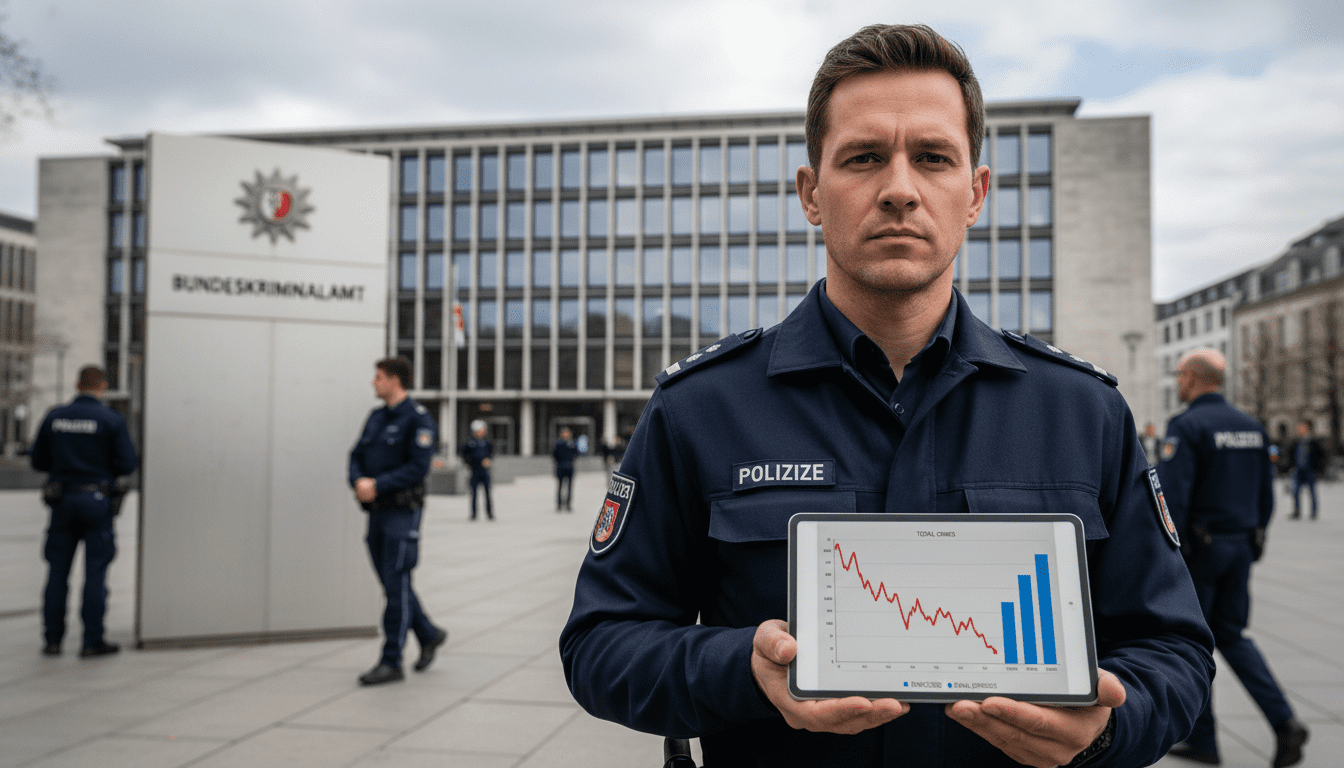
German crime statistics show first drop in violent crime since 2021, but severe offences rise
Germany records 2.3% fall in violent crime in 2025, yet homicides and sexual offences climb amid calls to improve police data collection.
For the first time since 2021, official German crime statistics released in Berlin on Monday, April 20, 2026, record a reduction in violent crime, according to figures showing 212,300 reported cases nationwide. The German crime statistics indicate a 2.3 percent decline compared with the previous year, a development officials linked in part to changes in drug policy and policing practices. Despite the overall decrease, authorities and analysts warned that serious violent offences have risen, underscoring persistent public safety challenges.
Police data and the headline numbers
The report presented in Berlin tallies 212,300 violent crime cases for the year, down 2.3 percent from 2024, officials said, a headline figure that drove the announcement. Interior Minister Alexander Dobrindt described the reduction as promising, commenting that fewer recorded offences generally means fewer victims and a lower immediate burden on victims’ services. At the same time, the ministry emphasized the complexity beneath the aggregate trend and cautioned against interpreting the decline as a wholesale improvement in public safety.
Sharpest increases concentrated in the most serious offences
Scrutiny of the statistics shows that while overall violent incidents fell, the number of severe crimes such as homicide, manslaughter and sexual offences rose, marking a troubling divergence within the broader trend. Officials and analysts noted that increases in these categories carry disproportionate social and legal weight, given their severe harm to victims and the heightened public concern they generate. The contrast between falling overall case counts and rising high-impact crimes has prompted calls for targeted policy responses and closer monitoring.
Cannabis policy change cited as a contributing factor
Government sources and analysts attributed a portion of the decline in recorded violent offences to the partial legalisation of cannabis possession and home cultivation implemented in April 2024. Legal changes that decriminalise certain low-level possession cases can reduce the number of minor drug-related incidents recorded by police, thereby lowering the headline crime totals even if broader patterns of offending remain unchanged. Experts cautioned that policy-driven reductions in police-recorded cases do not automatically equate to an absolute drop in all forms of criminal harm and urged a nuanced interpretation of the data.
Limits of police statistics highlighted by experts
Independent commentators and criminal justice researchers reiterated that police crime statistics capture reported and suspected incidents, not final convictions, a distinction that matters for interpreting trends. Markus Balser, an expert on interior politics, stressed that the statistics reflect suspected offences lodged by police and do not encompass the so-called “dark figure” of unreported crimes or the outcomes of prosecutions and court judgments. Economical and white-collar offences, in particular, can remain undercounted in police records, meaning the reported decline may not fully reflect real-world criminal activity across all categories.
Policy and policing reactions expected in Berlin
Interior Ministry officials said the figures will inform upcoming discussions on resource allocation, prevention programmes and legislative measures aimed at tackling serious violence. Political leaders across party lines expressed a mix of cautious welcome for the overall decline and determination to address the rise in the most damaging offences, signalling potential new initiatives focused on victim protection and targeted law enforcement. Police unions and victim advocacy groups called for sustained investment in investigative capacity and survivor support services to respond to the changing profile of violent crime.
Calls for improved data and transparency
Several stakeholders urged a revision of data collection and reporting practices to give a fuller picture of criminality, including stronger links between police records, prosecutorial data and court outcomes. Analysts suggested that harmonising datasets and publishing clearer breakdowns by offence type, geographic area and demographic factors would help policymakers design evidence-based interventions. There were also recommendations to expand efforts to measure unreported crime through victimisation surveys and to publish regular updates that clarify the interplay between legal reforms and recorded offence counts.
Public safety officials said they will continue monitoring emerging patterns and reassessing strategies as needed, while stressing that headline reductions do not remove the need for vigilance. The mixed picture painted by the German crime statistics — with fewer reported violent incidents but a rise in the most serious offences — is likely to shape debates in parliament and municipal councils about policing priorities, legal reform and victim services in the months ahead.
