
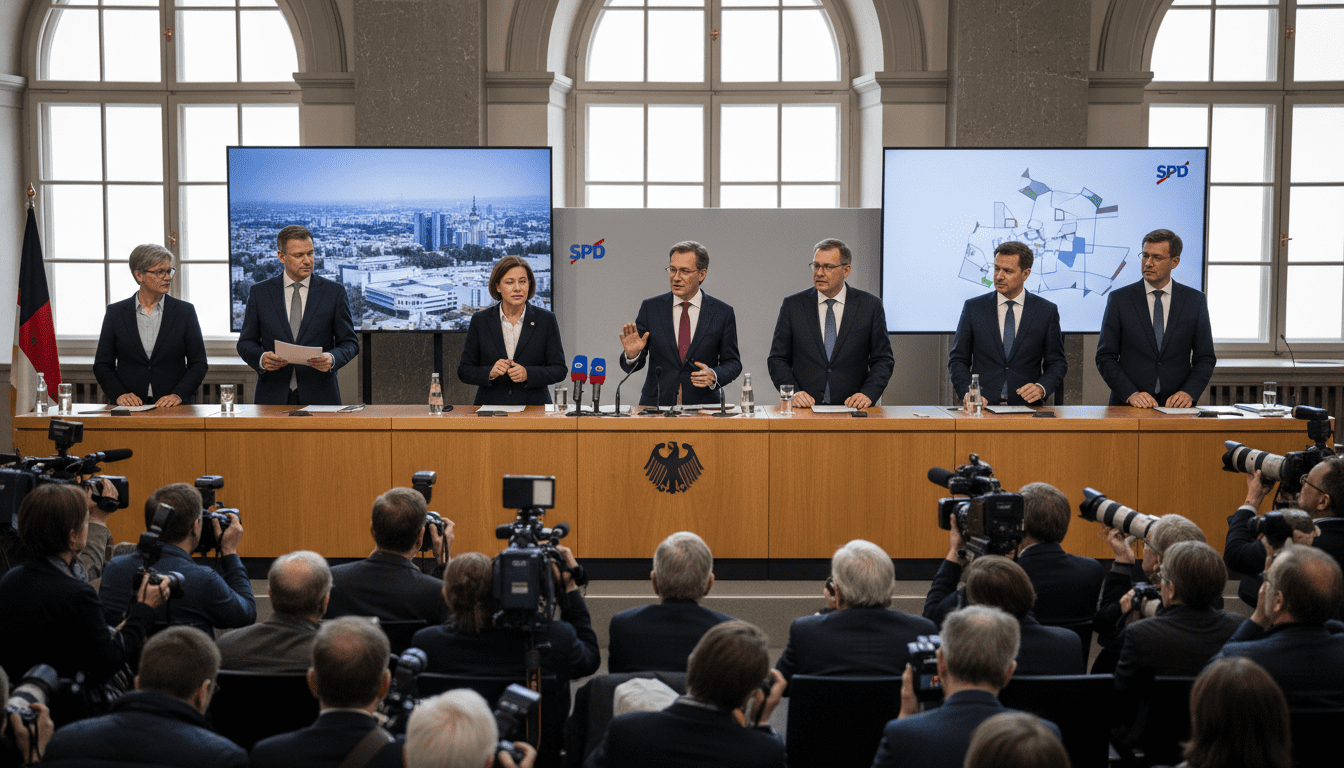
SPD Israel policy under pressure as MPs demand tougher stance over Gaza, settlements, and Lebanon
SPD Israel policy faces rising internal pressure as Bundestag MPs call for clearer condemnation of Israeli actions in Gaza and the West Bank, citing civilian casualties and alleged international law breaches.
SPD MPs Demand Tougher Approach to Israel
Some members of the SPD parliamentary group have publicly urged the party to adopt a firmer position toward the Israeli government, arguing that current responses risk accusations of double standards. They point to what they describe as large-scale civilian casualties in the Gaza Strip, an expansive settlement policy in the West Bank, and escalating suffering in southern Lebanon as reasons for change. The debate has intensified after recent parliamentary comments and media interviews from several SPD Bundestag deputies.
Ahmetović and Cademartori Call for Clearer Language
Adis Ahmetović, the SPD foreign policy spokesman in the Bundestag, told German media the party must explicitly name and condemn what he called repeated violations of international law. Isabel Cademartori urged SPD leaders Lars Klingbeil and Bärbel Bas to state unequivocally that Israeli actions in Gaza are unlawful and to support European measures if they are negotiated. Both MPs argued that failing to do so endangers the SPD’s credibility domestically and in Europe.
Faction Dissent: Defense of Existing Policy
Not all SPD deputies support a change in approach. Markus Töns, another Bundestag member, said he opposes shifting the party’s current stance despite strong criticism of the Israeli government’s politics. Töns argued that Israel faces persistent existential threats and warned against measures that could be perceived as abandoning Israel’s security needs. His remarks underline a broader split within the SPD between calls for stronger human-rights rhetoric and concerns about security and solidarity.
Former Officials Press for Clearer Support of Israel
At the same time, former SPD foreign affairs official Michael Roth has criticized the party’s hesitation, but from the opposite direction — urging clearer public backing for Israel. In a recent guest contribution for a national newspaper, Roth described the Hamas attacks of October 7, 2023, as the most brutal assault on Jews since the Holocaust and said the SPD’s language has been hesitant and evasive. Roth also singled out current faction leadership, arguing that past practice granted the faction chair more direct responsibility for the German-Israeli relationship.
Ceasefire Since October 2025 and Ongoing Violations
A ceasefire agreed in October 2025 has nominally reduced large-scale hostilities, but both sides continue to accuse each other of violations. Palestinian civil defense agencies reported that new Israeli strikes this week killed at least eight people in Gaza, illustrating how fragile the truce remains. Meanwhile, exchanges of fire between Israeli forces and Hezbollah in southern Lebanon have continued sporadically, keeping the region on edge and producing fresh displacement among local populations.
Human Toll and Historical Context
The current crisis is framed by the October 7, 2023, Hamas assault on Israel, which left more than 1,220 people dead and saw 251 people taken hostage, according to widely reported figures. Israel’s retaliatory operations in Gaza since then have been devastating; Palestinian authorities in the territory say more than 70,000 people have been killed over the two years that followed. These figures form the backdrop to the SPD’s internal debate, pressing lawmakers to balance human-rights concerns with security and diplomatic considerations.
Political Stakes for the SPD in Germany and Europe
MPs pressing for a tougher posture warn that the SPD’s standing with voters and partners could suffer if the party appears inconsistent on international law and civilian protection. Those urging restraint emphasize the diplomatic risks of publicly supporting punitive measures against the Israeli government, including potential impacts on bilateral cooperation and internal cohesion. The discussion also touches on Germany’s role in EU deliberations; Cademartori explicitly said Germany should not block possible European actions against Israel if those are proposed.
Potential Paths Forward for Policy and Messaging
Within the SPD, possible responses range from clearer public condemnation of specific Israeli policies to advocating targeted European measures, while others favor maintaining a firm security-oriented message and focusing on humanitarian relief. Some deputies advocate for a combined course: name and oppose breaches of international law while continuing to support Israel’s right to security and advancing humanitarian corridors. How the SPD leadership responds in coming weeks will shape the party’s posture in coalition debates and in broader European discussions.
The internal dispute over SPD Israel policy highlights a wider tension in European politics between human-rights advocacy and strategic alliances, and it places the party’s leadership under pressure to present a clear, consistent position.
