
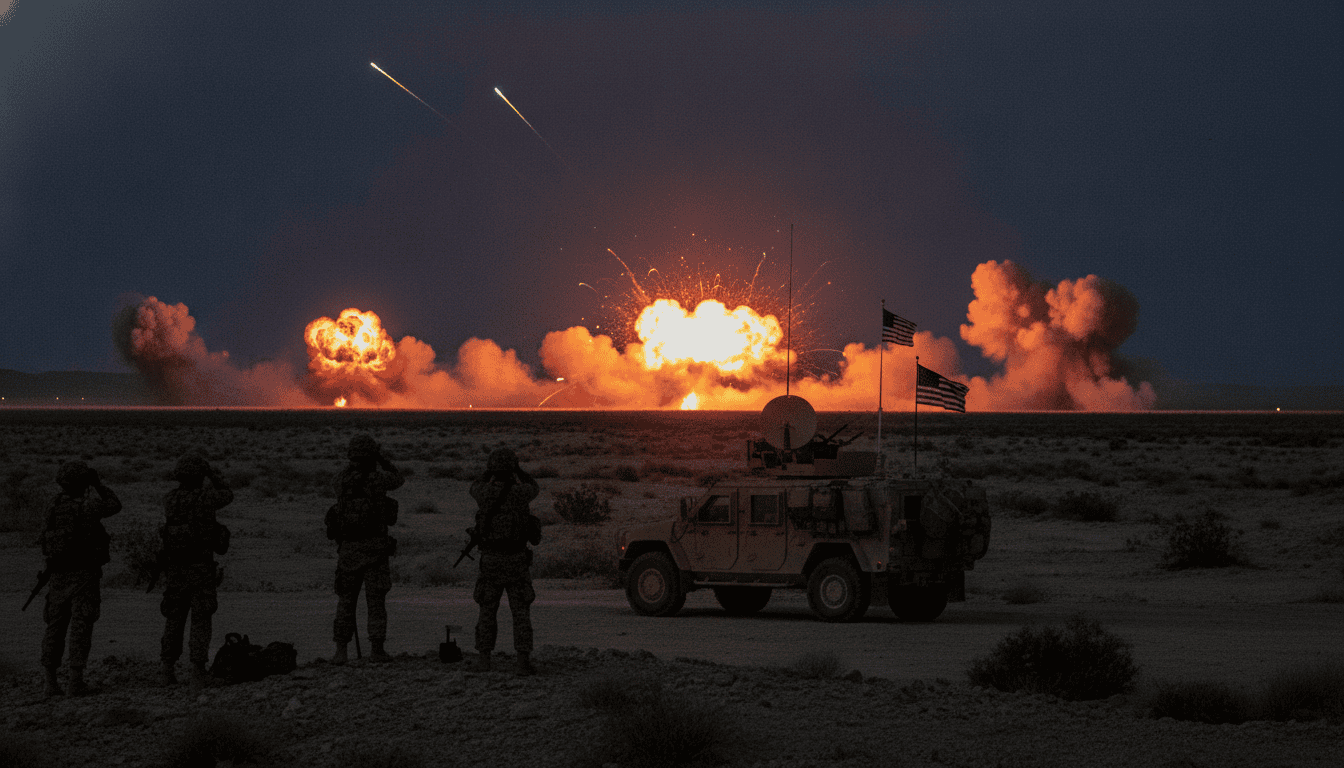
US-Iran conflict intensifies as U.S. carries out eighth consecutive night of strikes after Iranian fire killed U.S. troops in Jordan
US-Iran conflict intensifies as U.S. launches an eighth night of strikes in Iran after Iranian fire killed U.S. soldiers in Jordan, stoking fears of wider regional war. (157 characters)
The US-Iran conflict deepened as U.S. forces struck targets inside Iran for an eighth consecutive night while Iranian attacks on regional bases, including a strike that killed U.S. soldiers in Jordan, prompted new warnings of broader escalation. Military activity has spread across the Gulf and into the Red Sea, and both sides have traded threats rather than de-escalatory signals. Regional partners and commercial shipping routes are closely monitoring the situation as the risk of unintended consequences rises.
Eight nights of U.S. strikes
The U.S. military said it conducted strikes in Iran across multiple nights targeting what it described as military infrastructure linked to Tehran’s operations. Operations have reportedly included strikes on installations and transport routes, and damage to infrastructure has been documented in several locations.
Eyewitness reports and images circulating from southern Iran show at least one damaged highway bridge near Bandar Abbas, underscoring the physical toll of the strikes on Iranian territory. U.S. officials have framed the campaign as a response to attacks on American forces and regional partners, while warning that operations will continue as necessary to protect personnel and interests.
Iranian fire kills U.S. troops in Jordan
For the first time in months, Iranian fire aimed at regional targets resulted in the deaths of U.S. soldiers at a military site in Jordan, according to military statements and allied accounts. The incident marked a significant escalation from prior exchanges that had caused property damage and injuries but not recent fatalities among U.S. forces.
U.S. military commanders and allied officials signaled a hardening stance after the Jordanian incident, saying that attacks on personnel would be met with forceful responses. That shift has contributed to a cycle in which each side cites previous strikes to justify further action, narrowing space for restraint.
Attacks widen to Gulf bases and Aqaba
Iranian forces have directed strikes at U.S. positions and partner facilities in several Gulf states, including Kuwait and Bahrain, while regional militaries reported activity affecting bases farther afield in Jordan. Allied countries in the region experienced renewed air-raid warnings and civil defense sirens as trajectory of the conflict broadened.
Reports from regional militaries, as well as statements from a neighboring army, said Iran struck the Jordanian port city of Aqaba on the Red Sea, an area close to Israeli territory. That development heightened anxiety among nearby states and international shipping interests, given the city’s proximity to major maritime routes and the Israel-Jordan border.
Strait of Hormuz dispute at the conflict’s root
The broader confrontation began earlier this month amid a dispute over the strategic Strait of Hormuz, a vital chokepoint for global energy shipments. Incidents in and around the strait that disrupted navigation and raised threats to commercial vessels set off a chain of retaliatory steps on both sides.
Maritime insurers and international trade monitors have warned that continued military activity around Hormuz could increase shipping costs and delay cargo, particularly oil and liquefied natural gas. The waterway’s centrality to global energy markets means that any sustained disruption would carry economic as well as security consequences.
Diplomatic avenues appear limited as threats intensify
Despite the mounting toll and the expanding geographic scope of strikes, there have been few visible diplomatic moves aimed at de-escalation, according to statements from regional capitals and international observers. Both Tehran and Washington have emphasized military deterrence and reprisals, and third-party mediators have not yet announced major initiatives to halt the exchanges.
Analysts warn that without a rapid return to quiet, the pattern of tit-for-tat strikes could draw in additional regional actors or trigger unintended confrontations at sea and in the air. International stakeholders, including commercial shipping interests and energy-importing countries, have urged restraint to prevent a broader conflagration that would hit civilians and the global economy.
The situation remains fluid and volatile, with both sides indicating they are prepared to continue operations in defense of personnel and interests. Observers caution that a small miscalculation could expand the conflict, and they call for immediate channels of communication to be opened to reduce the risk to troops, civilians and critical maritime routes.
