
Ceuta migrant deaths rise to 67 as Spain installs sea barrier and urges EU solidarity
Spain reports 67 dead after migrants attempted sea crossings to Ceuta, prompting a new sea barrier, mass returns to Morocco, and urgent EU crisis talks.
Spain’s interior minister said the death toll from the recent mass arrivals of migrants bound for Ceuta has risen to 67, describing the losses as “sad, dramatic events,” as authorities move to restore order and prevent further tragedy. The surge of people toward the Spanish North African enclave, and the response that followed, has left Madrid demanding greater European support while deploying measures including a coastal barrier at the main crossing.
Interior minister reports 67 fatalities and calmer conditions
Fernando Grande-Marlaska told reporters the official count of Ceuta migrant deaths stands at 67 and said that, overnight, there were no new arrivals at the enclave’s beaches. He characterized the previous days as a period of crisis but said the situation had stabilised “within less than 48 hours” and that normality was returning to Ceuta.
Authorities have described the fatalities as the result of hazardous sea crossings and overcrowded conditions on shore, and Spanish emergency services continue to process the scene and care for survivors. The minister’s statements signaled a shift from emergency rescue operations to containment and humanitarian assistance.
Sea barrier erected to deter swimmers at main crossing
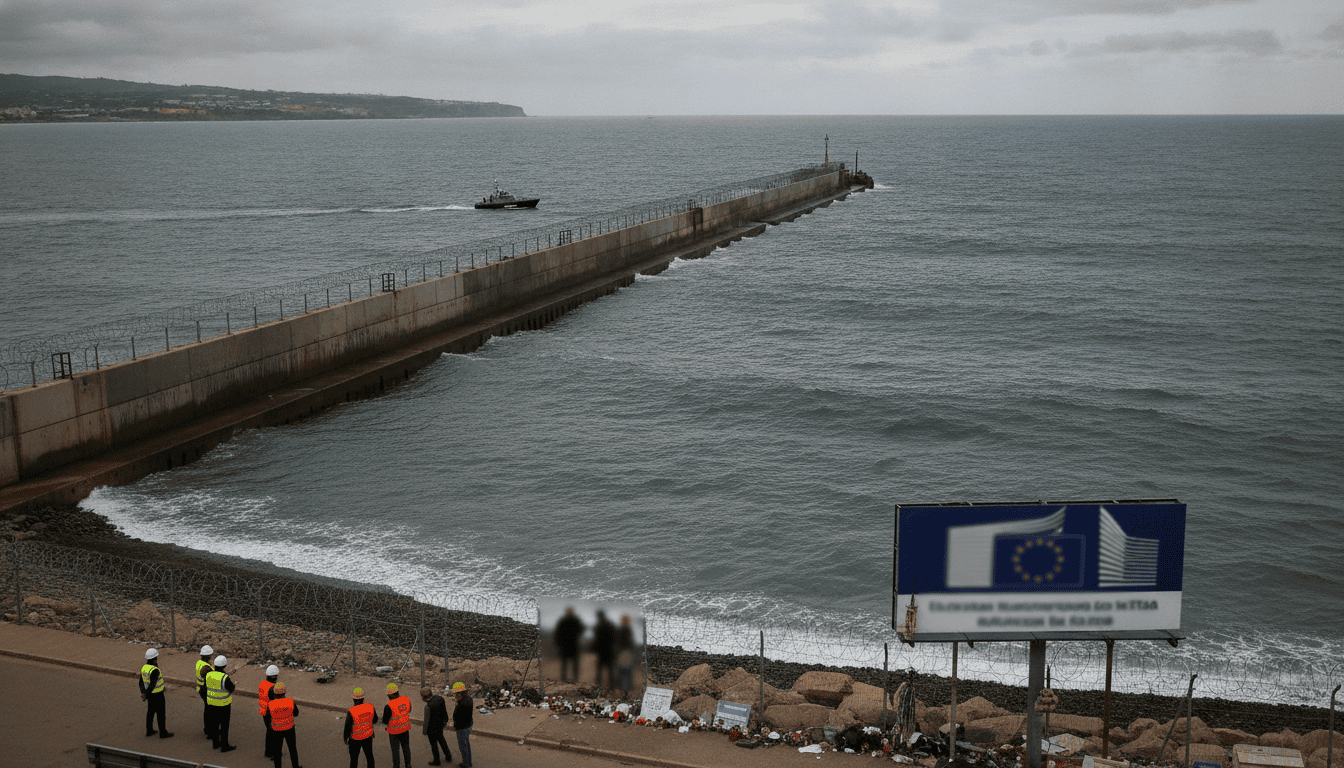
Workers began installing a physical barrier in the water off the border crossing with Morocco, a measure announced by Prime Minister Pedro Sánchez during his visit to Ceuta. Officials said the barrier aims to prevent people from entering Spanish waters by swimming and to reduce the immediate risk of drownings.
The coastal obstruction is part of a short-term security and migration-management plan that officials presented as necessary to re-establish control over maritime approaches. Humanitarian groups have stressed the need for parallel rescue capacity and medical care to accompany such deterrent measures.
Prime Minister Sánchez accuses some EU states of abandoning Spain
In an outspoken letter to European leaders, Sánchez complained of a lack of solidarity from some EU governments in the wake of the Ceuta influx, signalling particular frustration with recent measures taken by Italy. The Italian government introduced temporary border controls for non-EU nationals arriving from Spain by sea or air, a step Madrid viewed as punitive.
Sánchez accused certain capitals of reacting with prejudice, misinformation or political calculation and asked the Irish EU presidency to convene an extraordinary meeting of interior ministers. His appeal framed Spain’s plea as both a call for support and a rebuke of unilateral restrictions that he said undermine EU law.
Irish presidency schedules expert talks and ambassador briefing
An Irish presidency spokesman said experts from member states would meet in crisis sessions on Saturday, with EU ambassadors gathering on Monday to assess developments and coordinate assistance. The agenda will cover recent arrivals in Ceuta, the scale of returns to Morocco and options for EU support and diplomatic engagement with Rabat.
European officials will also discuss humanitarian needs and how to uphold border management while respecting legal obligations toward vulnerable people. The presidency emphasized that technical and diplomatic channels are being pursued in parallel.
Mass returns and evacuations from Ceuta to Morocco
Spanish media reported authorities in Ceuta were using chartered buses to move young Moroccans back to their hometowns, with more than 48,000 of roughly 50,000 recent arrivals voluntarily returning to the Moroccan side by Friday. Many had reportedly arrived without provisions or shelter and were sleeping in the open, prompting quick repatriation efforts and logistical relocations.
Officials said returns were being handled in coordination with Moroccan authorities, although the scale of movement has raised questions about longer-term reception and integration strategies. Humanitarian groups appealed for transparent procedures and access to asylum assessments for those who request protection.
Security reinforced in Melilla after attempted mass crossings
Spanish forces also bolstered security at the Melilla border after reports that about 500 people tried to enter from Morocco late on Friday, with clashes that included stone-throwing and the use of tear gas by security personnel. State television footage showed numerous Guardia Civil patrols moving along the frontier with lights flashing as officers secured the perimeter.
It remained unclear whether any migrants succeeded in entering Melilla during the attempt, but officials signalled heightened vigilance across both Spanish North African enclaves as authorities work to prevent simultaneous surges.
Spain faces immediate pressure to manage the humanitarian fallout, reduce the risk of further casualties at sea, and mend strains with partner capitals while coordinating an EU-level response. The coming days of diplomatic talks and on-the-ground operations will determine whether the crisis can be contained without further loss of life.
