
Hamburg CSD to Proceed Amid Heightened Security After Berlin Attack
Hamburg CSD organizers, police and queer groups maintain the parade will go ahead this Saturday, meeting fears with visibility and increased security.
Parade Confirmed After Berlin Attack
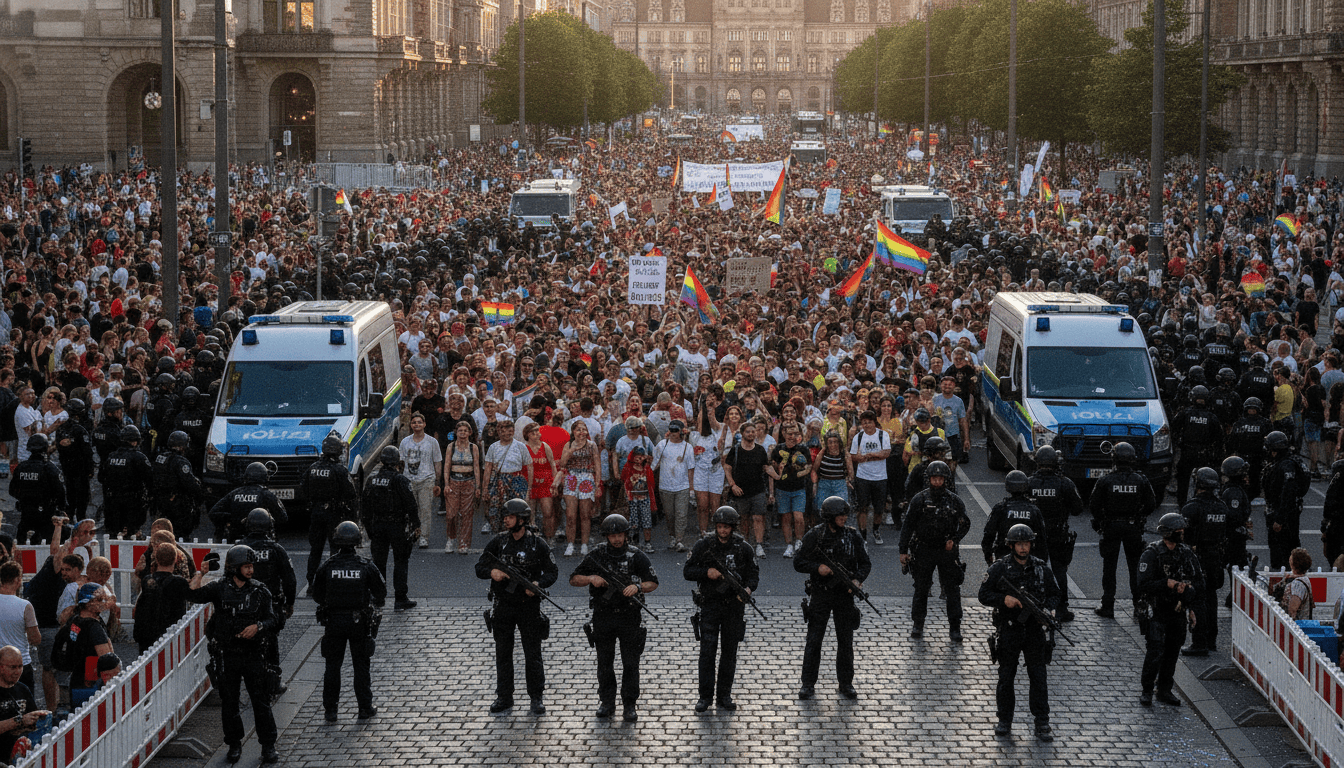
The Hamburg CSD will proceed as scheduled this Saturday despite last week’s Islamist attack near the Berlin CSD, organizers said. CSD spokesperson Manuel Opitz told reporters the community refused to cancel the event and that police had quickly assured organisers of robust support. The event will march under a theme of solidarity and visibility that organisers say is meant to confront fear rather than yield to it.
Community Reaction and Collective Resolve
Participants and activists described a shift from shock to determination in the days after the Berlin violence, according to organisers involved in Hamburg’s Pride Week. Pride House, the festival’s central hub, became an informal meeting place where people signed messages and shared condolences. Opitz emphasized that sustaining the CSD’s life-affirming character is central to the community’s response.
Long-Term Rise in Queer-Targeted Violence
Advocates point to a longer trend of growing hostility that preceded the attack in Berlin, drawing on law-enforcement reporting and NGO assessments. Federal criminal reports note a near-tenfold increase in recorded offences motivated by sexual orientation and gender diversity since 2010. In 2025 police data indicated an average of six queer-phobic violent incidents per day nationwide, and experts warn the true numbers are likely higher due to underreporting.
Local Patterns and Personal Risks in Hamburg
Official figures show recorded offences in Hamburg rising from 98 cases in 2023 to 149 in 2024 and 166 in 2025, underscoring a local escalation. Support centres such as the Magnus Hirschfeld Centre report clients describing public insults, threats and physical attacks, and many people have altered their behaviour to avoid visibility. Organisers say specific incidents — including a violent late-night assault on St. Pauli in May and assaults arranged via dating apps — have reinforced a climate of caution.
Security Measures and Police Deployment
Hamburg’s police leadership has announced a substantial increase in personnel for the parade, promising both uniformed and plainclothes officers along with aerial units. Police officials cautioned that absolute security in dense urban areas cannot be guaranteed, but said forces will be highly visible and accessible to participants. Organisers report ongoing coordination with city authorities and express gratitude for the enhanced presence while acknowledging the limits of policing alone.
Tensions Between Trust and Protection
While many in the queer community welcome the police presence, advocacy groups and survivors stress a complex relationship with law enforcement. The Magnus Hirschfeld Centre described a “real tension” rooted in decades of state discrimination, and urged policing that is sensitive to discrimination and committed to building long-term trust. Some community members said they want protection without losing sight of the need for accountability and dialogue.
Political Responses Under Scrutiny
The attack has also intensified debate over political rhetoric and policy towards queer communities, with some leaders’ past positions now being re-examined. Advocates criticised perceived inconsistencies in expressions of sympathy when prior public stances appeared dismissive of queer visibility. LSVD+ representative Andre Lehmann said the attack represents a climax in a trend of growing threats and called for more concrete measures to protect and support victims.
Hamburg organisers and allies say the parade’s purpose remains both celebratory and political: to affirm rights and visibility while demanding safer conditions for queer people. After a year that drew about 250,000 participants to Hamburg’s streets, organisers hope the turnout will include broad public solidarity as well as members of the queer community. They argue that marching together is both a statement of resilience and a call for sustained attention to rising violence and the structural changes needed to counter it.
