
Spahn resignation triggers Union leadership scramble as Merz signals quick successor
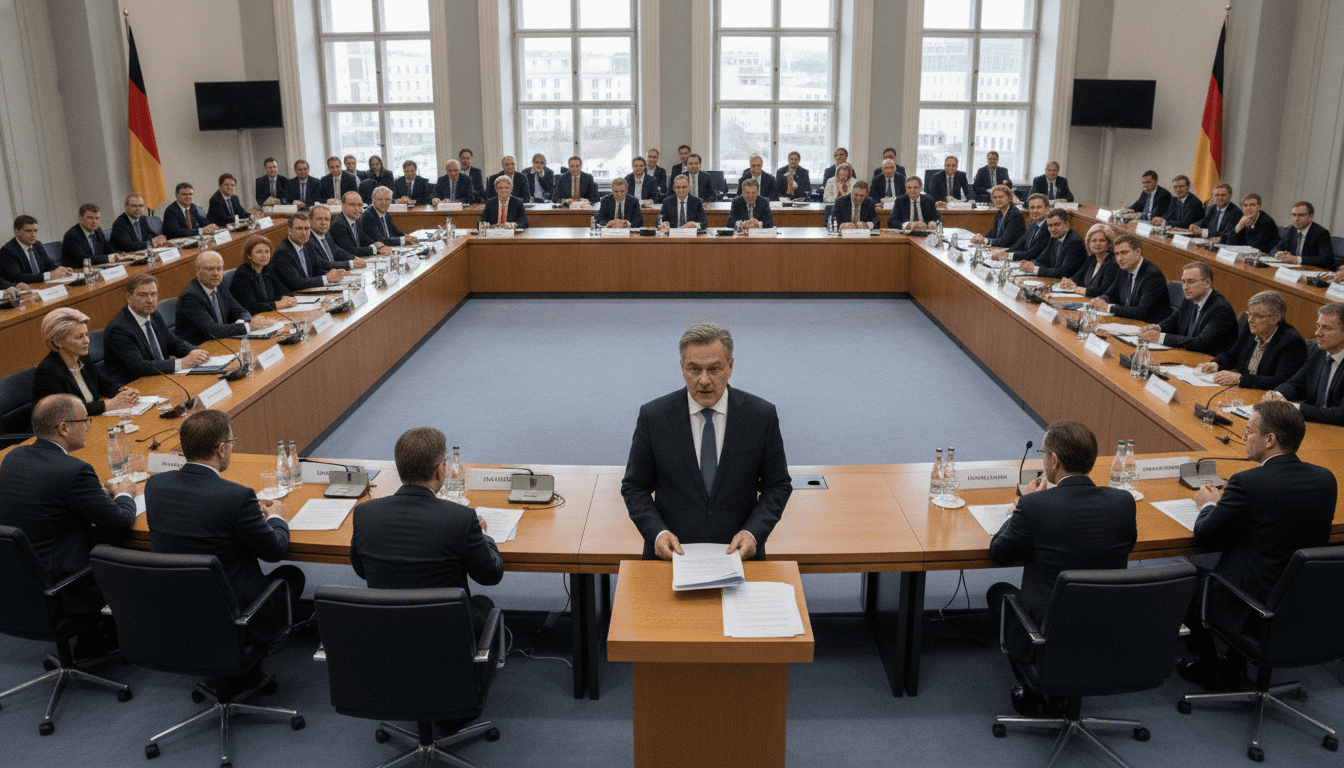
A short, decisive summary of the Jens Spahn resignation sets the stage for a week of internal talks in the CDU/CSU parliamentary group. Jens Spahn stepped down as leader of the Union group in the Bundestag on July 18, 2026, prompting the faction’s executive to assume interim control and schedule further consultations to select a permanent successor. (tagesschau.de)
Interim leadership and immediate communications
Following Spahn’s announcement, CSU parliamentary leader Alexander Hoffmann and CDU parliamentary manager Steffen Bilger informed Union MPs that the executive would carry out day-to-day duties until a new chair is elected. The message to deputies said the group would remain “decisive, operational and able to speak” while arrangements for a full plenary call of the faction were made. (zdfheute.de)
Sources reported that the interim leadership notified members by SMS about an expanded round of consultations slated to continue on Monday, underscoring the intent to keep parliamentary work uninterrupted. Party officials said the immediate priority was internal coordination rather than public comment, even as speculation about potential successors intensified. (nau.ch)
Procedure for choosing a new Union parliamentary leader
The Unionsfraktion must elect the next parliamentary chair in a formal vote of its members, but tradition gives the party chairmen of CDU and CSU the role of proposing a candidate. That customary practice places the selection process largely in the hands of CDU leader and chancellor Friedrich Merz and CSU leader Markus Söder, who will be expected to agree on a nominee before the faction convenes. (zdfheute.de)
Party insiders noted that while the formal vote rests with the Bundestag group, the practical mechanics favor a consensual candidate put forward by the two party chiefs to minimize internal fractures. Any contested election would risk exposing the coalition to further instability ahead of the autumn parliamentary calendar. (tagesschau.de)
Merz signals a quick proposal and raises prospect of cabinet changes
Chancellor Friedrich Merz told ZDF’s Sommerinterview audience that he and CSU leader Markus Söder intended to produce a proposal “relatively soon” for Spahn’s successor, and he did not rule out broader personnel adjustments in government. Merz framed the timing as necessary to restore credibility and normalise operations within the Union ranks. (br.de)
The suggestion that a change at the parliamentary group’s top could trigger a cabinet reshuffle added a new dimension to the leadership question, since any ministerial moves would require careful coalition management. Observers cautioned that while a reshuffle is possible, Merz emphasized the remark in conditional terms and said decisions would follow internal party consultations. (zdfheute.de)
Political fallout and wider reactions
Spahn’s resignation has generated rapid reaction across party and coalition lines, with members acknowledging the political and reputational implications for the CDU/CSU. Chancellor Merz described the step as necessary for the party’s credibility in public comments, while colleagues expressed regret at the departure of a high-profile figure who had shaped policy debates in recent years. (tagesschau.de)
Opposition parties seized on the episode to question the Union’s judgment and consistency, while analysts highlighted the timing ahead of the summer recess and state-level elections as a complicating factor for the coalition’s legislative agenda. Some regional party leaders publicly urged a swift resolution to the leadership vacuum to prevent prolonged distraction from governance priorities. (euronews.com)
Potential successor names and internal dynamics
Speculation about possible successors has circulated within Berlin’s political circles, with names from both CDU and CSU lists under consideration. The convention of joint CDU/CSU backing means that any nominee must satisfy a range of regional and parliamentary interests, including the two parties’ parliamentary groups and state-level executives. (zdfheute.de)
Senior figures cautioned against premature public campaigning, noting that the chief task for the next days would be to stabilise the group and present a unified front. While some members privately signalled appetite for continuity, others argued the episode requires a leader capable of rebuilding trust both inside the party and with coalition partners. (tagesschau.de)
A final vote in the full Union parliamentary group will determine the permanent successor, but the timetable will depend on when the party chiefs submit their proposal and whether the faction opts for a special session before the scheduled autumn return. In the interim, Hoffmann and Bilger will manage parliamentary responsibilities and prepare the ground for the decision that party bosses and MPs now face. (zdfheute.de)
