
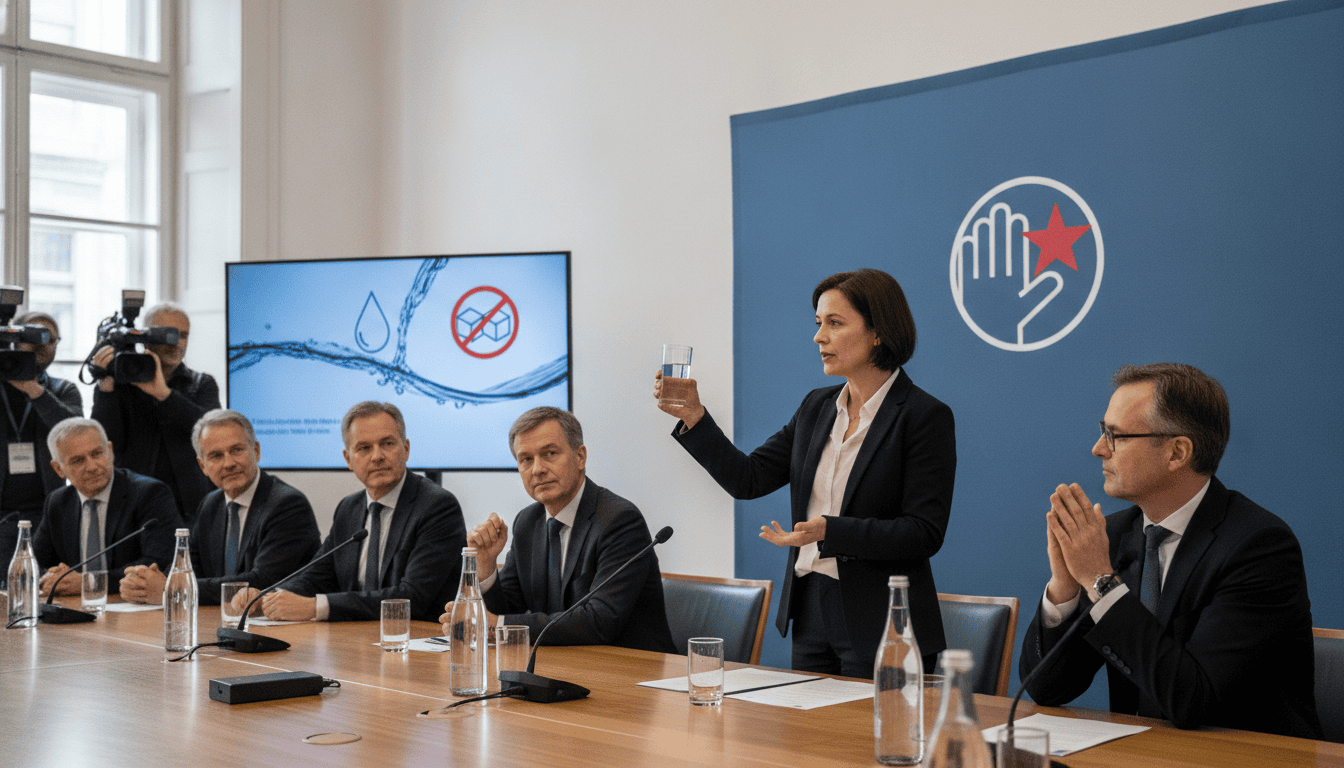
Free tap water in restaurants: The Left urges free water, fountains and school bans to cut sugary drinks
Die Linke proposes free tap water in restaurants and public spaces, plus drinking fountains and school bans to curb sugary drink consumption and promote equity.
Die Linke’s parliamentary group on July 19, 2026 released a position paper proposing free tap water in restaurants, public institutions and public spaces to reduce the consumption of sugary soft drinks. The proposal calls for accessible alternatives such as free tap water and new public drinking fountains, and it includes measures aimed at schools. The party frames the initiative as a health and social-equity effort and rejects a consumption tax approach to reducing sugar intake.
Proposal for free tap water in hospitality and public buildings
Die Linke wants restaurants, cafés and public institutions to provide tap water at no cost to customers and visitors. The party argues that free tap water is a simple, low-barrier option that can discourage purchases of sugar-sweetened beverages without imposing additional costs on households.
The policy paper presented by the Linksfraktion states that free tap water in restaurants would be paired with investments in public water infrastructure. Lawmakers say the measure should be implemented alongside information campaigns to encourage consumption of water over sugary drinks.
Plan to install drinking fountains and restrict school sales
The party is also calling for a network of drinking fountains in public spaces as part of its broader approach. According to the proposal, new fountains would make safe drinking water easily available in parks, squares and transit hubs, especially in urban areas where vending machines and soft drink advertising are common.
In schools, Die Linke proposes a ban on the sale of products high in sugar, fat and salt, arguing that educational settings should offer only healthier options. The ban is described as complementary to free water access, ensuring children have both the option and the environment to choose healthier beverages.
Contrast with CDU–SPD 2028 sugar tax plan
Die Linke’s demands put it at odds with a separate plan by CDU and SPD to introduce a sugar tax in 2028. While all parties say they want to reduce excessive sugar consumption, Die Linke rejects the proposed consumption tax as socially regressive and insufficiently targeted.
The Left’s parliamentary group says price increases alone will not create healthier consumption patterns if affordable alternatives are not available. The party therefore prefers measures focused on accessibility and prevention rather than additional fiscal burdens on consumers.
Health and social equity rationale behind the push
Party spokespeople stress that the proposal is rooted in public-health objectives, citing links between high sugary beverage intake and obesity, diabetes and other chronic conditions. Free tap water, they contend, would be a preventive measure that lowers barriers to healthier hydration choices for households across income levels.
Equity is central to the argument: Die Linke asserts that low-income families are disproportionately affected by price-based policies, and that making water freely available in everyday settings would help reduce health disparities. The proposal also calls for targeted outreach and education to ensure the policy reaches communities with the greatest need.
Political and practical challenges to implementation
Implementing free tap water in restaurants and public places raises logistical and financial questions that will shape the debate. Opposition parties and some hospitality groups may push back on potential compliance costs, sanitation standards and liability concerns, while municipalities will consider installation and maintenance budgets for fountains.
Experts and local authorities will likely weigh in on regulatory frameworks, including hygiene rules for served tap water, signage requirements and whether businesses could be offered incentives or phased obligations. The scale and timeline for any rollout would depend on negotiated legislation and funding decisions at federal and municipal levels.
Die Linke presents the package as a public-health priority rather than a punitive economic measure, arguing that it complements — rather than replaces — broader strategies such as education and public-service investments. The party’s stance signals that forthcoming debates on sugar reduction policy in the Bundestag will center on the balance between behavioral incentives, regulatory steps and taxation.
The debate now turns to parliamentary committees and coalition partners, where lawmakers will assess feasibility studies, cost estimates and health impact analyses before shaping binding proposals.
