
D.C. robotaxi bill pits Uber against Waymo as industry battles testing rules and fees
D.C. robotaxi bill fuels a clash between Uber and Waymo as industry groups, safety advocates and regulators debate testing rules, fees and market access.
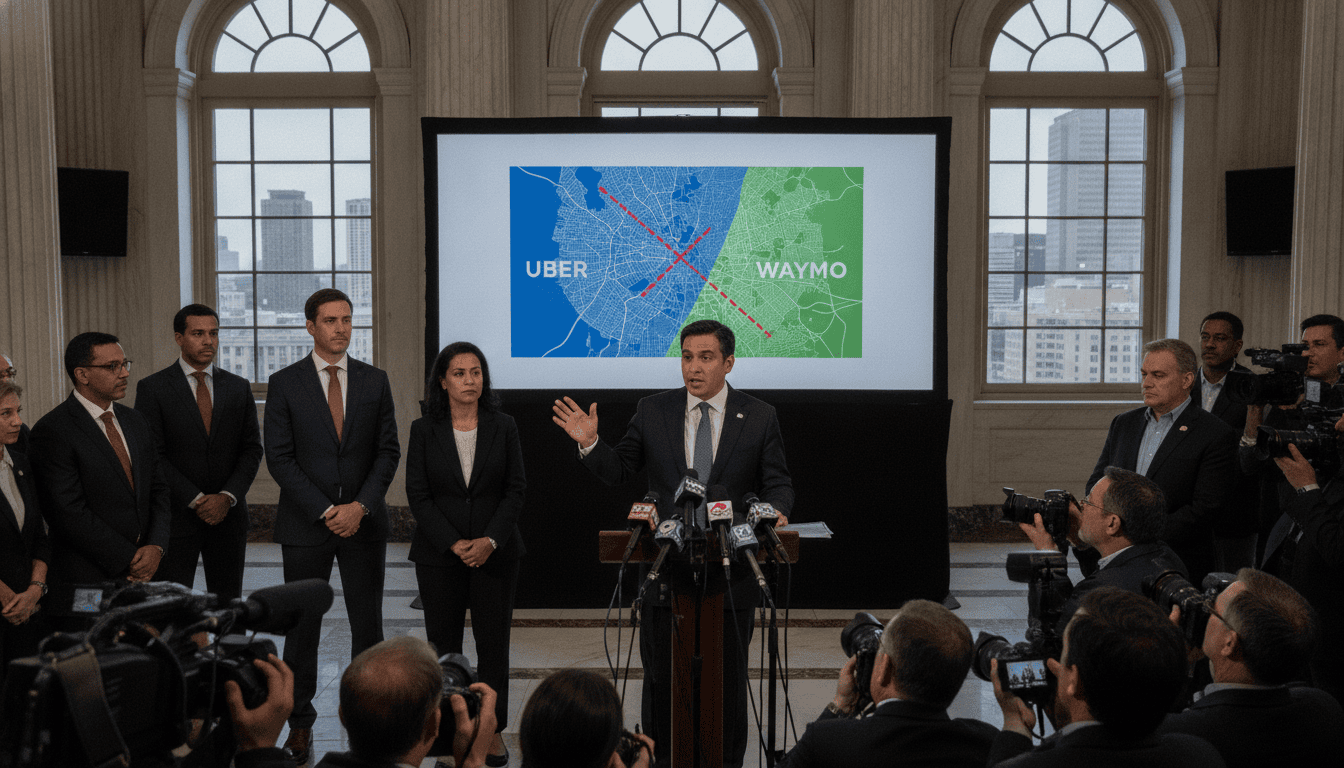
A proposed D.C. robotaxi bill has set off a sharp split between major mobility companies, with Uber and Waymo emerging as principal adversaries in a broader industry fight over how autonomous vehicles should enter urban streets. The legislation, which would allow autonomous passenger services to operate in Washington, D.C., has prompted intense lobbying, public testimony and behind-the-scenes maneuvering. Stakeholders from tech firms to disability advocates converged at a recent council hearing to press competing visions for testing thresholds, permit costs and how robotaxis should be integrated with traditional ride-hailing.
Uber pushes hybrid ride-hailing model
Uber argues the bill as written risks displacing human drivers and effectively granting a monopoly to a single autonomous operator. The company has proposed a hybrid framework that would require robotaxis to operate on a ride-hailing network alongside human-driven vehicles. Uber frames this approach as a way to preserve for-hire driving jobs while enabling gradual AV deployment across the city. Critics say that requirement would force autonomous developers into suboptimal choices and could stifle independent fleet operations.
Waymo’s testing lead and market positioning
Waymo has signaled broad support for the bill and stands to benefit from the proposed testing and mileage thresholds. The company’s fleet, which has already logged extensive testing with human safety operators in D.C., surpasses the draft’s 180-day and 250,000-mile benchmarks. That technical lead would give Waymo an immediate first-mover advantage if the legislation is enacted as currently written. For newer entrants, matching that record would require substantial additional miles and months of testing before full market access.
Industry objections focus on fees and reciprocity
Multiple companies voiced objections to the bill’s regulatory costs and testing rules during the council proceedings. Concerns centered on a proposed $1 million application fee, a $5 million permit fee, and a $0.15-per-mile tax for autonomous operations, which some developers called prohibitive. Firms also argued that testing miles accrued in other jurisdictions should be recognized to avoid redundant, costly trials. Tesla and other AV developers urged adjustments to make compliance feasible for a wider set of companies.
Public testimony highlights safety and equity stakes
The council hearing drew testimony from a wide array of stakeholders, including disability advocates, labor unions, highway safety organizations and local businesses. Disability groups emphasized the potential accessibility gains from robotaxis, arguing that well-regulated AV services could improve door-to-door mobility for riders with disabilities. Labor representatives raised alarms about job displacement and sought safeguards for drivers transitioning into a changing market. Safety organizations pressed for robust requirements to ensure reliable performance in emergencies and adverse conditions.
Regulatory ripple effects and market consolidation concerns
Beyond D.C., industry observers say the bill could set a template for other municipalities weighing autonomous services. Uber’s public efforts to shape the rules come as the company pursues large-scale commercial moves that would expand its delivery and ride footprint globally. That activity has heightened anxiety among competitors and regulators about market concentration and the economics of integrating robotaxis into existing platforms. Meanwhile, recent incidents involving automated vehicles — including temporary operational disruptions and isolated safety failures reported in other cities — have intensified calls for clearer contingency requirements and stronger oversight.
Testing, safety recalls and city responses
The debate over the D.C. bill arrives against a backdrop of operational hiccups and regulatory scrutiny elsewhere, prompting municipal leaders to demand tougher reliability standards. City officials in several jurisdictions have recently urged stricter performance metrics after episodes where autonomous vehicles became immobilized during heavy traffic or required software corrections following unexpected scenarios. Such events have reinforced the argument from some elected officials that operators must demonstrate consistent, resilient behavior before broad deployment, particularly in densely populated urban cores.
Lawmakers on the council face competing priorities: enabling the benefits of autonomous mobility, protecting public safety, and ensuring fair access to the market. Balancing those objectives has proved difficult in the hearing room, where industry submissions and community testimony painted divergent pictures of who would gain or lose under different regulatory designs. Some proposals aim to accelerate AV adoption while mitigating disruption, whereas others would erect significant barriers intended to preserve jobs and local control.
As deliberations continue, the council must weigh technical evidence, stakeholder testimony and political pressures to craft rules that reconcile innovation with public interest. The D.C. robotaxi bill will be closely watched by cities across the country as a potential precedent for testing reciprocity, fee structures and market access for autonomous services. The decisions that emerge from Washington could influence how quickly and under what conditions robotaxis become a common part of urban transportation networks.
