
Hungary constitutional amendment cleared after president signs measures that include his own removal
Hungary constitutional amendment cleared as President Tamás Sulyok signs laws enabling his removal, judicial age limits, MP term caps and a new asset recovery office.
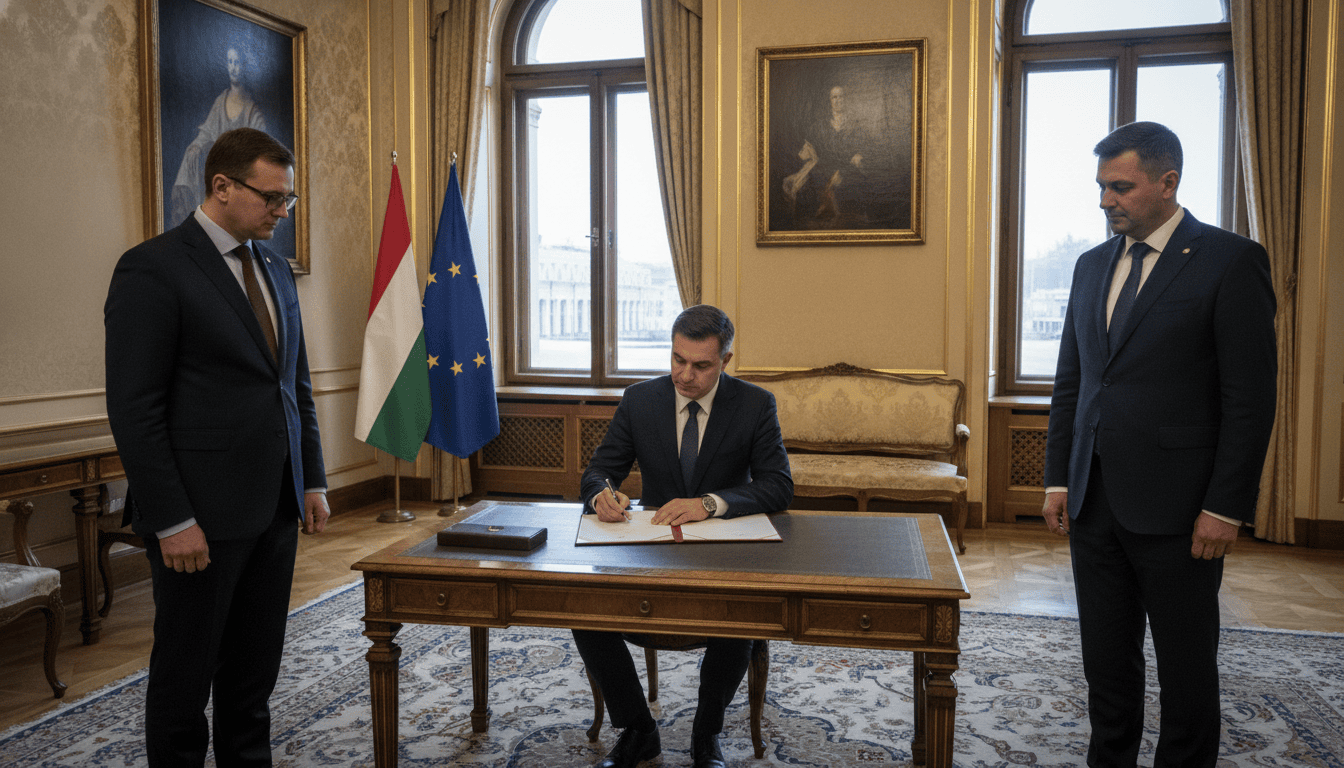
Hungary’s president has signed a sweeping constitutional amendment that could reshape the country’s political architecture and includes provisions that lead to his own removal from office. The Hungary constitutional amendment was countersigned by President Tamás Sulyok after days of public reluctance, and Prime Minister Péter Magyar confirmed the signature and said the presidential post will become vacant on Monday. The move opens the way for changes affecting judges, parliamentary service limits and the creation of a new state asset recovery body.
Presidential signature and immediate effect
After repeated hesitations, President Tamás Sulyok endorsed the constitutional package, clearing the final procedural hurdle for the reforms to enter into force. Prime Minister Péter Magyar publicly confirmed the countersignature and interpreted the step as a necessary correction to years of concentrated power.
Magyar has framed the measures as restoring limits on authority and returning state assets to the public, while Sulyok issued a statement saying he felt he had no legal avenue to refuse the parliamentary action. With the signature complete, Parliament’s timetable means the presidency will be declared vacant at the start of the coming week.
Parliament names acting authority and sets 30‑day window
Parliament has designated its speaker, Ágnes Forsthuber, to exercise presidential powers until a successor is elected, and lawmakers set a 30‑day deadline for choosing a new head of state. Hungary’s constitution entrusts the election of the president to the legislature, making the parliamentary calendar decisive for the next steps.
The decision follows a tense exchange in which Magyar had given Sulyok a five‑day deadline to sign and warned of impeachment proceedings if he obstructed the reforms. Legal analysts cited by officials argued the constitutional court’s scope to overturn the parliamentary decision would have been limited to formal procedural faults rather than the substance of the changes.
Age limit for judges and 12‑year cap on deputies
A central element of the amendment introduces a mandatory retirement age for constitutional court judges, ending mandates when judges turn 70. That provision is expected to affect four of the court’s 15 members, including the sitting president of the court, who is widely viewed as aligned with the previous administration.
The package also installs a twelve‑year limit on parliamentary service beginning in 2030, a measure that would bar long‑serving deputies from standing again once the rule takes effect. Observers note the cap is likely to have direct consequences for high‑profile figures who have been continuous members of Parliament for decades.
Asset recovery office and plan for a new constitution
Lawmakers approved the creation of a new office tasked with reclaiming alleged state assets, part of a broader effort by Magyar’s government to reverse what it calls entrenched misuse of public property. The move accompanies a stated intention by Magyar and his Tisza party to draft an entirely new constitution to replace the 2011 Basic Law enacted under Viktor Orbán.
Magyar has accused the existing constitutional framework of being tailored to the political needs of his predecessor’s party and positioned the new charter as a corrective. The transition to a new constitution, however, would be a complex process with significant legal and political implications domestically and for Hungary’s relations with international partners.
Political reactions and implications for Fidesz figures
Magyar cast the reforms as returning certainty to Hungarians and limiting the accumulation of power, posting on social media that the measures would serve “the free Hungarian citizen.” In contrast, Sulyok warned publicly that the presidency’s ability to act as a check on the executive has been diminished, arguing the office will be more exposed to political influence.
The reforms have particular resonance for figures associated with the previous government. Party leaders and long‑standing deputies may face new constraints under the term limits and judicial changes, while the prospect of a fresh constitution raises questions about future institutional safeguards and the balance between legislative and judicial authority.
The parliamentary adoption, presidential signature and the 30‑day timeline for electing a new president mark a rapid sequence of constitutional change in Hungary, setting in motion legal and political processes that will unfold in the coming weeks.
