
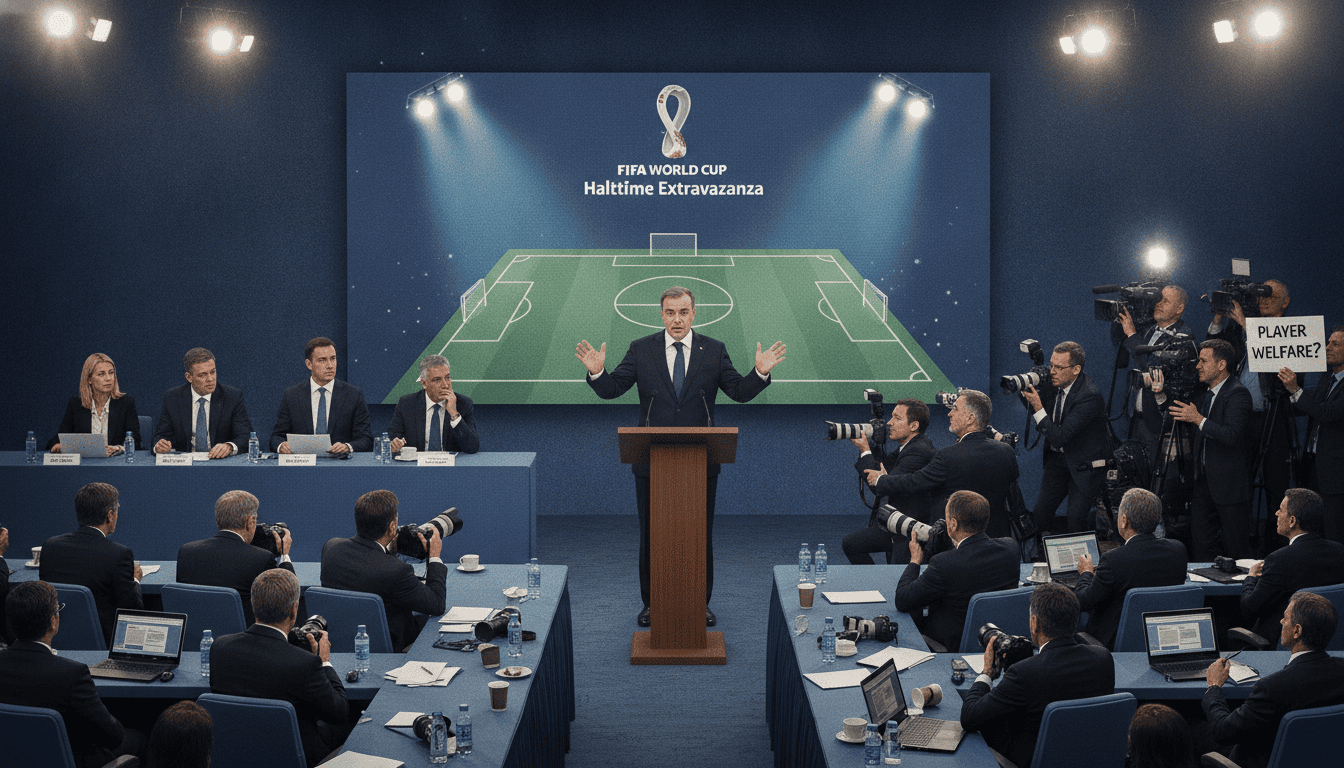
World Cup halftime show draws criticism after 12-minute spectacle at 2026 final
FIFA staged a 12-minute World Cup halftime show at the 2026 final in East Rutherford, sparking debate over player welfare and pitch maintenance and tradition.
The World Cup halftime show interrupted the final in East Rutherford, delaying the resumption of play and provoking immediate debate among coaches, grounds staff and fans. The performance, organized by FIFA and curated by Coldplay frontman Chris Martin, featured multiple global stars and extended the usual interval beyond standard practice. The disruption to routines and pitch care became a focal point as the match resumed after a longer-than-usual break.
FIFA schedules unprecedented halftime entertainment
FIFA inserted a full-scale halftime production into the tournament finale, introducing a countdown on stadium screens and branding that warned viewers not to miss the show. Organizers covered the playing surface with a large tarp shortly after the first-half whistle and began the performance minutes later. The sequence was billed as an 11-minute spectacle but ran for approximately 12 minutes before the match restarted.
High-profile lineup curated by a pop star
Chris Martin selected a roster of internationally known performers for the show, bringing together legacy and contemporary acts for the global broadcast. Names onstage included Madonna, BTS, Justin Bieber, Shakira and Burna Boy, supported by conductor Gustavo Dudamel and the PS22 elementary school choir. The mix reflected FIFA’s aim to maximize global viewership with artists who span markets and generations.
Pitch maintenance and operational concerns surfaced
Groundskeepers faced compressed windows for routine halftime tasks that normally protect playing conditions in hot, dry climates. Standard maintenance—replacing torn turf, localized watering and surface checks—was curtailed to accommodate the production, according to staff observations during the break. The shortened interventions raised questions about the impact on ball roll and player footing in the closing stages of the match.
Coaches voice health and regulatory objections
Colombia’s coach publicly criticized the extended interruption, noting that rules specify a 15-minute halftime and expressing concern for player welfare given the longer pause. He cited past disciplinary issues surrounding late returns from breaks and warned of potential health effects from an atypical downtime. Spain’s coach offered a different perspective, accepting the show as part of the event and suggesting that such changes might become normal over time.
Super Bowl model and commercial incentives explained
FIFA’s halftime staging mirrors a long-established model from the NFL’s Super Bowl, where a star-studded halftime show has become a major ratings draw and advertising revenue driver. Broadcast partners are able to charge premium rates for ad space around the performance, and artists gain massive exposure through a single global audience. Organizers appear to be testing whether the same economics and spectacle translate to football’s biggest match.
Fan reaction and domestic precedents contrasted
Reactions among spectators were mixed, with many attending solely for the sporting contest and others welcoming the entertainment. Critics pointed to earlier domestic experiments—such as a 2017 cup final halftime performance that provoked boos from fans—as evidence that live music can clash with supporter expectations. The balance between spectacle and sport remains contested, particularly when interruptions affect competitive routines.
FIFA also placed pre-match entertainment on the schedule, including a separate pitch ceremony and national anthem performance, and even featured celebrity appearances and brief addresses ahead of kickoff. Those elements expanded the event timeline well beyond traditional match preparations and heightened scrutiny over where ceremony ends and competition begins.
The experiment at East Rutherford has already prompted calls for clearer guidelines about halftime length, pitch access and the priority of player safety. As broadcasters and governing bodies assess audience metrics and commercial returns, national teams and match officials will continue to weigh the on-field consequences of turning football’s showcase match into a multi-element entertainment event.
