
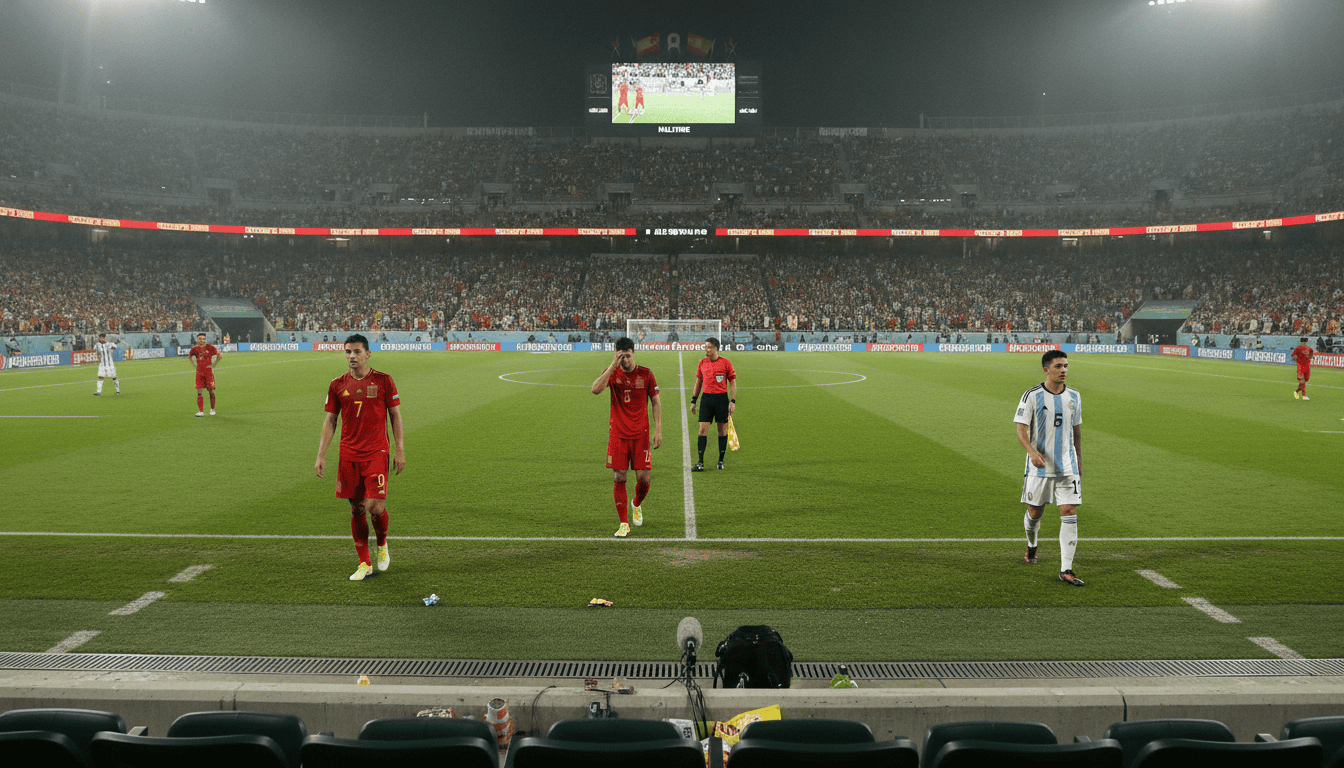
Spain vs Argentina World Cup final: half-time stalemate as Martinez exits injured
Spain vs Argentina World Cup final scoreless at half in New Jersey as Spain dominates possession and Argentina loses Lisandro Martínez to injury today
The Spain vs Argentina World Cup final in East Rutherford remained goalless at half-time on July 19, 2026, with Spain controlling possession while Argentina leaned into a physical game. The match at the New York New Jersey Stadium began six minutes late after an elaborate pre-match ceremony and the arrival of US President Donald Trump. Early chances were scarce and a late first-half injury to Lisandro Martínez left Argentina facing a tactical rethink for the second 45 minutes.
Half-time stalemate in New Jersey
Spain and Argentina entered the break locked at 0-0 after a cautious opening 45 minutes that produced few clear-cut opportunities. The final’s kick-off was delayed following a high-profile entertainment sequence featuring Robbie Williams and Tom Cruise and the arrival of the US president. Once play began, the game settled into a pattern of Spanish possession and Argentine resistance that prevented any breakthrough.
Spain dominates possession but lacks cutting edge
Spain registered roughly two-thirds of the ball in the opening half, seeking to build composed attacks through short passing and movement. Lamine Yamal forced the first real reaction from Argentina’s goalkeeper Emi Martínez with a drive inside five minutes, while Mikel Oyarzabal and Marc Cucurella also tested the defence and keeper at different moments. Despite territorial control and three attempts on target, Spain struggled to produce a decisive final ball or a sustained sequence inside the penalty area.
Argentina adopts a physical, disruptive approach
Argentina spent much of the half defending deep and using physicality to disturb Spain’s rhythm, preferring to make the match a contest of duels rather than a free-flowing tactical battle. The South American side were largely confined to their own half and aimed to frustrate La Roja by interrupting passing lanes and making late challenges. That approach limited Spain’s clear chances but also left Argentina with no shots on goal in the first 45 minutes.
Referee Slavko Vincic delays yellow cards
Slovenian referee Slavko Vincic drew criticism from the Spanish bench for a reluctance to issue cautions early in the match, with the first yellow card not shown until the 40th minute. A heavy challenge from Alexis Mac Allister on Dani Olmo around the 15-minute mark drew appeals from Spain but went unpunished, fueling tensions on the touchlines. The opening booking came when Lisandro Martínez was penalised for a foul on Mikel Oyarzabal, and the referee’s restrained approach shaped how both teams managed aggression.
Lisandro Martínez exits injured, Otamendi replaces him
Argentina suffered a significant setback late in the first half when Lisandro Martínez, a central figure in their defensive setup throughout the tournament, was forced from the field with an injury. The substitution brought veteran Nicolás Otamendi into the back line, handing responsibility for marking Spain’s attackers to an experienced but differently styled defender. Martínez’s departure alters Argentina’s defensive profile, potentially affecting their pressing triggers and the way they handle Spain’s wide runners in the second half.
First-half statistics underline Spanish control
The statistical picture at half-time reflected Spain’s territorial edge: approximately 64.6 percent possession, three shots to Argentina’s none, and two corners awarded to La Roja. Argentina committed more fouls and picked up the lone yellow card, a sign of the match’s physical tenor rather than attacking intent. Those numbers show Spain’s dominance in ball circulation but also the hosts’ success in denying clear chances and keeping the scoreline intact.
The second half promises tactical adjustments from both coaches as Spain seeks greater penetration and Argentina aims to balance physical disruption with offensive threat. Substitutions and the management of Martínez’s absence will be decisive factors, and set pieces may take on increased importance in a game where open-play chances have been limited. Fans and neutrals alike will watch whether Spain can convert possession into clear-cut opportunities or whether Argentina can find a counterpunch to tilt the final in their favour.
