
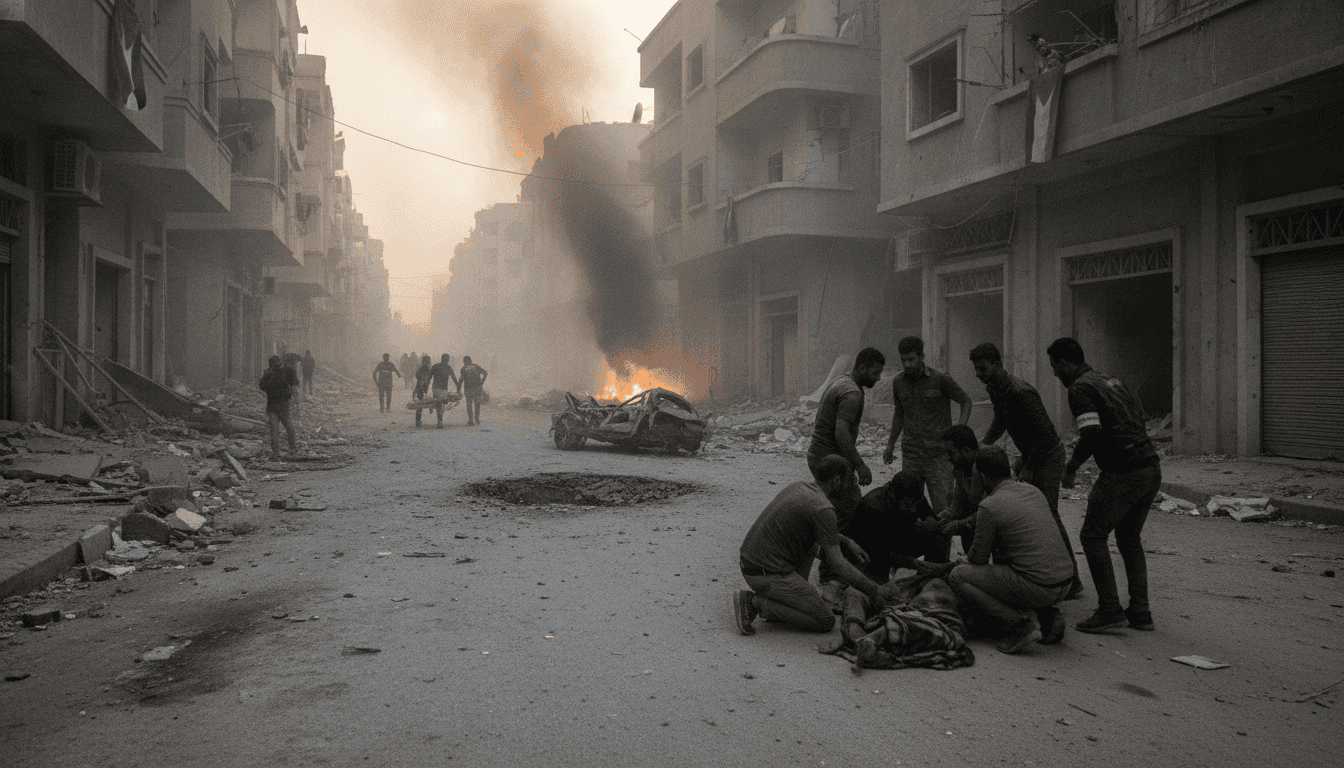
Israeli drone strikes in Gaza wound civilians in Deir el-Balah and near Gaza City
Israeli drone strikes in Gaza wounded multiple Palestinians, including children and women, after strikes hit Deir el-Balah, Salah al-Din Street and an area near Gaza City’s intelligence headquarters.
The Israeli drone strikes in Gaza wounded several people in the central and northern parts of the territory, local media reported, as emergency crews responded to multiple scenes of damage and casualties. Al Jazeera said several residents were injured in Deir el-Balah, while an air strike on Salah al-Din Street in central Gaza killed one person and wounded others. Earlier reports also described a separate strike north-west of Gaza City that injured a woman and a child near the intelligence headquarters.
Casualties and medical response
Medical teams in Gaza declared multiple injured were taken to nearby hospitals following the strikes, with some patients described as in serious condition. Health services in the Strip, which have been operating under strained conditions, mobilized ambulances and hospital staff to treat wounds ranging from shrapnel injuries to blast trauma.
Witnesses described long waits at ambulance collection points as medics triaged the most severely wounded, prioritising children and those with life-threatening injuries. Hospitals reported shortages of some medical supplies, and staff urged for safe access to medical facilities for civilians and first responders.
Locations hit and patterns of attack
The strikes affected several distinct locations, including Deir el-Balah in central Gaza and Salah al-Din Street in Gaza City’s central district. Residents and local media reported that drone-fired munitions struck residential areas and streets where civilians were present, resulting in both fatalities and injuries.
A separate strike northwest of Gaza City, near the intelligence headquarters, was reported to have wounded a woman and a child. The pattern of multiple strikes across different neighbourhoods in a short span raised concerns among local officials about the proximity of attacks to densely populated areas.
Eyewitness accounts and damage on the ground
Residents who inspected the aftermath described collapsed walls, shattered windows and debris across streets where strikes occurred. Photographs distributed by news agencies showed damaged and destroyed buildings in Deir el-Balah, with residents picking through rubble in search of personal belongings.
Witnesses recounted the moments before the strikes, describing the sudden roar of aircraft and explosions that sent people running for cover. Local civil defence teams coordinated clearing operations while attempting to account for those missing and to secure the damaged sites.
Official statements and local reporting
Local media outlets reported the incidents and relayed statements from hospitals and civil defence authorities, citing the number of wounded and the fatality on Salah al-Din Street. International and regional news organisations circulated images and field reports from Gaza, amplifying accounts from on-the-ground sources.
There was no formal confirmation in the reports about the specific targets of each strike beyond the locations named by witnesses and media, and independent verification of the full sequence of events remained limited at the time of reporting. Emergency responders and local health officials were the primary sources for casualty figures and descriptions of the scene.
Humanitarian concerns and access issues
Aid agencies and medical personnel have repeatedly warned that strikes in populated areas increase risks to civilians and complicate humanitarian operations. The reported injuries to a child and a woman near the intelligence compound underscore the risks faced by non-combatants when military activity occurs near residential neighbourhoods and public streets.
Access for ambulances and relief convoys remains a persistent challenge in parts of the Strip, and responders urged for corridors of safe passage and unobstructed movement to treat the wounded and evacuate the most severely injured. Health actors stressed that sustained access to medical supplies and fuel is critical for hospitals treating blast and shrapnel injuries.
The aftermath of the strikes, captured in images distributed by news agencies, showed residents conducting inspections and documenting damages. An AFP image dated July 29, 2026, depicted Palestinians examining destroyed buildings in Deir el-Balah following prior warnings to evacuate, highlighting the broader context of repeated warnings and population displacement.
The strikes come amid ongoing tensions in and around Gaza, where cycles of military action and reprisals have repeatedly escalated into broader confrontations. Local authorities and humanitarian organisations continue to appeal for protections for civilians and for measures that would reduce the likelihood of further civilian casualties.
The situation remains fluid, and reporting from Gaza relies heavily on local media, hospital reports and eyewitness accounts to piece together events as they unfold. Further verification of casualty figures and the full sequence of strikes is likely as additional information from responders and residents becomes available.
