
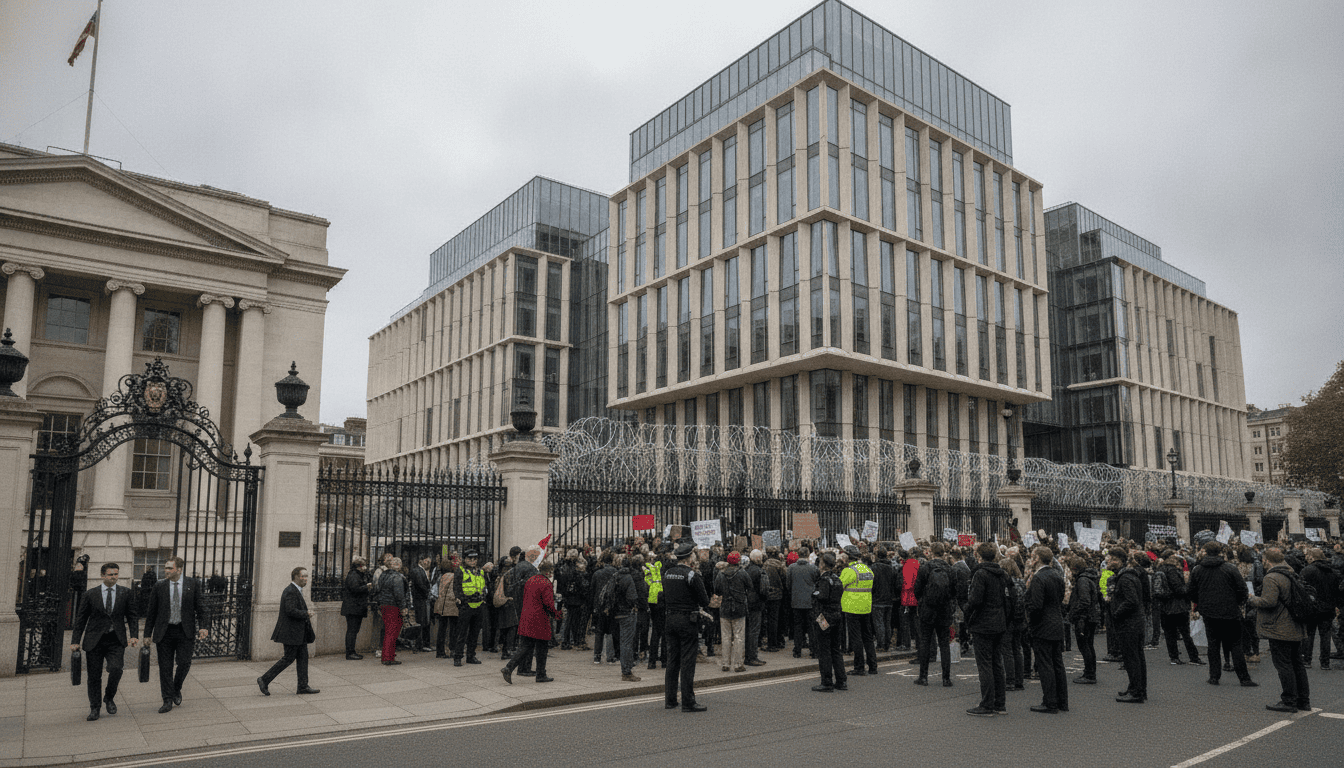
High Court clears way for Chinese mega embassy in London at Royal Mint Court
UK High Court dismisses challenge, allowing the Chinese mega embassy at Royal Mint Court to proceed; residents plan an immediate appeal amid safety concerns.
A High Court ruling on July 31 2026 has cleared the path for the Chinese mega embassy in London to be built at the former Royal Mint Court site. The decision, handed down by two judges sitting remotely, dismissed a legal challenge brought by nearby residents and businesses. The ruling affirms that planning permission granted earlier this year remains lawful and can proceed.
High Court dismisses residents legal challenge
Two judges concluded that the claims advanced by the Royal Mint Court Residents’ Association did not succeed and formally dismissed the action. The court said the housing minister and the London Borough of Tower Hamlets had followed proper legal processes when granting planning permission in January. The ruling was delivered without a full oral hearing after the parties had filed written submissions.
The residents’ association had argued the development would pose specific threats to people living and working around the site. The association, representing roughly 100 properties, said risks included repression of Chinese dissidents, surveillance and the potential for violent attacks linked to the diplomatic presence. The High Court judgment rejected those legal arguments as insufficient to overturn the planning decision.
Residents warn of security and human rights risks
Association leaders warned that the Chinese mega embassy in London could become a focal point for coercive activity directed at critics of the Chinese government. Luke Pollard, the association’s head, said the presence of the facility raised fears about enforcement of Chinese laws on foreign soil and the safety of residents who have expressed political views. The group also raised the prospect of demonstrations escalating into violent confrontations and the strain that could place on local policing resources.
Those representations framed much of the residents’ legal case but did not persuade the court that the planning process had been unlawfully conducted. The association pledged to appeal the decision and continue campaigning against construction. Opposition to the scheme has also been raised in parliament and in public debate by activists concerned about civil liberties.
Planning authorities say approval met legal tests
The Ministry of Housing Communities and Local Government and Tower Hamlets Council both defended their handling of the application. Officials said they had conscientiously considered public safety, human rights concerns and the potential impacts on local services before granting permission. The planning decision document recorded assessments of noise, traffic, security and heritage impacts in reaching approval.
Local council officers noted that national planning law requires decisions to be taken within a defined legal framework and that objections must meet statutory tests to reverse an approval. Ministers and local planners argued that diplomatic use of a site does not automatically trigger different planning rules and that safeguards were applied where relevant. The government ministry did not comment on operational security matters or diplomatic arrangements.
Site history and scale of the proposed complex
The site at Royal Mint Court sits adjacent to the Tower of London and comprises around 20 000 square metres of land that was acquired by China in 2018. Reports at the time said the purchase price was about $327 million and that the location carries historic and symbolic significance. Under the approved plans the development would become the largest embassy complex by area in the United Kingdom.
Planners considered the heritage setting and visual impacts as part of the application given the proximity to national monuments. The scheme would replace a mix of existing buildings and yards with a consolidated diplomatic compound featuring offices, residences and secure facilities. Local stakeholders had raised concerns about scale and how the development would alter the character of the immediate neighbourhood.
Diplomatic immunity and local safety obligations
A central element of residents’ concern was the interaction between diplomatic immunity and enforcement of UK safety standards. The association argued that on-site diplomats would be beyond the reach of British enforcement in emergencies and that this could complicate fire safety and other regulatory interventions. The High Court accepted that diplomatic immunity applies in many situations but found no legal basis to withhold planning permission on that ground alone.
Experts in international law point out that diplomatic premises remain subject to certain host state obligations and that practical arrangements are typically negotiated between foreign missions and local emergency services. Tower Hamlets Council indicated that contingency planning with emergency responders would be conducted as part of operational preparations should the embassy be established.
Political reactions and potential diplomatic fallout
The approval has prompted commentary from politicians and advocacy groups on both sides of the debate about trade ties and national security. Critics say the development raises questions about the balance between commercial relations and civic protections in the heart of the capital. Supporters of engagement with Beijing contend that diplomatic presence is a normal element of international relations and that established safeguards exist.
Observers noted the timing of the planning approval relative to recent high-level visits and diplomatic exchanges, which have intensified scrutiny of the project. The government has declined to characterise the decision as a political endorsement of any foreign administration, stressing that planning law and national interest assessments are distinct processes.
An appeal against the High Court ruling has already been signalled by the residents’ association and is expected to progress on an expedited timetable. The association maintains it will pursue all available legal avenues while continuing public campaigning against the development.
Legal and local stakeholders will now monitor whether the appeal succeeds and whether any mitigation measures are negotiated before construction begins. The dispute is likely to remain a focal point for broader debates about diplomatic footprint, urban safety and the governance of London’s historic riverfront.
