
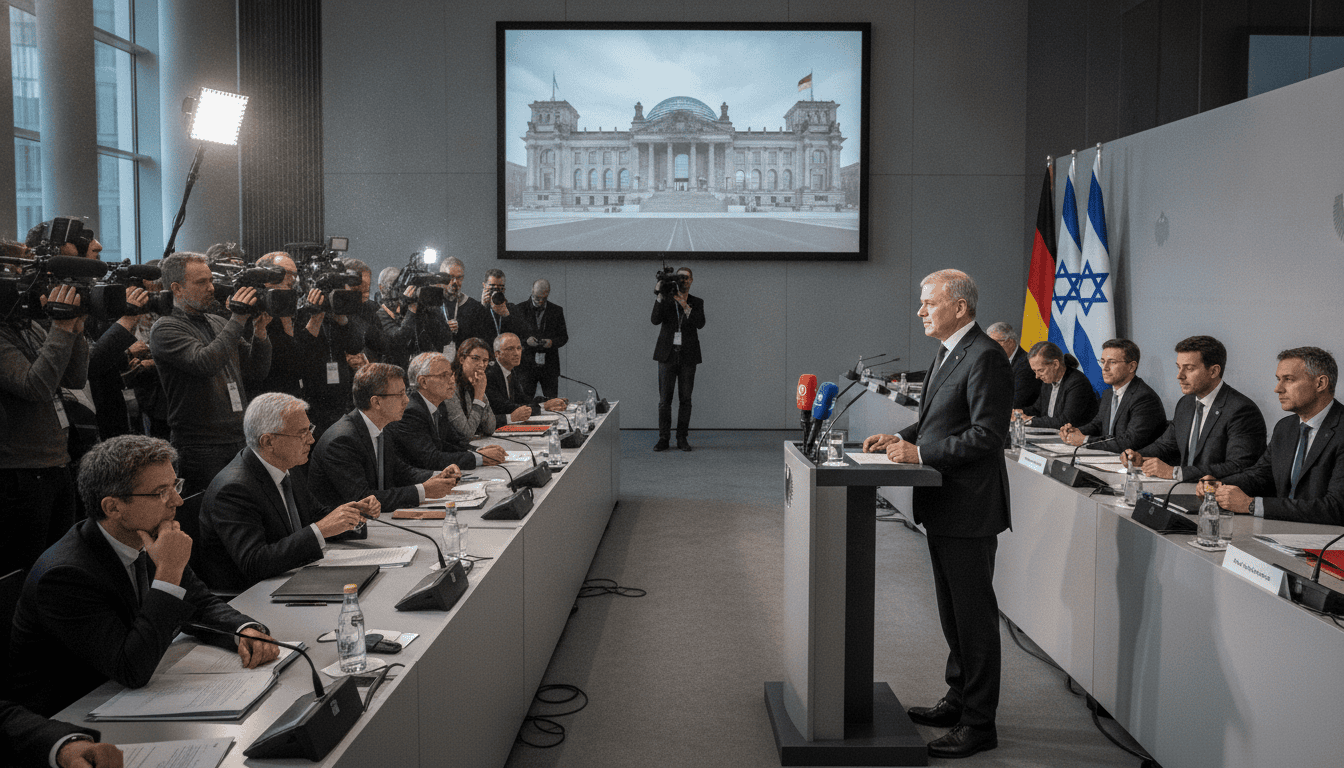
Staatsräson Debate Reignites in Germany Over Pledge to Israel’s Security
Germany’s ‘Staatsräson’ pledge — that Israel’s security is a German raison d’état — has come under renewed scrutiny since October 7, 2023 amid Gaza war debates.
The debate over Germany’s Staatsräson has intensified in national politics, media and civil society as critics question whether the 2008 commitment to Israel’s security still serves Germany’s strategic and moral interests. Voices across the political spectrum have pressed ministers and lawmakers to explain how that pledge shapes policy toward an Israeli government accused by some observers of rights violations. The issue has become a focal point for larger arguments about Germany’s postwar responsibilities, foreign policy priorities, and the limits of historical obligations.
Merkel’s 2008 Pledge and Its Legacy
Angela Merkel first framed Israel’s security as a German Staatsräson during a speech to the Knesset in 2008, a formulation that has since become a touchstone for Berlin’s policy toward Israel. That commitment was widely understood as an effort to enshrine a moral and geopolitical obligation rooted in Germany’s Nazi-era history and the Holocaust.
Over the years successive governments have cited the Staatsräson as a justification for close defence, intelligence and diplomatic cooperation with Israel. Critics now argue that invoking Staatsräson without clear boundaries has insulated policy from necessary scrutiny, particularly when Israel’s actions have drawn international criticism during the Gaza conflict that escalated after October 7, 2023.
Political Parties and Parliamentary Debate
Debate in the Bundestag has sharpened as parties seek to balance constitutional memory with current geopolitical realities. Lawmakers from the left and centre-right have publicly pressed the government for clarity on how Staatsräson informs arms exports, humanitarian aid and diplomatic engagement.
Coalition partners face internal tensions as backbenchers and caucuses push for greater oversight and new parliamentary debates. Opposition parties have used the issue to challenge government coherence, arguing that a reappraisal of Staatsräson could lead to more transparent decision-making on military and humanitarian policies.
Public Opinion and Media Scrutiny
German newspapers, broadcasters and social platforms have amplified questions about the practical effects of Staatsräson on foreign policy choices. Editorials and investigative pieces have probed whether the pledge has constrained policy options or shielded allied actions from legal and ethical assessment.
Public opinion surveys and street-level protests reflect a divided populace: many citizens express solidarity with Israel rooted in historical responsibility, while others increasingly prioritize international law and civilian protection in Gaza. This split has translated into intensified media scrutiny of politicians who invoke Staatsräson without detailed policy explanations.
Diplomatic and International Ramifications
Germany’s repeated reference to Staatsräson has consequences beyond domestic politics, shaping relations with European partners, the United States and Middle Eastern states. Allies watch how Berlin balances historical commitments with international law, and some have called for coordinated diplomatic responses to the humanitarian crisis in Gaza.
At the same time, critics abroad question whether Staatsräson as practiced limits Germany’s ability to mediate or to endorse international initiatives that demand criticism of Israeli policies. Diplomatic officials say maintaining security cooperation while addressing human rights concerns requires careful, often confidential, balancing acts.
Legal and Ethical Questions Raised
Legal scholars and human rights organizations have urged a clearer framework for how Staatsräson interacts with Germany’s international legal obligations. They argue that an unconditional pledge to safeguard another state’s security cannot override commitments to international humanitarian law and human rights conventions.
Ethicists stress that historical responsibility should not preclude critical engagement when a partner’s actions may violate international norms. Calls for a principled, transparent policy approach include proposals for parliamentary review mechanisms and clearer guidelines for military assistance and arms transfers.
Policy Choices Ahead
Ministers and party leaders now face a choice between reaffirming the Staatsräson in broad terms or redefining it with explicit caveats tied to legal and humanitarian standards. Any move to reinterpret the pledge will require careful framing to retain Germany’s historical responsibilities while responding to contemporary expectations from the electorate and international partners.
Lawmakers are expected to reopen parliamentary debates and committees to scrutinize the policy implications of Staatsräson more closely. How Berlin reconciles moral obligation with legal accountability will shape Germany’s standing in Europe and its influence in efforts to reduce violence and promote a political resolution.
The renewed discussion over Staatsräson has made clear that Germany’s historical commitments remain politically potent, but their application in a changing Middle East is increasingly contested and likely to shape debates in the Bundestag and the public sphere for months to come.
