
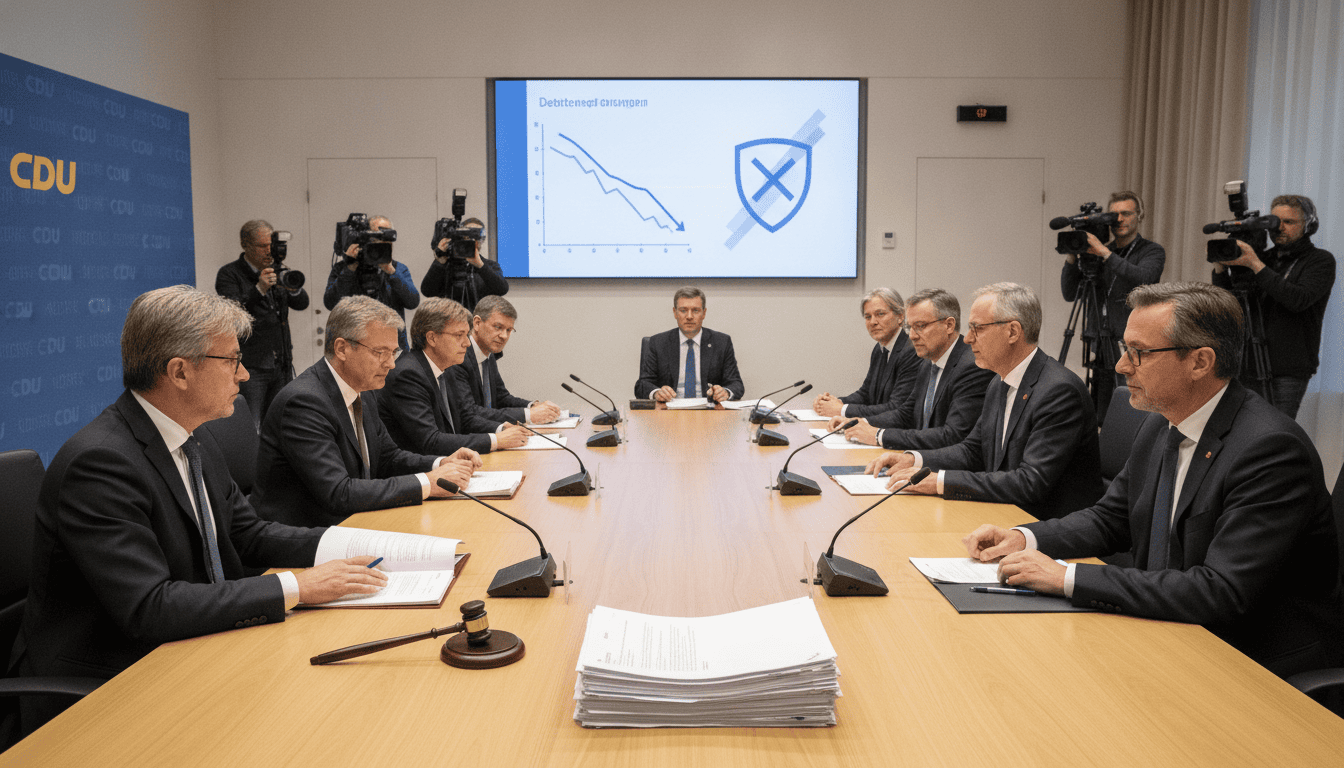
Germany’s CDU adopts strict stance on debt brake reform, opposing wider debt exemptions
German CDU finance committee backs a narrow approach to debt brake reform, seeking limits on new borrowing and phasing out defense exceptions.
The CDU’s federal finance working group has endorsed a position paper that would tighten, not loosen, rules on Germany’s debt brake reform, setting the scene for a heated clash with coalition partner the SPD over public borrowing. The decision signals that the CDU will only accept changes that make new debt harder to take on, while proposals to expand borrowing room for long-term public investment face firm resistance.
CDU panel sets conditions for debt brake reform
The CDU’s Federal Committee on Fair Taxes and Sound Finances framed its proposal around limiting future borrowing and closing perceived loopholes in the existing debt rule. The document demands clearer definitions for exceptions and tighter deficit caps for both federal and state budgets, arguing fiscal sustainability and compliance with European fiscal norms must guide any reform.
Party figures involved in drafting the paper emphasized a fiscal philosophy of aligning spending with revenues and warned of rising interest burdens on public finances. The paper, which includes proposals from Berlin finance senator and CDU candidate Stefan Evers, rejects broad relaxations that would make long-term indebtedness easier.
Defense spending exception to be phased out
A central plank of the CDU draft is a staged removal of the special borrowing allowance for defense. Under current rules, spending that strengthens defence capability above a threshold tied to GDP can be financed by debt; the CDU document proposes gradually raising that threshold from 2030 onward so NATO commitments are financed from tax revenues over time.
Supporters of the change argue that financing recurring defence obligations with debt would create lasting fiscal pressures and undermine intergenerational equity. Opponents counter that exceptional treatments are needed for security challenges and for rapid capability buildups tied to alliance commitments.
Merz signals limited appetite for reform this term
The debate intensified after CDU leader Friedrich Merz said at a recent summer press appearance that he sees little chance for a substantive debt brake reform within the current legislative term. He pointed to high procedural and political hurdles, noting that changes would require broad parliamentary majorities that are currently unlikely to form without support from parties the CDU rules out collaborating with.
Merz’s comments have been interpreted within the coalition as a sign that the CDU may not actively pursue the Koalitionsvertrag commitment to modernize the debt rule, intensifying mistrust among partners who conditioned other fiscal agreements on reform.
Experts split — commission hands competing proposals to finance minister
An expert commission convened to draft reform options delivered its recommendations this week to Finance Minister Lars Klingbeil (SPD), but failed to produce a unified blueprint. Members offered contrasting concepts: one approach aligns with the CDU’s emphasis on debt discipline, while another mirrors SPD calls for broader borrowing leeway to finance sustained public investments.
Minister Klingbeil has insisted he remains committed to the coalition agreement’s call to modernize the debt brake and pressed for political decisions despite the commission’s division. He framed the reform as urgent to secure future investments and said policymakers must choose a path even without technical unanimity.
Cross‑cutting alliances reshape the debate
The dispute has produced unusual alignments beyond tidy party lines. The trade union–linked Hans‑Böckler Foundation recently warned against permanently funding defence spending by borrowing, echoing the CDU’s fiscal caution with a labour voice worried about long‑term interest burdens. At the same time, the Greens and parts of the SPD argue that exceptions should be expanded to accommodate investments tied to security, climate and social infrastructure.
Development Minister Reem Alabali Radovan has urged broader debt-financed exemptions for areas she considers part of “civil security,” citing humanitarian and infrastructure projects that sustained millions in crisis regions. Greens leaders have accused the CDU of backtracking on prior agreements, saying parliamentary majorities for reform remain feasible if parties adhere to prior commitments.
Parliamentary battleground looms after summer recess
The disagreement could harden into a major coalition test when parliament returns from its summer recess, with the debt brake reform potentially becoming a fulcrum for wider fiscal disputes. The CDU’s stance risks making compromise difficult because a constitutional or statutory overhaul would need supermajorities, forcing broader negotiations that the CDU says cannot include collaboration with certain parties.
Observers warn the standoff may force ministers and parliamentary groups to prioritize which investment goals are politically achievable and which must be shelved or financed differently. The coming months will likely involve intense bargaining over technical definitions of exceptions, the timeline for any changes, and safeguards to limit structural debt growth.
The conflict over debt brake reform has exposed deep philosophical differences about Germany’s fiscal future and how to balance investment needs against sustainable public finances, setting the stage for a potentially decisive political confrontation between the coalition partners.
