
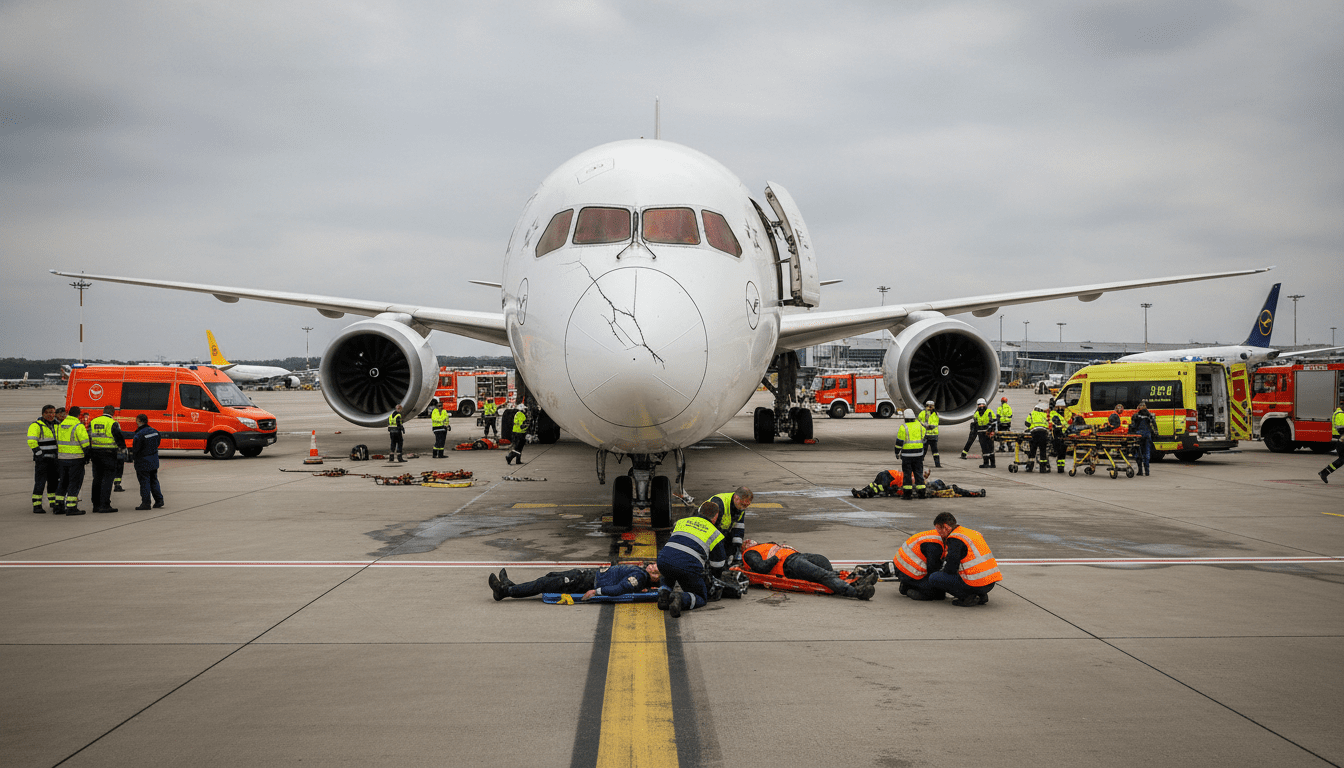
Lufthansa Boeing 787 nose gear collapse at Frankfurt gate injures several staff
Lufthansa Boeing 787 nose gear collapse at Frankfurt Airport injures multiple staff, damages a nearly new Dreamliner, cancels a transatlantic flight and prompts an immediate safety investigation.
The nose landing gear of a Lufthansa Boeing 787-9 collapsed while the aircraft was parked at a gate at Frankfurt Airport on June 4, 2026, causing the jet’s nose to drop to the ground and injuring several crew and ground staff who were on board and in the vicinity. Passengers had not yet boarded for the scheduled flight to Los Angeles, and authorities and the airline opened an investigation into the cause. (apnews.com)
Nose gear failure at the gate
Witness video and images from the scene showed the Dreamliner’s forward fuselage resting on the ramp and the nose gear bay doors damaged after the sudden collapse. The incident occurred while the aircraft was at a standstill at a gate in Terminal 1, with ground handling operations underway before boarding began. (apnews.com)
Airport staff immediately secured the area and emergency medical teams attended to injured employees, while ramp operations at the affected stand were halted to allow investigators safe access to the aircraft. Frankfurt Airport and Lufthansa worked to clear the stand and reroute ground traffic around the scene as initial assessments were completed. (internazionale.it)
Injuries and emergency response
Lufthansa confirmed that several employees sustained injuries and were receiving medical attention after the nose dropped; the airline said passengers were not on board at the time. Local emergency services and airport medical teams treated the injured on site before transporting any who required further care to nearby hospitals. (apnews.com)
Authorities described the injuries as non-fatal in early statements, and Lufthansa said it was cooperating with emergency responders and regulatory investigators. The company did not immediately provide a detailed update on the condition of those hurt, saying only that support was being provided to affected staff. (internazionale.it)
Aircraft identity and extent of damage
Aviation monitoring sites and industry reports identified the aircraft as a Boeing 787-9 recently added to Lufthansa’s fleet, with sources noting the jet was delivered to the carrier in January and had completed a limited number of revenue flights since entering service. Aviation trackers and specialist outlets recorded significant forward fuselage damage and the loss of nose gear bay doors in the collapse. (aviation24.be)
Images circulating on social media and in press coverage showed the nose contacting the ramp surface and structural components around the gear bay affected, suggesting costly repairs and an extended removal from service. Airline operations staff subsequently removed the aircraft from planned rotations, and the scheduled transatlantic departure was canceled. (airdatanews.com)
Flight cancellations and operational impact
The affected flight to Los Angeles was canceled following the incident, leaving passengers to be rebooked and disrupting long-haul scheduling at Lufthansa and partner carriers. Ground operations at the terminal were adjusted to manage passenger flows and accommodate aircraft diversions or replacements where possible. (apnews.com)
Lufthansa’s operations center and customer service teams typically work to re-accommodate travelers on alternate flights or provide refunds when aircraft are withdrawn from service, and the airline indicated it would contact affected passengers once logistics were confirmed. The airline also pledged to keep the public informed as investigators assess what happened. (internazionale.it)
Investigative avenues and preliminary causes
Regulators, Lufthansa and Boeing said they were investigating the sequence of events. Boeing acknowledged awareness of the incident and said it was supporting the customer, while industry experts stressed investigators will examine maintenance records, ground handling procedures and any mechanical systems tied to nose gear locking and extension. (apnews.com)
A former U.S. federal aviation crash investigator cited in reporting noted it is unusual for a nose gear to collapse while an aircraft is stationary, identifying possible causes that include mechanical failure, maintenance error or an incorrectly positioned safety pin during ground work. Investigators are expected to inspect the strut, actuators and locking mechanisms and review service history and technician actions. (apnews.com)
Context within the 787 program and past incidents
The Dreamliner program has faced scrutiny in recent years over quality control and production anomalies, and investigators will likely review whether any broader manufacturing or design factors played a role in this ground incident. A similar 2021 event at London Heathrow involved inadvertent nose gear retraction during maintenance, and post-incident reports underlined the need for robust procedural safeguards. (apnews.com)
Industry analysts said the immediate priority is establishing a factual sequence and ensuring injured staff receive care, while longer-term implications could range from revised ground procedures to targeted inspections across operators if a systemic fault is identified. Boeing and airlines routinely cooperate with regulators on such probes to determine causal factors and mitigation steps. (internazionale.it)
The investigation into the June 4, 2026 incident at Frankfurt Airport is ongoing, with Lufthansa, airport authorities, Boeing and national aviation regulators expected to release further technical findings as inspections and interviews conclude.
