
China-Philippines Clash Near Second Thomas Shoal Injures Sailor, Sparks Diplomatic Tensions
Clash near Second Thomas Shoal injures a Philippine sailor as Manila and Beijing trade accusations; tensions rise during regional foreign ministers’ talks.
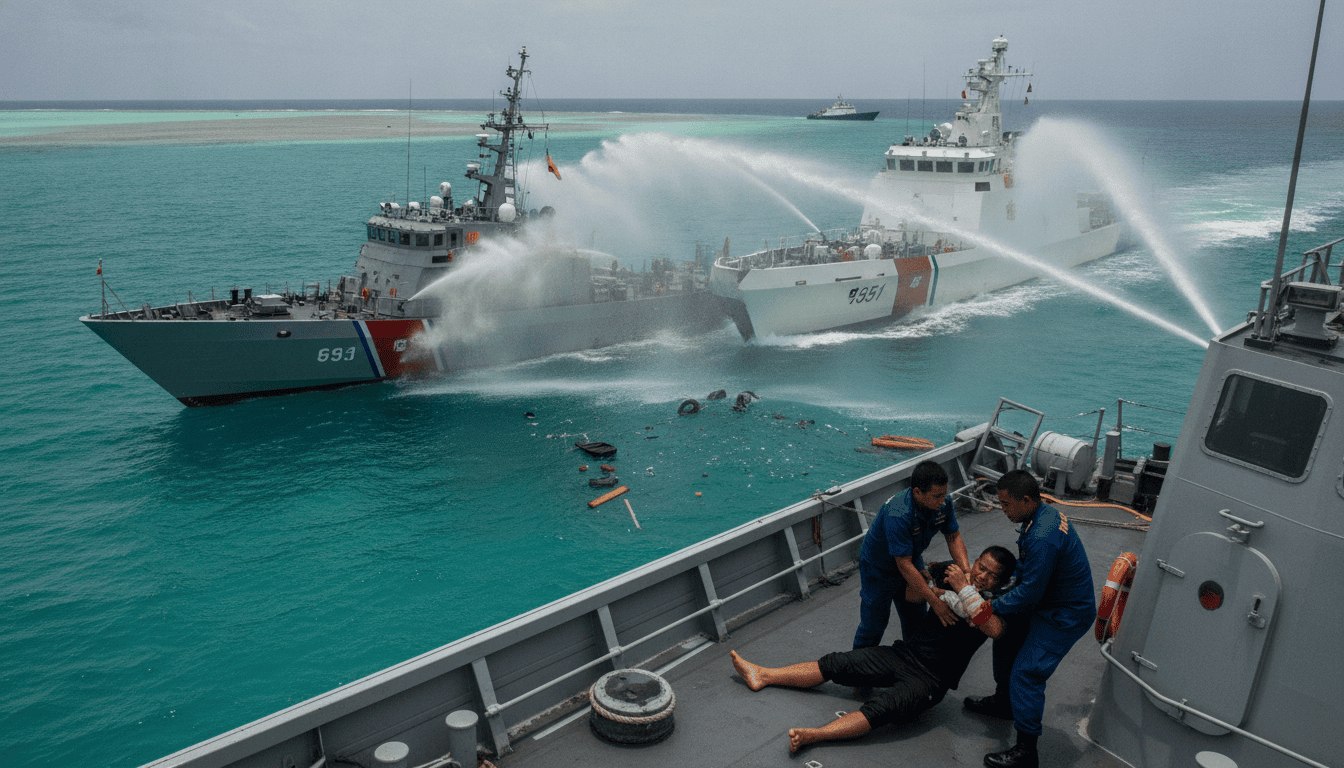
The Philippines and China traded sharply different accounts after a confrontation near the Second Thomas Shoal on Monday left a Philippine sailor with head injuries, Manila said. The incident involved coastguard and naval vessels close to the grounded Philippine warship BRP Sierra Madre, which Manila maintains as an outpost on the shoal. The Second Thomas Shoal sits at the center of overlapping maritime claims in the South China Sea and has long been a flashpoint between the two countries.
Manila says sailor struck during harassment
The Philippine military said a Chinese coastguard vessel approached the Sierra Madre and harassed personnel delivering supplies, adding that one sailor sustained blows to the head from a wooden baton. Officials described the injured sailor as receiving medical attention and being in stable condition while naval authorities documented the alleged assault and damage to Philippine boats. Manila framed the episode as part of a broader pattern of interference with lawful Philippine maritime operations in its exclusive economic zone.
The government also reiterated calls for Beijing to respect the 200-nautical-mile exclusive economic zone rights granted under the United Nations Convention on the Law of the Sea. Philippine spokespeople said routine resupply missions to the BRP Sierra Madre are legitimate activities to sustain an established presence and that disruptions jeopardize safety. Military and civilian agencies began compiling statements and photographic evidence to present to international partners.
Beijing says Philippine vessels rammed Chinese patrol boat
China’s coastguard issued a contrasting narrative, saying two Philippine vessels ignored warnings and struck one of its patrol boats, causing damage and prompting a defensive response. Beijing rejected the allegation that its personnel assaulted a Philippine sailor and accused Manila of provocation in waters it claims largely as its own. The Chinese account framed the episode as enforcement of maritime order against foreign vessels it considers trespassers.
State-run Chinese media and official statements emphasized that China acted after repeated warnings, asking that other countries refrain from escalating the encounter. Beijing has long maintained expansive claims across most of the South China Sea, and it has publicly urged removal of the Philippine outpost at the Second Thomas Shoal. The competing statements harden an already polarized public diplomatic posture on both sides.
Legal status of Second Thomas Shoal under UNCLOS and arbitration
Under the United Nations Convention on the Law of the Sea, the Second Thomas Shoal lies within the Philippines’ exclusive economic zone, Manila notes, and the 2016 Permanent Court of Arbitration ruling sided with the Philippines on several maritime entitlements. China refused to participate in the 2016 arbitration and has not accepted the tribunal’s award, continuing to assert historic maritime rights across much of the sea. The legal dispute therefore remains unresolved in practice despite the tribunal’s findings.
Analysts say the shoal’s status is emblematic of the larger contest over maritime law, national sovereignty and access to fisheries and potential energy resources. Both sides have used legal and diplomatic channels to bolster claims while maintaining operational activities on and around features such as the Sierra Madre. The presence of an intentionally grounded patrol vessel has been Manila’s signal of continuous occupation and sovereign assertion.
Diplomatic backdrop: ASEAN foreign ministers meeting in Manila
The incident occurred as foreign ministers from across Southeast Asia, including China’s Wang Yi, were meeting in Manila, elevating the diplomatic stakes of the encounter. Organizers had expected maritime tensions to figure prominently on the agenda, and the clash injected an immediate real-world incident into the talks. Several Southeast Asian delegations are sensitive to any escalation that might complicate consensus on regional security statements.
Manila’s hosting of the meeting placed it in the spotlight, forcing swift responses from ministers present and prompting bilateral consultations that stretched beyond scheduled sessions. Diplomats said the timing made the incident harder to contain through back channels and raised pressure on ASEAN to address maritime disputes more forcefully. Observers noted that such confrontations during high-level meetings can test mechanisms for crisis communication.
International reactions and implications for regional security
The US State Department condemned what it called “dangerous and aggressive” actions by China toward Philippine personnel and urged restraint, reflecting Washington’s broader security partnership with Manila. The statement said the pattern of harassment undermines regional peace and stability and contradicted China’s stated commitments to resolve disputes peacefully. Other maritime stakeholders and allied countries expressed concern about freedom of navigation and the safety of civilian and naval crews in contested waters.
Security analysts warn that repeated incidents of this kind could increase the risk of miscalculation or a larger naval standoff, complicating bilateral relations and regional diplomacy. They say confidence-building measures and clear lines of communication between maritime agencies are essential to prevent small incidents from spiraling. The clash is likely to factor into diplomatic, legal and military planning in the weeks ahead as the Philippines seeks international support and China defends its enforcement actions.
The incident near Second Thomas Shoal underscores the fragility of peace in the contested South China Sea and the continuing gap between competing legal claims and on-the-water realities. Manila has vowed to pursue diplomatic and legal avenues while maintaining resupply missions to the Sierra Madre, and Beijing has signalled it will continue to challenge activities it deems unauthorized. As regional ministers conclude discussions in Manila, attention will turn to whether ASEAN and external partners can press for de-escalation and improved mechanisms to safeguard maritime safety.
