
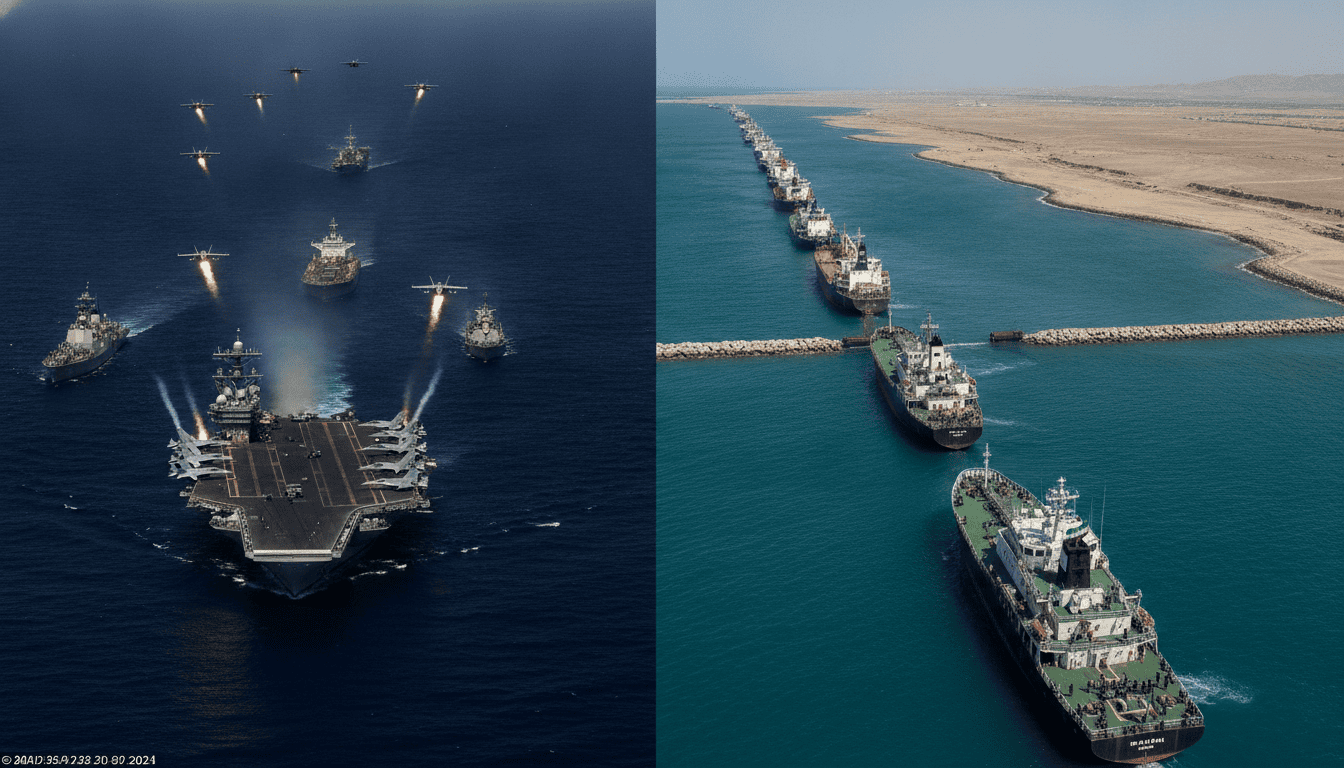
US attacks on Iran enter tenth night as Tehran strikes regional US bases and closes Strait of Hormuz
US attacks on Iran continue into a tenth consecutive night as Washington pounds Iranian command centres while Tehran retaliates across the Gulf and reasserts control over the Strait of Hormuz, raising fears of wider escalation.
Tenth night of US attacks extends campaign
US Central Command said American forces conducted a roughly five‑hour operation that ended at 9pm Eastern on Monday, marking the tenth consecutive night of strikes on Iranian targets. The campaign, Washington says, has focused on command centres, missile and drone launch sites, maritime capabilities and air‑defence systems inside Iran.
Officials described the operations as a continuation of the coordinated Israel‑US campaign that began with strikes on 28 February, despite a June memorandum of understanding that briefly appeared to pause hostilities. The memorandum, signed on 17 June, included provisions intended to end military operations and lift a naval blockade, but its terms have since been contested by both sides.
Targets reported: command, missile, maritime and radar sites
US statements said the strikes were designed to degrade Iran’s ability to launch missiles, drones and maritime operations that threaten regional forces and shipping. Central Command identified specific categories of targets — including air‑defence systems and facilities it linked to Iran’s maritime capabilities — though it did not publish a full target list.
Iranian outlets and state statements reported damage to a range of sites and vowed continued operations until what they described as deterrence was achieved. Tehran’s account of the fighting emphasized damage to radar arrays, launch infrastructure and military command posts, framing the strikes as a response to what it calls sustained US aggression.
Iran’s retaliatory strikes hit bases in Bahrain, Kuwait and Jordan
The Islamic Revolutionary Guard Corps (IRGC) said it launched coordinated missile and drone strikes against US facilities in Bahrain, Kuwait and Jordan overnight. Iranian statements reported hits on radar and defence systems, including an alleged destruction of a Patriot battery in Al‑Riffa and damage to installations near Muharraq.
Tehran also claimed strikes on multiple sites in Kuwait, naming Ahmed Al‑Jaber and Ali Al Salem airbases, and said its forces struck buildings and antennas at Camp Arifjan in Kuwait and a helicopter area at Camp Al‑Adiri. State broadcasters reported the IRGC assertion that an F‑15 was damaged inside a shelter at a Jordanian base during the operation.
Strait of Hormuz closure and attacks on tankers
Iran’s military sources said they placed the Strait of Hormuz under effective control and would keep it closed while US attacks continue, a statement that immediately raised alarm among shipping and energy markets. Iranian outlets reported explosions and “massive fires” aboard two tankers that attempted to transit an alternative southern route near Oman, and rescue teams were reported to be evacuating crews.
The IRGC’s commentary framed the closure as leverage to halt exports of oil, gas and other commodities from the Gulf until what it called US “evil” in the region ceased. Western and regional officials have warned that sustained closure or recurring attacks on commercial shipping would have broad economic and security consequences.
Domestic political pressure and calls to end the war
Pressure in Washington intensified as Senate Democrats moved to force another vote to end military operations, with Senate Minority Leader Chuck Schumer urging an immediate halt and the return of US troops. Schumer said in a public post that prolonging the campaign further endangered US service members and that Democrats would compel Republicans to register their positions on the conflict.
The US withdrawal from the 17 June agreement, which President Trump declared void on 8 July and which coincided with the resumption of strikes and a restored blockade, has become a focal point of criticism from lawmakers seeking a clearer strategy and exit plan. Voices from both parties warned of mission creep as airstrikes and counterstrikes spread across multiple countries.
Markets and mediation amid rising tensions
Markets reacted with volatility amid reports of renewed mediation efforts, with Brent crude dipping to $88.87 a barrel and US West Texas Intermediate for September trading at $82.47. Traders and analysts said the immediate price moves reflected a combination of supply‑risk premiums and short‑term profit‑taking as mediation hopes fluctuated.
Diplomatic sources said back‑channel contacts and third‑party mediation attempts were under way, though participants cautioned that official talks would be difficult while kinetic operations continue. Regional governments have expressed concern about spillover effects and the potential for miscalculation that could draw additional states into direct confrontation.
US and Iranian accounts remain in sharp contradiction over the scope and effects of recent operations, leaving independent verification limited in many cases. International organisations and neutral governments have urged both sides to de‑escalate and to resume serious talks centered on concrete security arrangements for the Gulf.
The immediate outlook hinges on whether the parties will accept renewed negotiations tied to the June memorandum’s framework or continue military pressure that risks wider confrontation. The human, economic and geopolitical stakes are high: further strikes and a prolonged closure of the Strait of Hormuz would deepen regional instability and strain global energy markets.
