
New Calculus in the Israel-Hezbollah Conflict as Beirut Strike Is Averted
U.S. pressure appears to be reshaping the Israel-Hezbollah conflict after a large-scale strike on Beirut’s southern suburbs was called off, raising new questions about rules of engagement and regional influence.
The near-averted bombardment of Beirut’s southern suburbs has prompted fresh debate over whether new rules are shaping the Israel-Hezbollah conflict, with Washington signaling limits on strikes against the capital while tolerating operations along Lebanon’s border areas. The apparent last-minute cancellation has been portrayed by Hezbollah as a victory, even as U.S. officials insist their intervention aims to curb broad attacks on Beirut and reduce the risk of wider escalation. Regional diplomacy and Tehran’s influence over Hezbollah have become focal points in assessments of how the conflict may evolve in the coming days.
Foiled Strike on Beirut’s Southern Suburbs
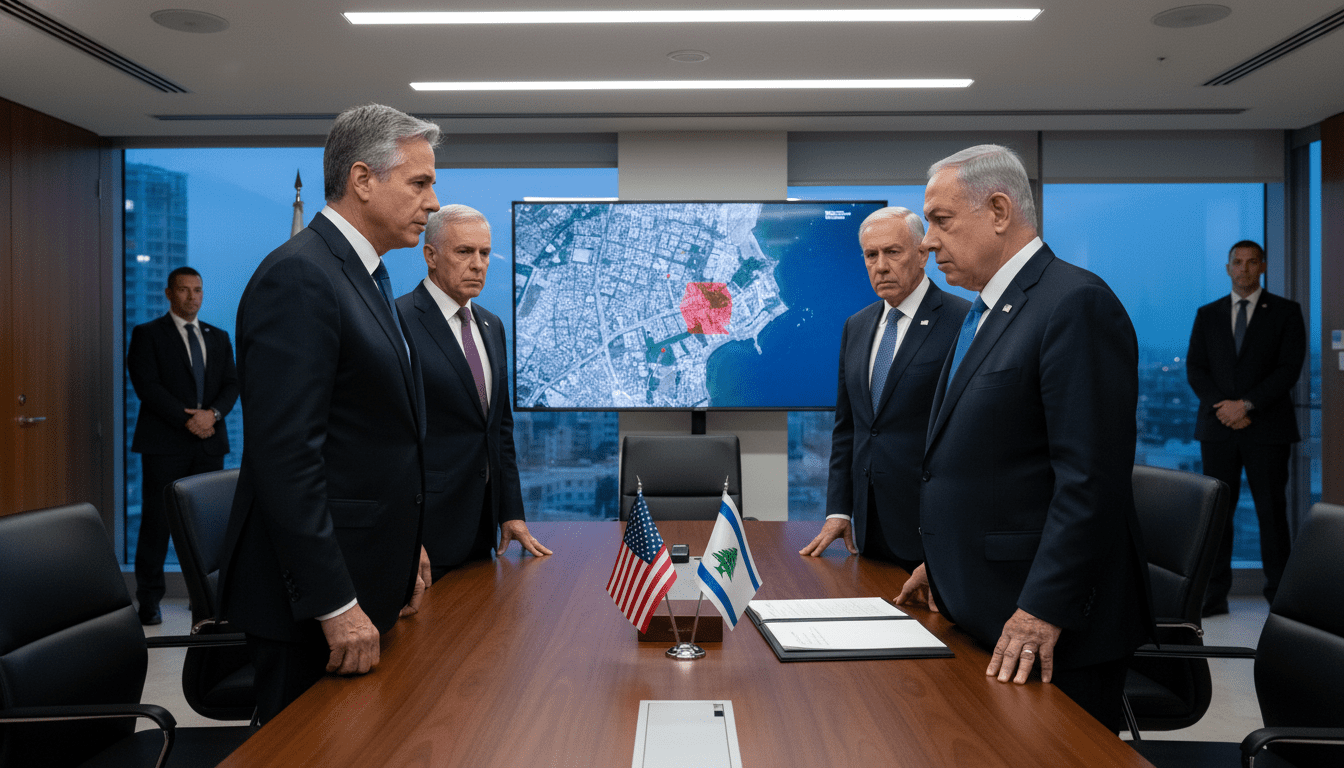
A large-scale Israeli operation targeting the southern suburbs of Beirut was reportedly called off at the final hour, averting immediate destruction in a densely populated part of the Lebanese capital. The aborted assault has been framed by local actors as evidence of a possible new understanding that shields Beirut from wholesale air campaigns. Residents and officials in Beirut described a tense atmosphere after air raid preparations were visibly scaled back, underscoring how fragile the situation remains.
Military analysts say the cancellation does not equate to a durable ceasefire but may reflect a tactical recalibration driven by political and diplomatic concerns. Hezbollah’s own statements lauded the halted attack as a triumph of deterrence, even as the group continues rocket strikes against northern Israel. The incident has therefore become a symbol of competing narratives: restraint imposed by outside powers versus battlefield gains touted by the militia.
U.S. Intervention and Emerging Constraints
U.S. pressure appears to have played a central role in limiting strikes against Beirut, with American officials publicly and privately urging restraint to avoid a catastrophic urban assault. Statements attributed to senior U.S. figures signaled a clear preference for preventing large-scale air strikes on the capital while accepting Israeli operations closer to the Lebanese border. Washington’s stance has been interpreted in Beirut and regional capitals as a de facto rule: no large attacks on the capital in exchange for continued operations against southern and eastern zones.
This emerging constraint seems to rest on a pragmatic calculus: prevent widespread civilian casualties and regional backlash while allowing Israel to pursue security objectives near the frontier. But the arrangement is politically volatile and depends on continued U.S. diplomatic pressure, coordination with Arab partners, and Israeli willingness to accept limits on targeting. If any of those elements falter, the balance could quickly unravel.
Hezbollah’s Narrative and Tehran’s Influence
Hezbollah has seized on the aborted Beirut strike to bolster its narrative of resilience and political clout, presenting the outcome as evidence of successful deterrence backed by its allies. The group’s propaganda emphasized that Tehran’s intervention and pressure were decisive in forcing a change of plans, a claim that has been amplified across pro-Iran media. Supporters in Lebanon and beyond framed the moment as proof that Hezbollah’s ties to Iran yield concrete strategic gains.
Observers caution that such messaging masks a more complex reality in which Tehran’s role is only one factor among many, including U.S. diplomacy and regional interlocutors pushing for de-escalation. Hezbollah remains mindful that retaliatory attacks on Israel risk triggering disproportionate reprisals against Beirut, a liability that could increase domestic pressure on the group inside Lebanon. The interplay between military initiative and political cost is therefore central to Hezbollah’s calculations.
Ongoing Talks Between Beirut and Jerusalem
Despite the fighting, negotiations between Lebanese and Israeli interlocutors are reportedly continuing, reflecting parallel tracks of diplomacy aimed at preventing a full-scale war. Lebanese officials have pursued talks in an effort to contain hostilities and address immediate security concerns along the Blue Line, while Israel has sought assurances that cross-border attacks will be reduced. These discussions are fragile and do not yet amount to a formal ceasefire.
Diplomats working the channels emphasize that progress remains incremental and contingent on credible enforcement mechanisms on the ground. A halt to strikes on Beirut would likely need accompanying guarantees that rocket attacks from southern Lebanon abate, a requirement that Hezbollah may resist without reciprocal concessions. The diplomatic engine is therefore running against a backdrop of mutual suspicion and continuing violence.
Escalation Risks and Domestic Pressure in Lebanon
The aborted strike on Beirut underscores a broader risk calculus: continued exchanges could provoke a devastating response that would deepen Lebanon’s political and humanitarian crises. Lebanese state institutions already exercise limited control in parts of the south, where Hezbollah holds significant sway, complicating government efforts to manage the conflict’s domestic fallout. Each skirmish raises the prospect of public anger and destabilization that could reshape internal politics.
Analysts warn that even confined strikes or rocket salvos carry outsized consequences in a country marked by fragile governance and economic distress. A large-scale assault on Beirut would not only cause mass casualties but also intensify pressure on the Lebanese government to act against Hezbollah, a step that could fracture the political order. For now, the balance between military action and political cost appears to be the determinant of what happens next.
The near-miss in Beirut has highlighted how international diplomacy, regional power projection, and local military calculations are intersecting to produce a new, tentative choreography in the Israel-Hezbollah conflict, but the arrangement remains precarious and subject to rapid change.
