
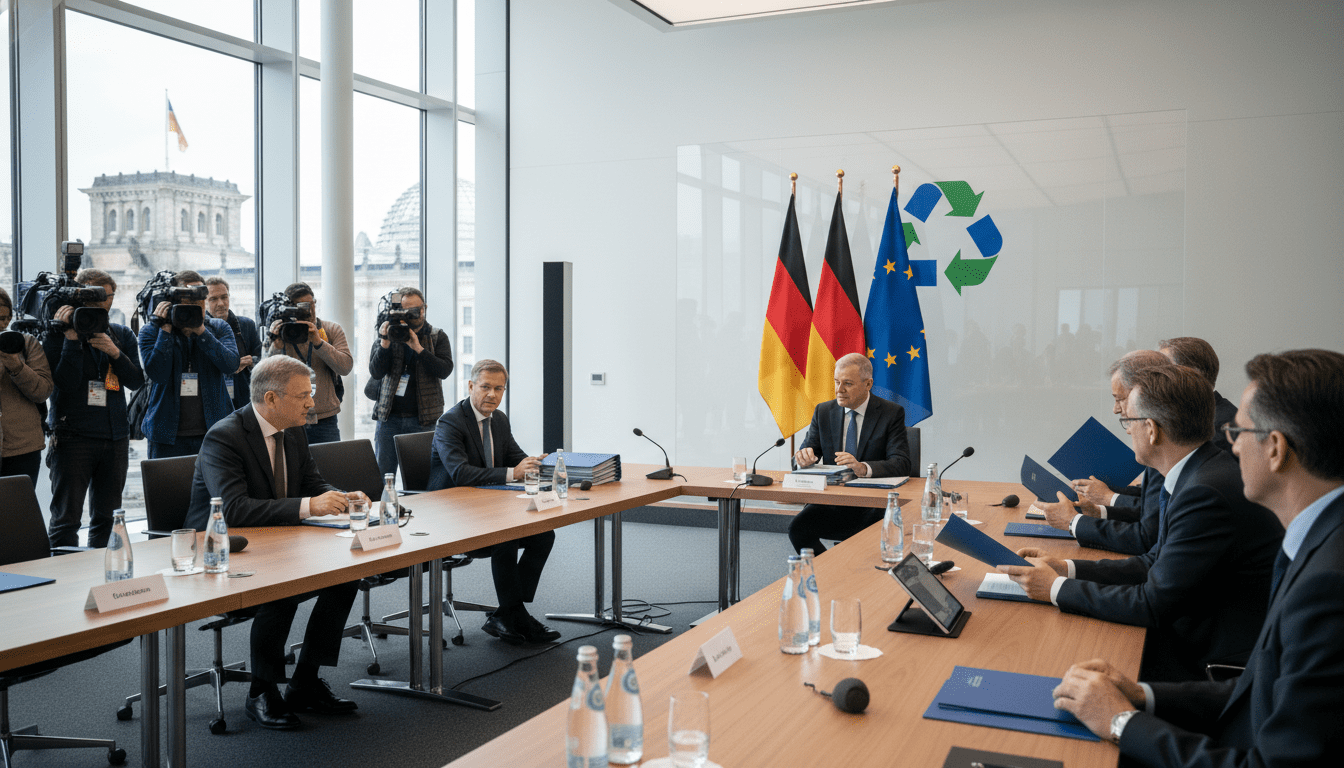
Germany Approves Circular Economy Action Programme with 12‑Point Plan and €565m Funding
Germany’s circular economy action programme launches a 12‑point plan to boost repair, reuse and recycling with digital product passports and €565m funding.
The federal cabinet approved a new circular economy action programme on Wednesday, June 3, 2026, outlining a 12‑point plan intended to strengthen product repair, reuse and recycling across the economy. The package refines the government’s 2024 circular economy strategy and sets an implementation target through the end of 2027. Officials announced immediate measures backed by initial funding and further allocations scheduled through 2030.
Cabinet decision and implementation deadline
The cabinet’s resolution formalises the 12‑point plan and ties the main implementation phase to a deadline of December 31, 2027. Short‑term measures are allocated €260 million to begin rolling out initiatives this year, with a further €305 million earmarked for the 2027–2030 period, bringing the package total to €565 million. The plan is presented as both a competitiveness and security measure to reduce dependence on imported primary raw materials.
Funding sources and relationship to 2024 strategy
Finance for the programme will come from the Climate and Transformation Fund and the federal Climate Protection Programme 2026, according to ministry statements accompanying the decision. The government says the action programme is meant to operationalise and sharpen the 2024 national circular economy strategy rather than replace it. Officials described the funding as a first tranche intended to catalyse projects, with additional budget questions to be settled during subsequent budget cycles.
Digital product passports and a networking platform
A centrepiece of the programme is a planned national platform to link companies, public administrations, researchers and civil society to accelerate sustainable products’ market entry. The government also plans to roll out digital product passports providing standardized information on chemical composition, reparability and disposal routes. Policymakers argue these tools will make recycling and reuse more efficient and give consumers and businesses clearer data for lifecycle decisions.
Regulatory measures: textiles, production and single‑use vapes
The action programme lists regulatory reforms aimed at increasing material recovery, including a proposed new textiles law to improve durability and recyclability of garments. It also includes support for improved production processes that enhance recovery of critical raw materials from end‑of‑life products. In a sign of tightening product rules, the programme reiterates plans to ban single‑use e‑cigarettes, reflecting recent parliamentary moves on disposable vaping devices.
Public procurement to boost circular markets
For the first time in explicit terms, the government commits to using public procurement more deliberately to expand demand for circular products. The cabinet text instructs federal entities and companies with majority federal ownership to increase annual purchasing volumes of durable and recyclable goods over time. The measure is framed as a market‑creating instrument, though the resolution stops short of setting quantified procurement targets or enforceable timelines.
Industry and environmental responses
Reactions from business and environmental organisations were mixed after the cabinet decision. The German Chambers of Industry and Commerce welcomed greater planning certainty and called for rapid, pragmatic implementation to translate strategy into industrial practice. The Federation of German Industries said the initiative recognises growth potential but criticised a lack of bold economic policy measures and urged faster, more reliable steps to scale up circular business models; the environmental group WWF warned the programme leaned too heavily on recycling and innovation while lacking binding targets to reduce primary resource consumption.
Key stakeholder groups have pointed to the need for clearer metrics, stronger legal instruments and predictable financing to enable companies to retool production lines and for investors to back large‑scale reuse and repair infrastructure. Both industry bodies and NGOs expect follow‑up legislation and technical guidance in the months ahead.
The programme leaves several political and practical questions unresolved, notably the absence of numerical reduction targets for primary raw material use and the lack of concrete procurement quotas. Success will depend on the speed of secondary legislation such as the proposed textiles law, the design and interoperability of digital product passports, and whether future federal budgets secure the promised funds beyond initial allocations. Implementation across federal states and alignment with EU circular economy rules will also be decisive for scaling measures nationally.
The federal decision marks a notable policy push to anchor circular economy principles in government action, but translating plans into measurable reductions in resource dependence will require clearer targets, sustained funding and coordinated enforcement across ministries and industry.
