
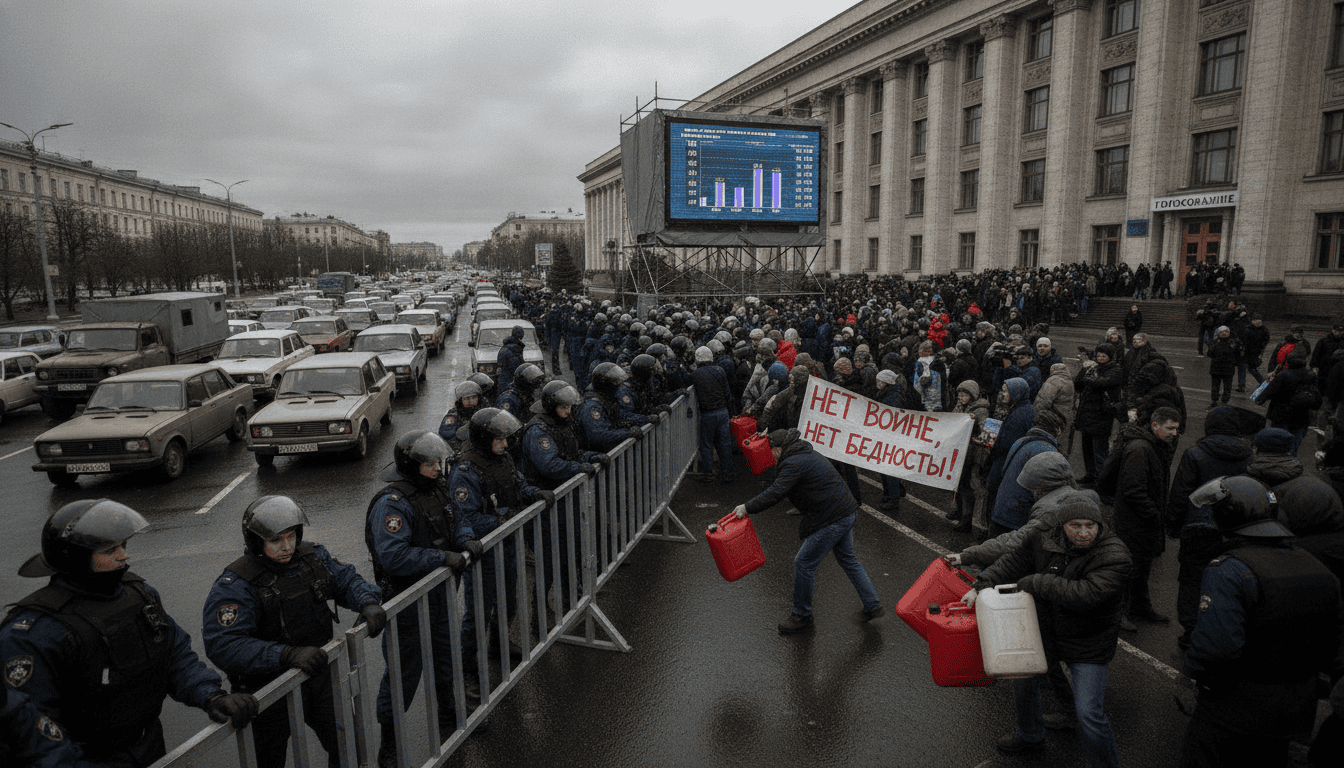
Russian parliamentary election faces domestic strains as drone strikes and fuel shortages unsettle Kremlin control
Russian parliamentary election in September 2026 faces tests as drone attacks, fuel rationing and internet blackouts challenge the Kremlin’s ability to deliver a controlled vote.
The Russian parliamentary election, scheduled for September 2026, is unfolding against a backdrop of heightened domestic disruption that threatens the Kremlin’s usual ability to stage a managed outcome. Nightly Ukrainian drone strikes against inland targets have sparked fuel shortages and intermittent internet shutdowns, bringing the war’s consequences into everyday life. Kremlin strategists now confront a more volatile electorate and logistical hurdles that complicate efforts to produce a preordained result.
Kremlin frames vote as demonstration of control
The authorities have long treated elections as a demonstration of authority rather than a contest of ideas. Officials aim to secure a plausible majority for United Russia through a blend of incentives, administrative pressure and tightly controlled opposition access. This election-cycle choreography is intended to signal stability to both domestic audiences and international observers.
Those routines are under strain as the regime struggles to mask apparent weaknesses. Even tightly managed polling data from loyal institutes hint at eroding confidence, forcing the Kremlin to recalibrate its messaging while maintaining the appearance of unity.
Drone strikes reach deep inside Russia
Ukrainian long-range drones have increasingly struck targets far from the front, including oil refineries and logistics hubs, disrupting fuel supplies and critical infrastructure. The scale and persistence of the strikes have made it difficult for Moscow to present a narrative of unbroken domestic calm.
Because the attacks are visible and disruptive, Kremlin attempts to downplay them or attribute them to sabotage face skepticism among ordinary citizens. The strikes also complicate security preparations for the vote, forcing local officials to divert resources to emergency measures.
Fuel rationing and internet blackouts aggravate public anger
Damage to refineries has led to rationing of gasoline and diesel in many regions, producing long lines at petrol stations and real strains on daily life. These shortages have become one of the clearest, most tangible grievances for voters who once accepted steady supplies as part of the regime’s social contract.
At the same time, repeated mobile internet shutdowns — justified by authorities as countermeasures to prevent further strikes — have disrupted commerce and communication. The blackouts are unpopular and have drawn internal dissent, exposing disagreement within the security apparatus over cost and effectiveness.
Elections as a stress test for regime legitimacy
For the Kremlin, the parliamentary vote is a stress test: it must mobilize enough support to make the officially declared result believable while avoiding the appearance of coercion. The state apparatus combines carrots and sticks to ensure turnout and deliverable margins for loyal parties.
Observers say the need to produce a credible façade of legitimacy becomes harder when ordinary Russians experience mounting disruptions that cannot be hidden by propaganda. The election therefore serves both as a performance for the public and a barometer of the regime’s grip.
Elite infighting reveals institutional fragility
Conflicts among elite factions have become more visible, though not necessarily indicative of imminent collapse. Competing networks within the security services, state companies and the presidential administration vie for resources and influence, a perennial feature of governance that can intensify in times of external pressure.
Historically, such turf battles have allowed the central leadership to play factions off one another and preserve control. Yet the current combination of military setbacks, economic strain and social unrest increases the stakes of those rivalries and raises uncertainty about long-term cohesion.
West faces limited leverage as Kremlin endures
Western governments have limited direct options to influence internal Russian politics and should prioritize durable measures that protect their interests, officials and allies argue. Continued support for Ukraine and enhancement of NATO defenses remain the most tangible levers available, while sanctions and diplomatic pressure have mixed and often delayed effects.
Even in a scenario where more conciliatory forces gained influence in Moscow, nationalistic currents entrenched in the military and intelligence services would likely demand retribution or push back, complicating any rapid shift toward peace.
Putin’s hold on power appears resilient for now, and the parliamentary election will likely reinforce existing structures rather than precipitate immediate change. Still, the unfolding combination of military, economic and social pressures has made what was once routine into a risky test of governance. The vote in September will be watched as a measure of how effectively the Kremlin can convert authority into an appearance of legitimacy while managing day-to-day crises that touch citizens’ lives.
