
Spahn resignation sparks CDU power play as Merz and Söder weigh faction chair and wider reshuffle
Spahn resignation forces CDU leaders into urgent talks as Merz and Söder consider candidates for the parliamentary group chair and broader government reconfiguration.
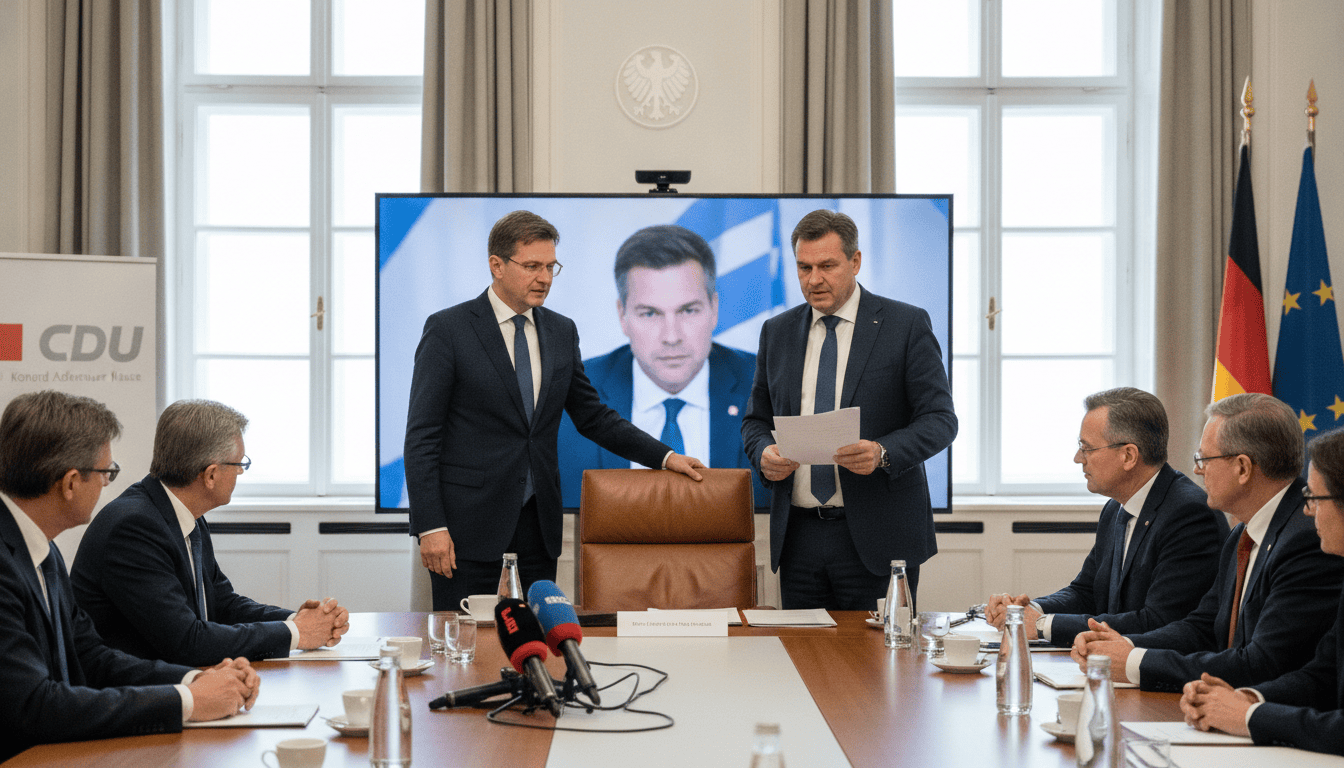
The resignation of Jens Spahn has set off a rapid round of meetings within the CDU, with party leader and Chancellor Friedrich Merz convening the CDU presidium in Berlin and coordinating with CSU chair Markus Söder over next steps. The meeting, scheduled for 11:00, carries high stakes for the Unionsfraktion because Merz and Söder jointly have the right to propose a successor for the parliamentary group chair. Party officials say no final public statement is planned immediately after the presidium meeting.
CDU presidium meets, executive bodies prepare
The CDU presidium gathered to discuss personnel implications of Spahn resignation and to map options for filling the vacancy at the head of the parliamentary group. Merz and Söder spoke over the weekend about potential nominees, signaling an early, coordinated approach to the selection process. Alongside the presidium, the CDU’s managing board and the Unionsfraktion’s executive intend to consult to decide whether changes will be limited to the faction chair or extend across the cabinet and party posts.
Sources inside the parliamentary group stress that while many names have circulated, no binding decisions had been taken as of the meetings. There is a sense in party circles that the moment could be used for a tactical refresh rather than a narrow replacement, but timing and coalition sensitivities will shape how far Merz pushes a wider reordering.
Merz signals opportunity to rethink government lineup
On Sunday Merz described the situation as an “opportunity” to reconsider the government’s composition, remarks that party insiders interpreted as an invitation to explore broader changes beyond the faction chair. That comment, aired on ZDF, encouraged discussion inside the CDU about leveraging Spahn resignation to strengthen the party’s stance in government. Officials caution, however, that any major ministerial moves would require careful coordination with coalition partners to avoid destabilising the governing alliance.
The chancellor’s reference to a possibility of rethinking the government has added momentum to speculation about several high-profile names and has prompted quick, informal consultations among senior CDU and CSU figures.
Names floated for parliamentary group chair and ministerial posts
Several senior figures have been repeatedly mentioned as possible beneficiaries of any reshuffle triggered by the Spahn resignation. Thorsten Frei, the chancellery chief whose office has coordinated government business since last year, is cited as a candidate who combines administrative experience with parliamentary credentials. Frei’s background as First Parliamentary Secretary during opposition years is seen as an asset for managing the Unionsfraktion.
Carsten Linnemann, the CDU’s secretary general, is another name under consideration after he was left without a ministry following the coalition formation. Linnemann had sought the labour portfolio and later declared he would not take other ministerial posts, but discussions within the party have reopened possibilities if a comprehensive reallocation is pursued.
Regional power and party debts factor into choices
Günter Krings, deputy parliamentary group chair responsible for interior and justice issues, has been suggested in part because of his standing within the influential North Rhine-Westphalia delegation. Krings’ profile has risen after internal party disputes, and some members view a high-profile promotion as a way for Merz to mend internal balances after past decisions, including the Konrad-Adenauer-Stiftung nomination contest.
Alexander Dobrindt, the CSU interior minister, is also being watched: he has positioned himself as a key broker within the coalition and has driven recent migration policy shifts. His effectiveness in the ministry could argue against moving him, but his capacity to bring coalition partners together makes him a potential candidate for higher-profile coordination roles should a wider reshuffle be pursued.
Coalition dynamics and political risks
Any attempt to reassign ministers or elevate faction leaders will require delicate handling of coalition partners, chiefly the SPD, which holds several cabinet posts central to government stability. The SPD’s reaction to personnel changes, especially if they touch ministries with cross-party responsibilities, could determine whether the CDU can press for a substantial reorganisation. Party strategists warn that misreading coalition tolerance could create friction that outweighs any internal gains.
Public messaging and parliamentary arithmetic will also shape the timetable. The Unionsfraktion needs a leader who can manage Bundestag floor operations and present a coherent legislative agenda; selecting such a figure quickly reduces a window of uncertainty but also compresses consultation time with regional groups.
Timeline and likely next steps
Officials expect the immediate priority to be naming a candidate for the Unionsfraktion chair, a choice Merz and Söder are empowered to propose. The CDU presidium and the parliamentary group’s executive will refine options, after which the full faction must ratify a nominee. If the party opts for a broader reshuffle, consultations with coalition partners and inter-ministerial planning would follow, extending the process into weeks rather than days.
For now, the focus remains on stabilising parliamentary leadership and assessing whether Spahn resignation will trigger a limited succession or catalyse a wider realignment of party and government posts.
The coming days will reveal whether the CDU uses this moment to settle the faction chair and preserve existing ministerial lines or to pursue a larger reshuffle aimed at reshaping the coalition’s balance and the party’s role in government.
