
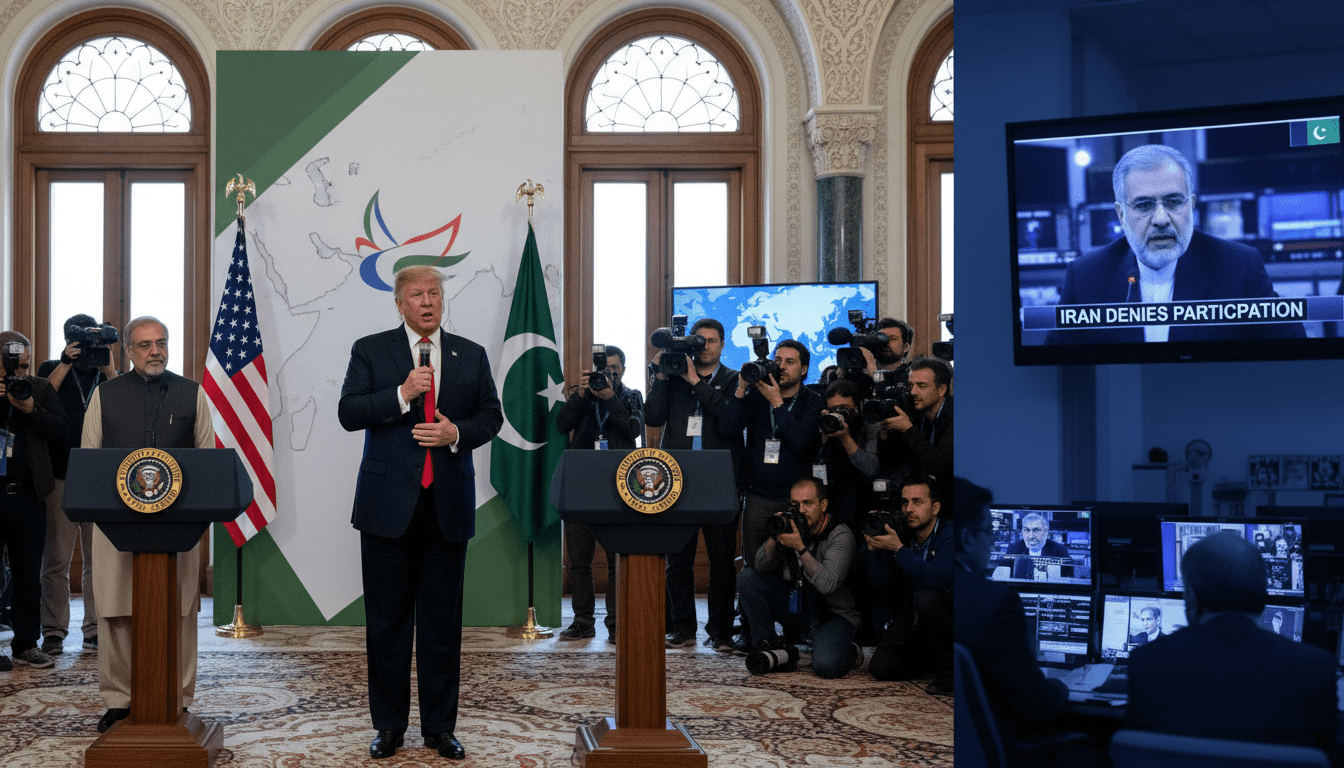
Trump says second round of US-Iran talks will take place in Pakistan as ceasefire unravels
President Trump announces second round of US-Iran talks in Pakistan amid threats to Iranian infrastructure and renewed maritime confrontations.
President Donald Trump announced a second round of US-Iran talks would be held in Pakistan as a fragile two-week ceasefire nears its end, deepening an already acute diplomatic crisis. The US-Iran talks are intended to salvage a deal before the truce expires, but Tehran has denied plans to attend and has protested recent US military actions. Tensions escalated after US forces seized an Iran-linked tanker, prompting reciprocal threats and warnings of further strikes.
Trump announces Islamabad meeting
President Trump said US negotiators would travel to Islamabad for a new round of talks, naming Pakistan as the venue for efforts to extend or conclude the ceasefire. The declaration followed a previous, inconclusive session led by Vice President JD Vance that failed to produce a settlement. Trump did not specify which officials would represent the United States in the Pakistan talks, leaving details of the delegation unclear.
The announcement coincided with a sharp uptick in rhetoric from the White House, where the president reiterated that Iran must accept a US offer “one way or another,” and warned of direct strikes on key civilian infrastructure if talks falter. The public posture suggested Washington hopes to use negotiations as a pressure valve while maintaining military options.
US threatens infrastructure strikes
In social media posts, President Trump renewed warnings that the United States could target power plants and bridges in Iran if Tehran rejects the proposed terms. Legal experts and rights groups have cautioned that deliberate attacks on civilian infrastructure can raise serious questions under international humanitarian law. US officials argue the measures are intended to coerce compliance while avoiding further large-scale combat.
The United States also said its forces boarded and took control of an Iran-linked vessel in the Gulf of Oman after breaching its engine room, an action the White House characterized as part of enforcement of a naval blockade. US officials framed the seizure as a demonstration of resolve to prevent illicit transfers and pressure Tehran, though critics warned the move risks further escalation.
Iran rejects talks and signals retaliation
Iranian authorities denied they planned to attend the Pakistan meeting and denounced the US seizure of the tanker as “armed piracy.” State-linked military headquarters confirmed the attack on the Iranian-flagged vessel and vowed a response, while Iran’s Tasnim News Agency said drones were dispatched toward US ships in the area. Tehran’s parliamentary security chief stressed Iran will act in line with national interests and described negotiations as an extension of the battlefield.
Mohammad Bagher Ghalibaf, the speaker of Iran’s parliament and the country’s chief negotiator, acknowledged some “conclusions” had been reached in prior exchanges but said the parties remain far from a final agreement. Iranian leaders have repeatedly insisted any deal must respect their sovereignty, nuclear rights and regional security calculations.
Maritime access at the center of standoff
A core dispute moving the talks is control and access through the Strait of Hormuz, a vital shipping lane through which large volumes of global oil and liquefied natural gas transit. Iran asserts sovereign rights over parts of the waterway and has limited transits since the conflict began, while Washington demands full freedom of navigation and has implemented a naval blockade of Iranian ports.
Analysts say the competing positions are difficult to reconcile because regional allies of the United States and Israel would oppose any arrangement that acknowledged enhanced Iranian control or tolling of the strait. Shifts in US rhetoric about possible shared control or tolling arrangements have complicated the diplomatic picture and alarmed partners in the Gulf.
Nuclear enrichment and missiles remain divisive
Negotiators face deep disagreement over Iran’s nuclear programme and its stockpiles of enriched uranium. The United States and Israel have pushed for significant constraints on enrichment, while Iran insists its nuclear activities are for peaceful civilian use and protected by treaty rights. Tehran has signalled it will not accept a zero-enrichment outcome, and legal scholars point to the Non-Proliferation Treaty as part of Iran’s argument for maintaining peaceful nuclear capabilities.
Separately, US demands have at times included curbs on Iran’s ballistic missile programme and on its support for regional proxy groups. Tehran has consistently rejected negotiating away its missile capabilities and backing for allied militias, making those topics particularly intractable and widening the gap between the sides.
Regional proxy conflicts complicate diplomacy
The war’s spillover into Lebanon and other theatres further complicates the talks. Iran-backed Hezbollah’s exchanges with Israel and Israel’s subsequent incursions into southern Lebanon have tested the ceasefire and become bargaining chips in wider negotiations. Tehran has insisted that any settlement cover related fronts and demand that Israel end operations against its partners.
Observers say Iran’s network of allies across the region—Hezbollah in Lebanon, the Houthis in Yemen and militias in Iraq—forms a strategic axis Tehran is unlikely to abandon, limiting what negotiators can realistically extract in a single agreement.
The Pakistani-hosted talks will therefore face multiple structural obstacles: conflicting US and Iranian red lines over sovereignty, enrichment and allied networks; recent military incidents that have inflamed public opinion on both sides; and the challenge of keeping regional partners aligned with any compromise. With the ceasefire fragile and mutual mistrust high, analysts suggest the most plausible immediate outcome may be an extension of the truce rather than a sweeping deal.
As negotiators prepare to meet, both Washington and Tehran continue to trade accusations and warnings, leaving the future of the US-Iran talks uncertain and the wider region on edge.
