
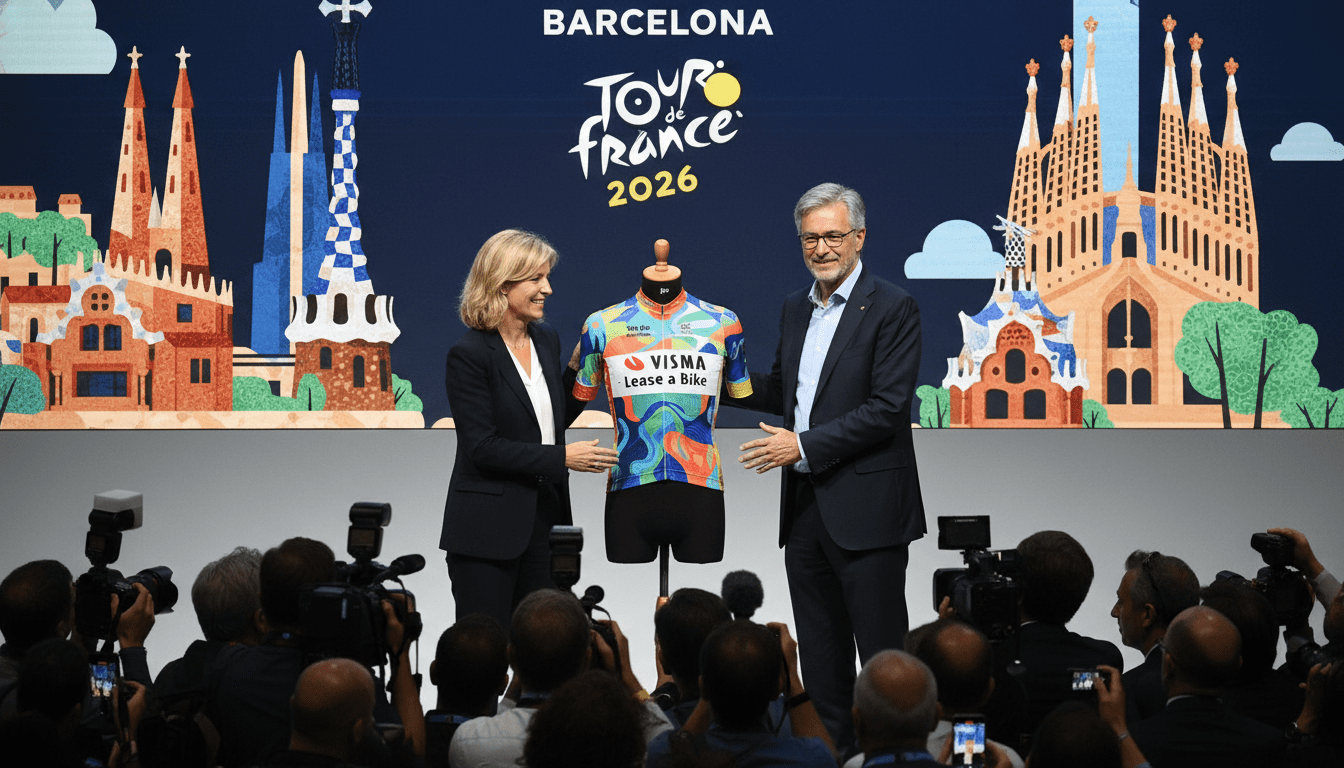
Visma Tour de France jersey fans choose Gaudí‑inspired “The Architect” as main kit
Visma Tour de France jersey: Fans chose dark “The Architect”, a Gaudí‑inspired design, after 100,000+ votes; the light option will serve as the team’s rest‑day jersey.
Visma-Lease a Bike has handed a high-profile design decision to its supporters, announcing that the dark “The Architect” kit will be the squad’s main Tour de France jersey this year. The fan vote attracted more than 100,000 responses and crowned a design that draws directly on motifs associated with Barcelona and Antoni Gaudí. The team confirmed that the lighter alternative will still appear as the official rest‑day jersey, creating a two‑shirt lineup for supporters and riders alike.
Fans Choose “The Architect” Design
The fan ballot produced a clear winner in favor of the darker kit, which blends geometric patterns and muted tones to form a distinctive racing look. Organizers described the winning concept as both a visual tribute to Barcelona and a commercial opportunity to engage the team’s global following. The result underlines the growing role of fan participation in cycling marketing decisions.
Design Draws on Gaudí and Barcelona
The winning kit incorporates tessellated, honeycomb-like motifs that echo Gaudí’s organic architectural language and the visual texture of the Sagrada Família. Designers said the pattern aims to evoke Barcelona’s built environment while remaining legible on the road and in broadcast coverage. By referencing a specific cultural landmark, the team has tied a national Grand Tour start to a locally resonant visual story.
The aesthetic choice also reflects broader trends in sports apparel where architecture and local identity inform kit design. This strategy can deepen fan attachment by linking a single edition of a jersey to the event’s host city and its heritage. For Visma, the connection to Barcelona provides a narrative that will be used in merchandising and promotional materials.
Voting and Reach: Over 100,000 Ballots
More than 100,000 votes were recorded in the poll, a turnout that the team highlighted as evidence of strong engagement among supporters. That level of participation delivers both marketing value and data on consumer preferences, giving the team a clearer picture of what design elements resonate. The vote also extended the team’s social reach during the buildup to the Tour, amplifying awareness ahead of the race’s Barcelona start.
The campaign’s scale suggests a viable model for other cycling teams seeking to convert digital attention into sales. Beyond pure visibility, the interaction produces measurable metrics—clicks, signups, and conversions—that teams can use to plan production runs and estimate demand for limited‑edition items.
Light Variant Assigned as Rest‑Day Jersey
The lighter kit, which narrowly missed top honors, will be used as the official rest‑day jersey, ensuring both designs appear during the race. Assigning the alternate design to rest days preserves fan investment in the losing option while keeping product scarcity intact. This two‑jersey approach mirrors strategies used in other sports to maximize collection and purchase incentives.
From a sporting perspective, rest‑day jerseys are visible during media moments and leisure scenes, allowing teams to showcase alternate branding without displacing their primary race kit. For fans, the rest‑day shirt becomes a collectible item that often carries its own promotional narrative and limited availability.
Merchandising Push Mirrors Football Strategy
Cycling’s move to multiple, commercially distinct jerseys follows a well‑worn playbook from football and other professional sports, where clubs release home, away, third kits and special editions. Teams now offer authentic player versions, replicas, and commemorative variants to capture different buyer segments. For pro cycling outfits, the transition represents an effort to monetize brand recognition beyond race sponsorship alone.
This approach also raises questions about fan identity and the commercialization of team apparel, as supporters must decide which versions to buy and display. Sponsorship-driven messages—airport and airline partners among them—remain a visible part of the modern kit, folding commercial narratives into garments that once were purely functional.
Fans and Pricing Expectations
Exact retail pricing for the Visma jerseys has not been announced, but market observers expect a premium for player‑style authentic versions and separate pricing for the rest‑day shirt. Industry estimates for similar team kits typically fall in a range that reflects material technology, branding, and licensing arrangements. For consumers, the outlay often reflects both product quality and the perceived status of wearing a current season’s team kit.
Supporters familiar with football merchandising may find cycling’s new price tiers unsurprising, while casual buyers could be deterred by higher costs. Teams must balance exclusivity with accessibility if they are to convert enthusiasm into sustainable merchandise revenue.
Visma’s fan-driven selection process marks a notable instance of participatory marketing in cycling, and the chosen Gaudí‑inspired kit will offer a distinctive visual anchor as the team heads into the Tour de France. The dual‑jersey strategy is likely to shape both on‑road visibility and off‑road revenue in the months that follow.
