
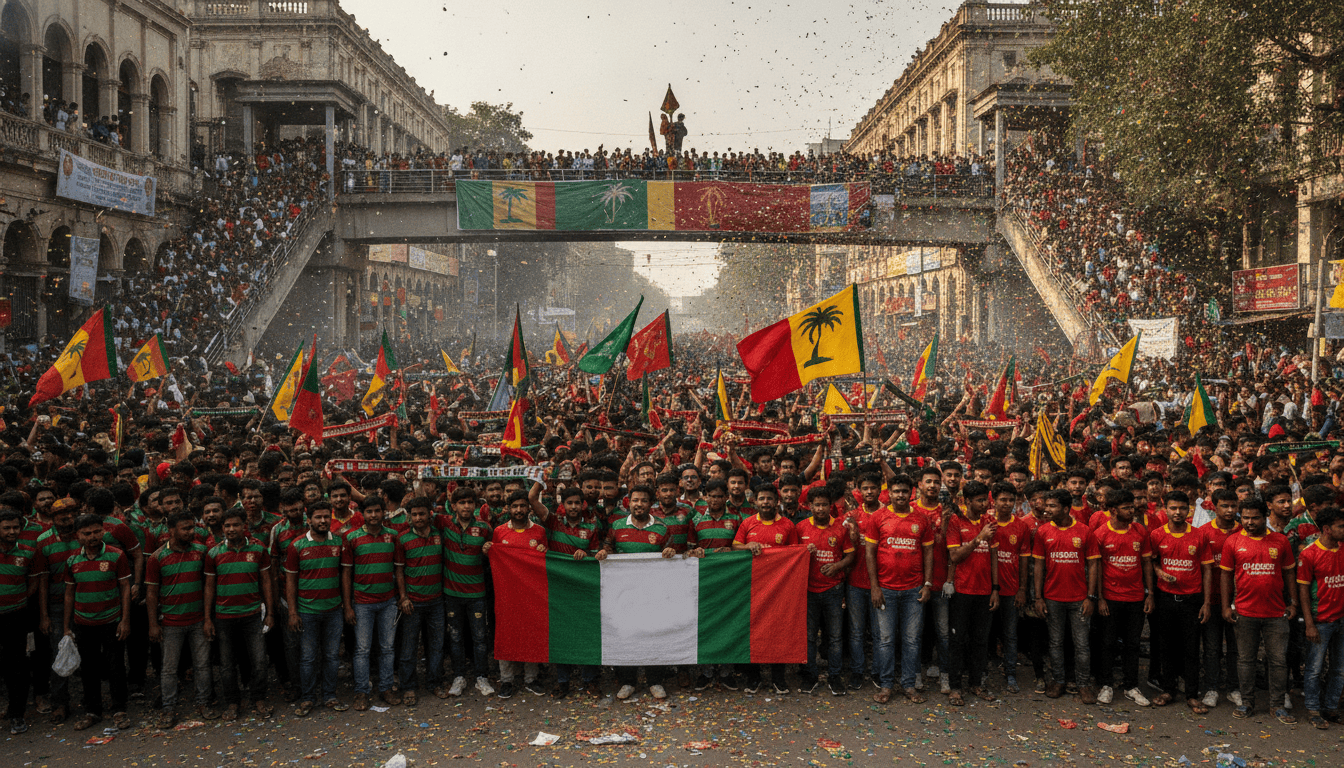
Kolkata football rivalry deepens as Mohun Bagan and East Bengal shape city identity
Inside the Kolkata football rivalry: how Mohun Bagan vs East Bengal shaped a city’s fandom, Argentine influence from Maradona to Messi, and recent fan unrest.
Kolkata football rivalry remains the defining heartbeat of the city, where matches between Mohun Bagan and East Bengal draw tens of thousands and dominate public life. Fans and analysts say this rivalry has produced a level of sustained, year-round engagement with the sport that is distinct from other Indian regions. Recent incidents surrounding high-profile appearances have underlined how deeply football icons and club loyalties are woven into Kolkata’s social fabric. The city’s attachment to Argentine players, from Diego Maradona to Lionel Messi, further complicates the local football narrative.
Mohun Bagan–East Bengal Rivalry Drives Kolkata’s Football Culture
Kolkata’s two principal clubs have built a duopoly that structures fandom, media coverage and daily conversation across neighborhoods. Matches routinely fill stadiums and create rituals — from pre-game debates at tea stalls to generational chants in the stands. Supporters describe allegiance as inherited and intense, with many tracing their club loyalty back to childhood.
Analysts argue the rivalry did more than create competitive spectacle; it fostered an ecosystem of analysis, memorabilia and local journalism. That ecosystem keeps football a year-round topic in Kolkata, rather than a seasonal pastime. The result is a civic culture where football influences social identity and local discourse.
Generational Loyalty Shapes Public Life and Debate
Fans in Kolkata often speak about club affiliation as part of family history, with allegiances passed from grandparents to grandchildren. This continuity sustains dialogues about the game across age groups and anchors communal gatherings. The intensity of that loyalty is reflected in long-standing debates about tactics, transfers and club management.
Observers note that the rivalry also colors how supporters interpret other public arenas, including politics and art. For many, football provides a lens for understanding broader civic questions, and match-day narratives are woven into the city’s cultural memory. The clubs thus function as social institutions as much as sporting entities.
Argentina’s 1986 Turning Point and Maradona’s Enduring Legacy
The city’s fascination with Argentine football can be traced to the 1986 World Cup, when live television broadcasts brought Diego Maradona’s performances into Kolkata homes. For a generation that had long idolized Brazilian stars, the images of Maradona on screen created a decisive cultural pivot. Those televised moments embedded Argentina’s style and heroes into local imagination.
Writers and fans who lived through that era recall how the shift altered preferences and loyalties, not merely for a season but across decades. Maradona’s influence set the stage for later emotional investments in Argentina’s national team and its icons. The resonance of that era is still cited by supporters who now regard Messi as a contemporary beacon.
Messi Visit Exposes Idolization and Event Management Gaps
A high-profile visit by Lionel Messi to Kolkata in December escalated into disorder when the event did not proceed as planned and spectators breached security barriers. The incident highlighted the city’s powerful emotional attachment to football stars and raised questions about crowd control at celebrity events. Officials and organizers faced criticism for failing to anticipate the scale of demand and the fervor of local fans.
Commentators say the episode revealed a recurring tension: when sporting idols transcend the stadium, ordinary event structures struggle to contain fan enthusiasm. The breakdown prompted calls for clearer planning and better coordination among authorities, while also underscoring how celebrity appearances can ignite long-simmering passions.
Local Voices Reflect on Tribal Fandom and Football as Civic Education
Scholars and chroniclers of fandom in Kolkata describe the city as a living classroom for understanding tribal loyalty in sport. Some local analysts frame their study in sociological terms, examining how club identities are constructed and how they influence behavior. This approach emphasizes that fandom in Kolkata is often irrational, sentimental and deeply held — characteristics that make it fertile ground for cultural study.
Novelists and journalists who track the city’s football life point to storytelling as a core component of the phenomenon, where personal narratives and match-day lore get retold and reinforced. The stories around players, classic matches and shared losses or victories are central to how communities define themselves.
Kolkata’s attachment to football, whether through club rivalries or international idols, continues to shape everyday life across the city. The Mohun Bagan–East Bengal rivalry remains a powerful engine of identity, while Argentina’s influence and episodes of fan unrest underscore how sport can both unite and unsettle public spaces. Football in Kolkata is thus as much a social institution as an athletic contest, and its rhythms are likely to keep shaping the city for years to come.
