
Vingegaard falters at Le Lioran as Pogačar strengthens grip on Tour de France
Vingegaard falters at Le Lioran as Pogačar widens the gap; team setbacks, isolation and family warnings reshape the Danish leader’s Tour de France bid.
Vingegaard loses ground on a decisive stage
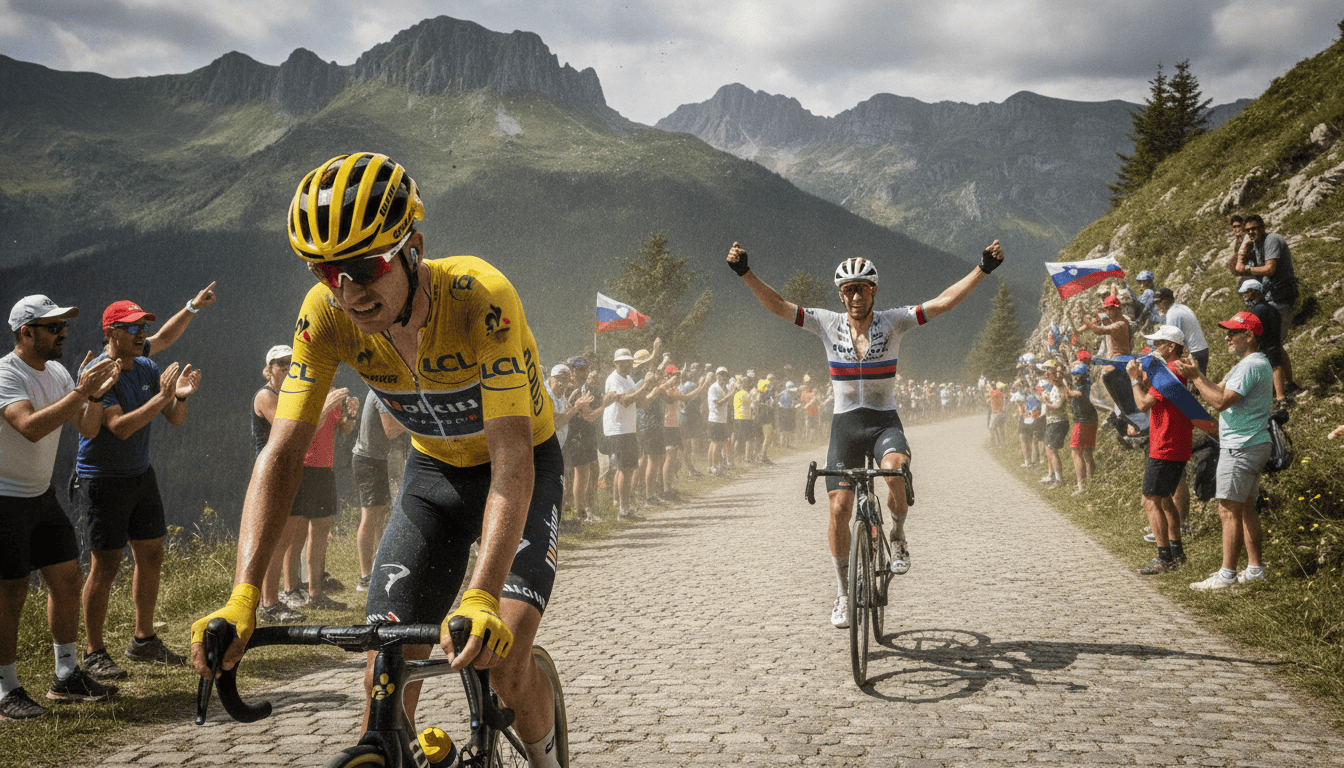
Jonas Vingegaard finished seventh on the tenth stage to Le Lioran, surrendering 44 seconds to Tadej Pogačar and watching rival teams close in on his position. The finish played out with six pursuers arriving together after 166.6 kilometers, a sprint that left Vingegaard behind as Remco Evenepoel and others surged past. What had been a head-to-head narrative between Vingegaard and Pogačar now looks more like a contested field chasing the Slovenian.
The outcome exposed vulnerabilities in the Danish leader’s support and race position, turning a single-stage deficit into a broader tactical problem. Vingegaard still sits high in the general classification, but the margin that once defined the duel with Pogačar is narrowing under sustained pressure.
Stage dynamics and the shifting leaderboard
Pogačar’s attack on the climbs reshaped the race and the standings in quick order, with time bonuses and a powerful finish adding to his lead. Vingegaard’s earlier losses, including over two minutes on a previous Pyrenean day, compounded the significance of Le Lioran’s result. Evenepoel’s presence and the proximity of other contenders mean the second place is now under real threat.
Race metrics underscore the change: what began as a comfortable margin from the opening team time trial has been whittled down by stage aggression and selective attacks. Riders who previously sat beneath the headline duel are now racing ahead of Vingegaard, transforming the contest from bilateral to multi‑faceted.
Team setbacks left Vingegaard exposed
The day’s story is as much about the absence of support as about raw power. Key teammates were missing or sidelined: a prominent domestique withdrew injured, another crashed on a descent, and the usual cavalry could not assemble when Pogačar struck. Davide Piganzoli and others tried to stay with the captain but were unable to close the gaps created by Pogačar’s acceleration.
Left at the front with his face into the wind, Vingegaard spent long kilometers driving the chase without the numbers he typically relies on. The effect was tactical and physical — being both road leader and lone pursuer sapped energy and limited his response options when rivals launched their own moves.
Personal strain and public warnings from family
The pressure on Vingegaard is not only athletic but personal, a theme that his family has previously flagged. His wife publicly warned in 2025 about the risk of overextending him, arguing that the team’s approach risked exhausting the man behind the athlete. Those comments were once treated as media noise, but the current Tour has given them renewed resonance.
Vingegaard himself has acknowledged the danger of burnout and adjusted his calendar and training to protect his form and well‑being. That recalibration delivered victories earlier in the season, yet the singular focus on the Tour and a single rival — Pogačar — has constrained the Dane’s public identity and left him tethered to a matchup that can be destabilizing when results don’t go his way.
Vosges climbs to offer immediate answers
The race now turns toward two consecutive mountain stages: the ascent to Le Markstein in the Vosges followed by the climb to Plateau de Solaison. Those profiles suit Vingegaard’s strengths in long, sustained climbs and high temperatures, and they present a realistic chance to claw back time. Observers will watch whether he can convert terrain advantage into tangible gains while staying sheltered from further tactical isolation.
How Vingegaard and his team manage recovery, reconnaissance and race positioning over these days will be decisive. If he can enlist support, cover rival attacks and time an assault correctly, the coming mountain tests could reframe the contest. If not, the Danish leader risks drifting into the chasing pack with diminishing options.
The Le Lioran stage crystallized a new phase of the Tour de France: Pogačar racing with freedom and menace, Vingegaard contending with gaps both on the road and in his support structure. With the Vosges climbs immediate and the Alps looming later, the coming days will determine whether Vingegaard can reassert himself as the principal challenger or whether the race opens fully to a wider group of contenders.
