
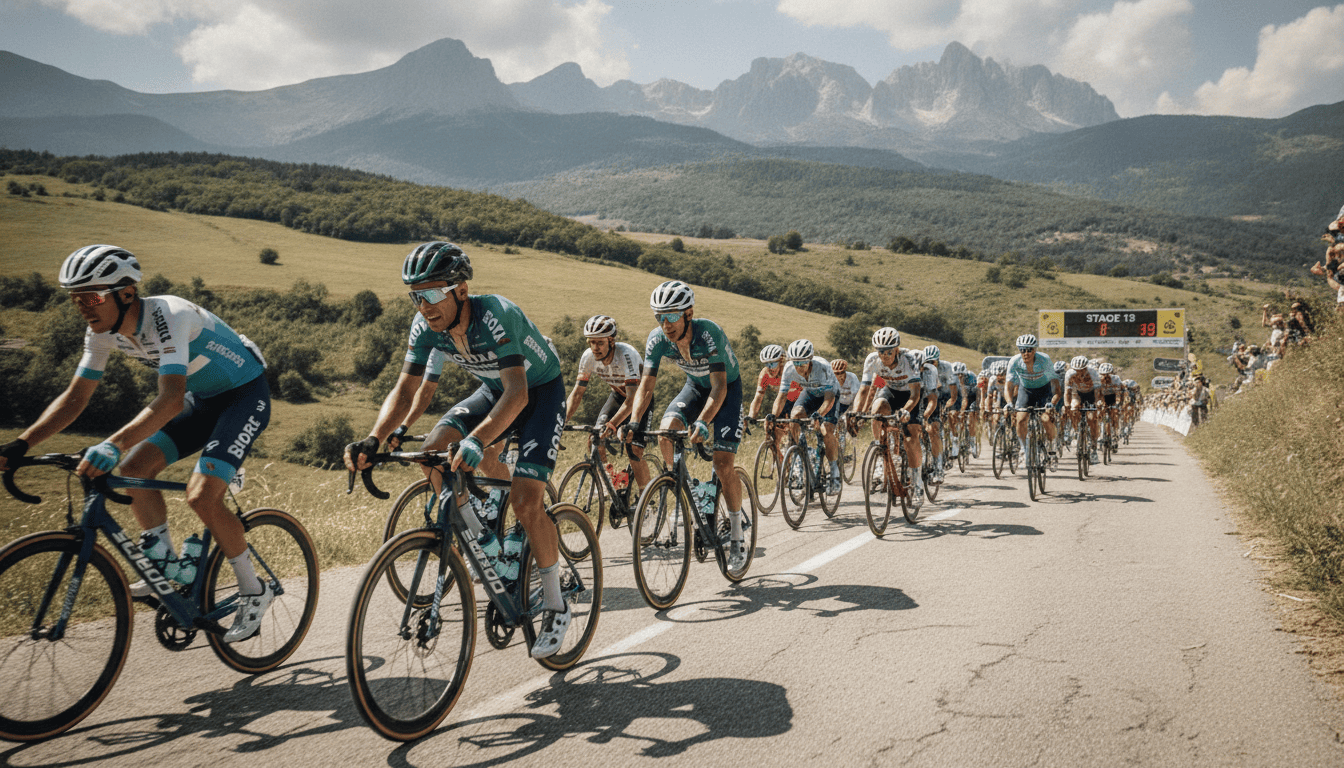
Florian Lipowitz slips to seventh as Pidcock’s break and Schmid’s sprint shake up Tour de France GC
Florian Lipowitz dropped to seventh overall on Stage 13 of the Tour de France after a large breakaway led by Tom Pidcock and a stage-winning sprint from Mauro Schmid, with a tough Vosges mountain weekend ahead.
Florian Lipowitz rode aggressively near the German border but conceded a place in the general classification on the longest stage of this year’s Tour de France. A huge escape group enlarged a lead on the peloton and allowed Tom Pidcock to claw back minutes that reshuffled the standings. Lipowitz and his Red Bull team increased tempo late in the stage but could not fully close the gap before the finish in Belfort.
Pidcock’s move reshaped the day
Tom Pidcock joined an extended breakaway that grew from two separate groups into a formidable unit with a substantial gap to the main field. The Brit’s presence in the move forced several teams to reassess their tactics, since riders in that break included contenders with significant time to gain. By the stage finish Pidcock’s effort had helped hollow out the top ten and directly contributed to Lipowitz’s slide.
Schmid claims first Tour stage in Belfort
Swiss rider Mauro Schmid took the stage victory after 205.8 kilometres from Dole to Belfort, prevailing in a reduced sprint ahead of Harold Tejada. The 26-year-old recorded his first Tour de France triumph, a result that vaulted him into the upper ranks of the general classification. Schmid’s win added a fresh dynamic to the race, underlining how opportunistic escapes can produce both stage glory and GC ramifications.
Pogacar holds the yellow jersey as gaps shift
Tadej Pogačar retained the race lead after Stage 13, with Jonas Vingegaard remaining in second and Remco Evenepoel third, but the time gaps among the top riders tightened and shifted. Mauro Schmid moved up to fourth overall and sits approximately 4 minutes 15 seconds behind Pogačar, while Vingegaard is 3 minutes 36 seconds adrift. Lipowitz now sits seventh, a position change that will affect his team’s approach to the upcoming mountain tests.
Crash, resilience and early moves
Georg Zimmermann endured a mid-stage crash but soon rejoined the action, later taking his place in a secondary break that animated the race early on. A plaster on his chin was visible evidence of the spill, yet the Augsburg native carried on without serious injury. The early attacks set the tone for a long, attritional day in which the peloton only reasserted control well into the latter third of the stage.
Ballon d’Alsace and the Vosges test loom
The route did not begin to bite until after roughly 150 kilometres, with the decisive climb coming late in the stage at Ballon d’Alsace, an ascent of almost nine kilometres averaging 6.9 percent. That climb served as a rehearsal for a brutal weekend in the Vosges, where the riders will tackle multiple first-category ascents and a second-category climb across Stage 14. With 3,800 metres of elevation on the Saturday profile, teams will need to balance aggression and conservation as the general classification is further defined.
Team tactics and Lipowitz’s prospects in the mountains
Despite losing a place, Lipowitz’s characteristics as a climber suggest he can regain time over the coming high mountains compared with rivals who gained on the long break. His team will likely protect him carefully and look to exploit steeper gradients where pure climbing strength matters most. Red Bull’s group will also be mindful of how breakaways form and of opportunities to mark or join moves that could reclaim seconds in the GC battle.
The next two stages represent a critical phase for the Tour de France contenders, with the Vosges promise of selective terrain likely to reward aggressive climbing and disciplined teams. Florian Lipowitz remains within reach of the podium places if he and his teammates can marshal energy and respond where the road steepens.
