
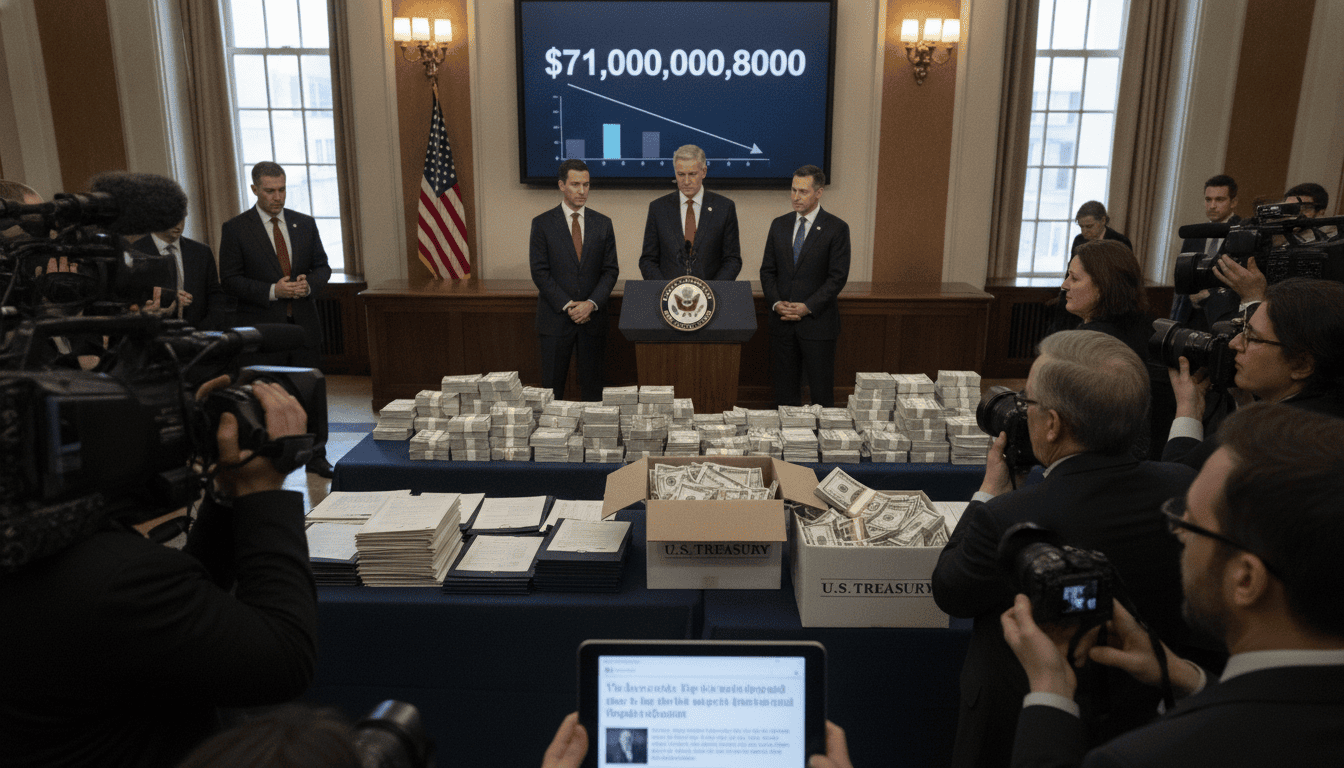
Trump tariffs: Treasury report shows refunds now outpace collections
Supreme Court ruling forces refunds of Trump tariffs; Treasury reports $71.1B repaid, companies seek payouts and legal fights over pass-throughs intensify.
The Treasury Department’s latest monthly report shows a dramatic reversal in the finances stemming from Trump tariffs, with tariff refunds now exceeding collections and prompting major companies to seek billions in repayments. The report records $23.6 billion in customs revenue for June but $49.2 billion in tariff refunds for the same month, a swing driven by a Supreme Court decision that voided many IEEPA-based levies. The fast-moving reimbursement process has already delivered tens of billions to corporate claimants and set off a wave of litigation and political debate about who ultimately bears the cost of the tariffs.
Treasury report: refunds exceed collections in June
The June monthly statement from the Treasury lists $23.6 billion in tariff receipts against $49.2 billion in refunds, producing a net outflow tied to the court’s ruling. Including payments processed in May and June, Customs and Border Protection (CBP) has returned about $71.1 billion to importers to date. Officials warn the total owing could grow because interest is due on refundable duties, and the full tally of claims remains incomplete.
Treasury Secretary Scott Bessent’s earlier praise of the tariffs contrasts with the current numbers; a year ago he highlighted record customs receipts and celebrated the economic benefits of the administration’s America-First agenda. The reversal underscores how quickly trade policy can shift budgetary outcomes when courts and legal frameworks intervene.
Supreme Court voided IEEPA tariffs, triggering repayments
The repayment push traces to a Supreme Court decision that found key tariffs imposed under the International Emergency Economic Powers Act (IEEPA) unlawful. The court’s judgment left open questions about restitution, prompting CBP to set up an online mechanism to process refund claims and begin payouts at the end of April. That implementation came faster than many observers expected, accelerating repayments in May and June.
The IEEPA-based levies included a high-profile April proclamation that applied tariffs broadly and was promoted by the administration as a marker of economic sovereignty. The court’s ruling did not affect all tariffs—industry-specific duties on autos, steel and aluminum were excluded—but it struck down a substantial portion of the administration’s IEEPA actions.
Major companies disclose expected refunds and uses
A string of multinational firms have published estimates or confirmations of large refunds as they reported quarterly results. Nike said it expects about $986 million and reported receiving roughly $300 million so far. Walmart has signaled potential repayments of up to $2.4 billion, while Ford recorded a $1.3 billion tariff refund on its books without specifying precise payment timing. John Deere has had $272 million approved, and Adidas’ chief executive said the company is expecting about $300 million.
Companies differ in how they plan to use the funds. Walmart’s CEO has pledged to prioritize price reductions for consumers where possible, and the retailer has announced a series of price cuts that were celebrated politically. Other firms, including McCormick, say refunds will largely offset rising input costs tied to global supply pressures and geopolitical conflicts.
Class actions and trade court fights escalate
The refund wave has provoked a parallel surge in litigation aimed at forcing companies to return tariff rebates to consumers who allegedly paid higher prices. Plaintiffs have filed class actions against retailers and manufacturers including Nike, Adidas and Costco, seeking to convert corporate receipts into consumer relief. Those suits hinge on complex questions of passthrough, standing and the evidentiary burden to show consumers actually bore the tariff costs.
At the same time, the federal government remains engaged in litigation over the refunds themselves. The administration has appealed certain aspects of the Supreme Court decision at trade tribunals and federal courts, and observers say the government has added procedural hurdles that could slow or limit recoveries, especially for small and mid-sized importers. Libertarian and free-market think tanks have criticized the government’s approach, saying administrative barriers threaten to leave billions with the Treasury instead of returning them to importers.
Policy moves and what firms should expect next
Despite the Supreme Court setback, tariffs remain central to the administration’s trade posture, and new levies have been announced under alternative statutory authorities. A separate across-the-board tariff of 10 percent and targeted duties such as a 25 percent levy on certain imports from Brazil illustrate that the policy toolkit has shifted rather than disappeared. Some of these measures face their own legal challenges and, for now, remain in flux.
Treasury and CBP officials caution firms to expect continued administrative and legal complexity. Many companies appear to be factoring ongoing tariffs into forecasts, suggesting volatility in future customs receipts and refunds. Economists and Federal Reserve officials have already argued that most of the economic burden of the tariff program fell on U.S. consumers and businesses rather than on foreign exporters, complicating political claims that tariffs are paid by other countries.
The unfolding repayment process and the accompanying lawsuits will determine whether corporate refund recipients pass savings to consumers, retain the funds to shore up margins, or use them to meet other cost pressures. With tens of billions already repaid and more claims pending, the outcome will shape corporate balance sheets, consumer prices and the budgetary picture for months to come.
