
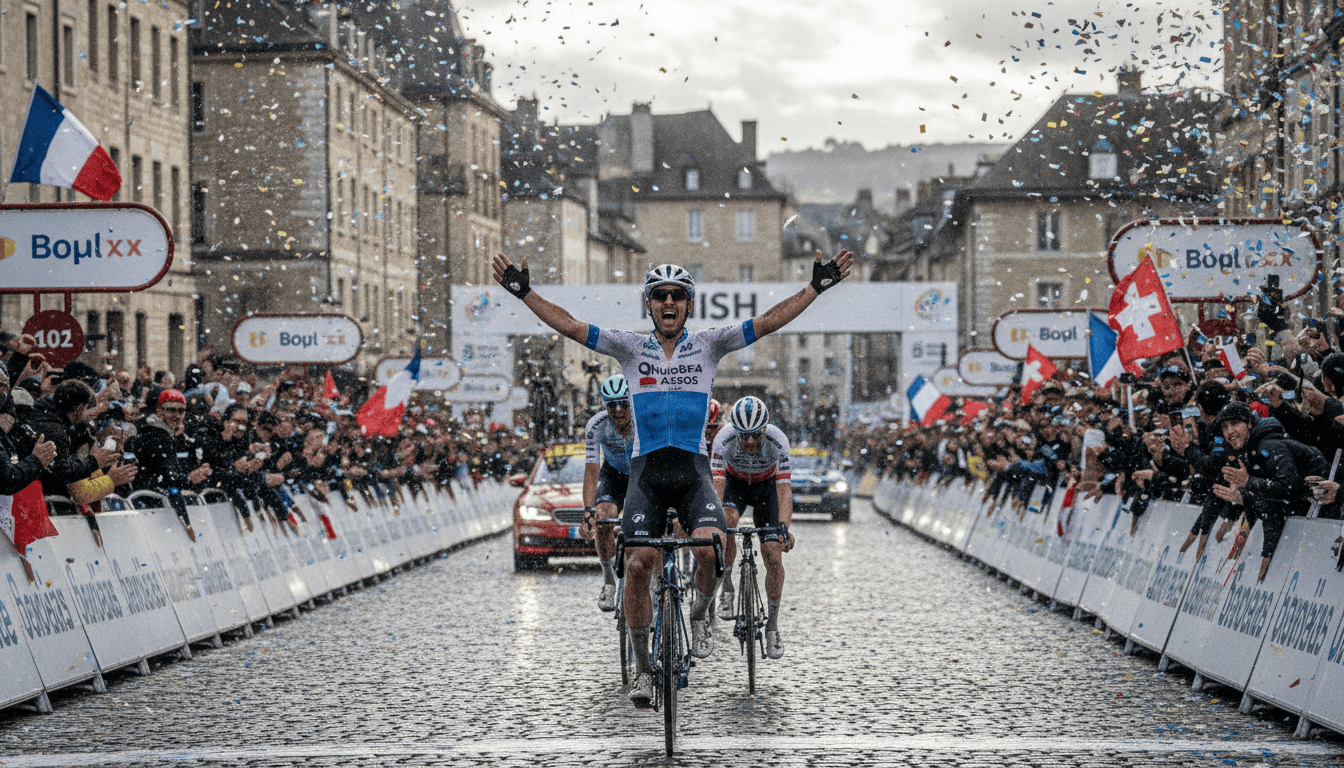
Mauro Schmid wins longest stage of this year’s Tour de France in sprint finish
Mauro Schmid claims first Tour de France stage after edging Harold Tejada in a sprint on the 205.8km longest stage, reshaping the general classification ahead of the Vosges.
Mauro Schmid produced a decisive finish to win the longest stage of this year’s Tour de France, taking his first career stage victory on the 205.8-kilometre 13th stage from Dole to Belfort. The 26-year-old Swiss outsprinted Colombia’s Harold Tejada to cross the line first, with Britain’s Tom Pidcock completing the podium in third. The victory came near the French border with Germany and marked a notable breakthrough for Schmid in a race dominated by established GC contenders.
Stage details and the sprint conclusion
The 13th stage covered 205.8 kilometres and stood as the longest single day of racing in this edition of the Tour de France. Riders battled a long, attritional route that ultimately set up a reduced group for the sprint finish near Belfort. Schmid timed his effort to perfection, converting a sustained move into a clear victory over Tejada and Pidcock in the closing metres.
The result represented Schmid’s first stage win in the Tour de France and will be counted as a career milestone for the young Swiss. Observers noted that the finish rewarded positioning and timing after a day that favoured opportunistic riders over the pure climbers among the peloton.
General classification shifts after the breakaway
The large breakaway that animated the day altered the general classification and forced a recalibration among several contenders. Tom Pidcock, who featured prominently in the move, advanced to fourth overall and now sits 4 minutes 15 seconds behind race leader Tadej Pogacar. The reshuffle pushed German rider Florian Lipowitz down from sixth to seventh in the standings.
Tadej Pogacar retained the yellow jersey, but the time gaps tightened and widened in different directions depending on team tactics and which riders joined the escape. Jonas Vingegaard remained second overall at 3 minutes 36 seconds behind Pogacar, while Remco Evenepoel holds third, slightly more than four minutes back from the Slovenian leader.
Breakaway dynamics and race tactics
The stage unfolded around an extensive “XXL” breakaway that at one point contained a significant number of riders and compelled teams with GC ambitions to recalibrate their plans. The breakaway’s composition allowed non-GC riders to contest the finish, reducing the incentive for all-out chase from the peloton. That tactical environment created the opening Schmid exploited in the finale.
For teams defending overall ambitions, the day presented a dilemma: allow the breakaway to go and risk losing time, or chase hard and expend energy ahead of the mountains. Several squads opted for a controlled approach, preserving resources for the imminent high-mountain tests rather than burning men in a long pursuit.
Impact on contenders and team strategies
The outcome produced mixed consequences for the principal contenders and their squads. Riders who joined the decisive escape gained bonus seconds and stage glory, while some GC hopefuls saw their positions slightly altered without direct involvement in the break. Florian Lipowitz’s slip from sixth to seventh underlines how even modest time swings can shift standings late in the race.
Teams will now reassess their strategies ahead of the weekend, balancing the need to protect current placings against the inevitability of tougher climbs. Those with multiple leaders face particular pressure to choose when to support attacks and when to shelter their leaders through transitional stages.
Vosges mountains to test contenders this weekend
Attention immediately turns to the weekend, which will feature two testing mountain days in the Vosges near the German border. The 14th stage, scheduled for Saturday, includes roughly 3,800 metres of climbing and lists three Category 1 climbs alongside a Category 2 ascent. That profile guarantees a stern examination of both climbing legs and team cohesion.
Race directors have laid out a sequence likely to provoke attacks and force clear time gaps in the general classification. The heavy climbing load will favour pure climbers and aggressive teams willing to animate the race from a long way out, altering the complexion of the standings if any contender falters.
The outcome of the next two stages will shape the remainder of the race, setting the stage for the decisive Alpine and high-mountain battles to follow.
