
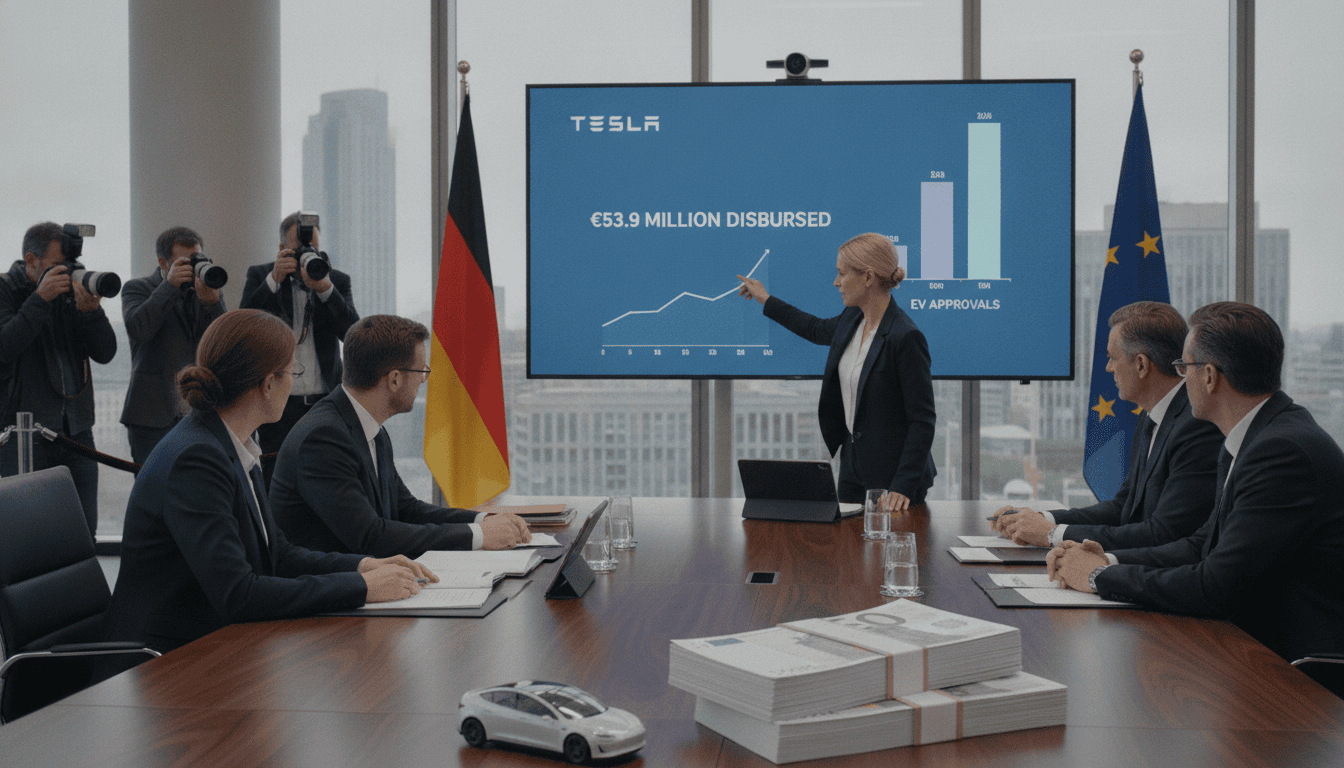
Germany electric car subsidy pays out €53.9m by June 30, 2026 as Tesla leads approvals
Germany electric car subsidy paid €53.9 million by June 30, 2026; Tesla leads approvals as ministry warns early figures may not reflect long-term distribution.
Germany’s electric car subsidy program had disbursed €53.9 million by June 30, 2026, with models from Tesla receiving the highest number of approved grants in the initial weeks of the scheme. The funding comes from a broader package capped at up to €3 billion and was processed through an application portal that opened on May 19, 2026. The Federal Environment Ministry provided the figures in response to a parliamentary question from the Green Party, noting the data represent an early snapshot.
Early disbursements and uptake
By the end of June 2026, authorities had approved applications covering €53.9 million in subsidies under the new purchase scheme for electric vehicles and eligible hybrids. The ministry said these payments reflect approvals recorded since the portal launch on May 19 and cover the period through June 30. Officials cautioned that the short time frame and rapid market changes make this only an initial measurement of demand.
Manufacturer and group approval figures
Approved cases by brand show Tesla at the top with 2,086 vehicles, followed by Skoda with 1,197 and Renault with 784 vehicles. When aggregated by corporate groups, Volkswagen-group brands — including Audi, Cupra/Seat, Porsche, Skoda and VW — accounted for 2,720 approved vehicles. Stellantis brands recorded 2,278 approvals, while Tesla’s tally remained at 2,086, underscoring strong early interest in a small number of manufacturers.
Eligibility rules and subsidy levels
The subsidy applies to new registrations from January 1, 2026 onward and covers purchases and leases of fully electric vehicles, certain plug-in hybrids and electric cars fitted with range extenders. The exact grant amount varies by model price, household income and family size, with a maximum state contribution of up to €6,000 per vehicle under the scheme. Program administrators said these eligibility criteria aim to target support where it can most effectively accelerate uptake.
Funding capacity and administration
The federal program is designed with a headline budget of up to €3 billion intended to support as many as 800,000 vehicles over its lifespan. The €53.9 million paid through June 30 represents a small fraction of the available envelope, the ministry noted, and the authorities will continue to monitor applications as the market evolves. Processing speed, dealer documentation and vehicle availability will influence how quickly the remainder of the funds is allocated.
Market reactions and model availability
Automakers and dealers said the early figures reflect a market responding quickly to clearer state incentives and the staggered arrival of new EV models. Industry observers point out that a handful of popular models can dominate initial approvals when supply is concentrated and consumer awareness is high. The ministry highlighted that ongoing model launches and changing inventories mean brand rankings could shift markedly over the program’s duration.
Administrative caveats from the ministry
In its reply to the parliamentary question, the Federal Environment Ministry emphasized caution in interpreting early statistics and warned against drawing firm conclusions about long-term distribution patterns. Officials noted that continuous introductions of new models and short reporting windows make early-month numbers volatile. The ministry said it will provide updates as further application and payment data accumulate.
Political context and next steps
The subsidy was enacted by the coalition government to accelerate the shift to low-emission mobility and support consumer uptake of zero- and low-emission vehicles. Lawmakers from different parties have already signalled an interest in tracking which household groups and regions benefit most from the program. The ministry and parliamentary committees are expected to review periodic reports and adjust administrative guidance if bottlenecks or inequities appear.
Looking ahead, the program’s trajectory will depend on vehicle supply, dealer processing capacity and the pace of consumer decisions across income groups and family sizes. Authorities plan to publish further disbursement data as the application portal continues to process requests, allowing observers to assess whether the initial concentration of approvals around certain brands persists or broadens across the market.
