
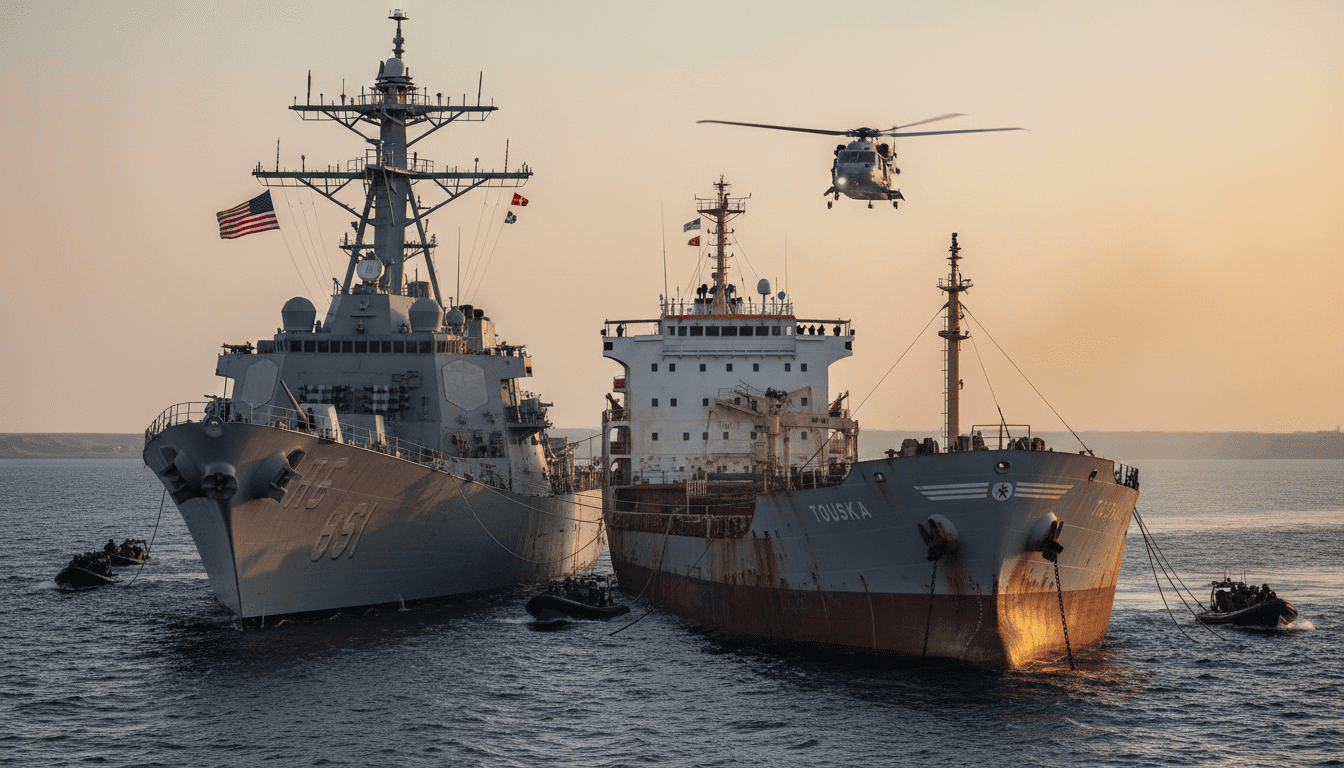
US blockade of the Strait of Hormuz escalates as US forces seize Iranian-flagged freighter Touska
US forces seized the Iranian-flagged freighter Touska after enforcing the US blockade of the Strait of Hormuz, a move captured in night-vision video released by the US military. The operation, involving a helicopter launch from the USS Tripoli and subsequent boarding by US personnel, marks a further escalation in a stand-off that has disrupted regional shipping and complicated emerging diplomatic talks.
US forces seize Iranian-flagged freighter Touska
US naval personnel boarded the container ship Touska after it failed to comply with repeated orders to stop, according to US military accounts contained in released footage. The vessel, sailing under an Iranian flag and reported to have routed from Malaysia toward Bandar Abbas, was taken under American control following the boarding operation.
Officials say the captain resisted orders for approximately six hours before US forces acted to halt the ship, asserting that the vessel had crossed a naval blockade line declared by the United States in the Strait of Hormuz. The boarding was completed without reported armed resistance from the crew, and US sailors subsequently secured the vessel.
Night-vision footage shows helicopter lift-off and boarding from USS Tripoli
Grainy night-vision clips show a helicopter lifting from the deck of the amphibious assault ship USS Tripoli and lowering US personnel onto the Touska’s deck. Later sequences depict sailors fast-roping onto the freighter and moving to secure key areas, consistent with standard maritime interdiction procedures.
The images were released amid heightened tensions and serve both operational and communicative purposes, underlining US resolve to enforce the blockade while documenting that the operation was completed without combat casualties. The footage also underscores the logistical coordination between the Tripoli and other surface combatants operating in the area.
USS Spruance fired on engine room to enforce stop order
US accounts report that the guided-missile destroyer USS Spruance engaged the Touska’s engine room after the ship passed the declared blockade line and failed to comply with instructions. The ship’s propulsion spaces were fired upon to disable the vessel, following warnings issued over radio that the engine room should be evacuated.
After the strike, the freighter’s movement ceased and boarding teams were able to secure the ship; US officials said there was no armed confrontation with the crew during the seizure. Analysts caution that such kinetic enforcement carries a risk of escalation, particularly if other states choose to escort or defend commercial traffic.
Pakistan tells Washington blockade complicates planned negotiations
The seizure came as the White House had signaled willingness to pursue a new round of talks in Islamabad, a diplomatic opening that Pakistan has been facilitating. Pakistani military leadership reportedly raised concerns with US officials that the blockade and the boarding of the Touska could undermine the trust needed for productive negotiations with Tehran.
Pakistan’s unease reflects the diplomatic tightrope Islamabad faces in balancing ties with Washington against regional stability and its own security considerations. Islamabad has positioned itself as a potential mediator in talks, and objections from Pakistani officials underscore the political fallout from military enforcement measures at sea.
Tehran denounces action but signals restraint amid internal debate
Iran’s foreign ministry criticized the US move, saying the seizure cast doubt on the “seriousness” of the diplomatic process while not ruling out continued negotiations. The Iranian Revolutionary Guard Corps issued warnings of potential retaliation but appeared to curb immediate escalation, citing concerns for crew safety and the presence of family members aboard the freighter.
Statements from Iranian military spokespeople also indicated that there had been internal deliberations over plans to recover the vessel by force, but that commanders ultimately refrained from an armed response to avoid risking civilian lives. The episode illustrates competing currents within Iran’s ruling apparatus between hard-line posturing and cautious risk management.
Blockade shows partial effects; Iran’s shadow fleet complicates enforcement
Since the blockade began, US forces say they have compelled dozens of merchant vessels to alter course or return; the military reported that 25 ships had been turned or redirected. Yet monitoring firms and analysts note that the blockade is not impermeable, pointing to ships that have slipped past interdiction lines and to a pattern of deliberate evasive tactics by Iranian shipping networks.
Iran’s long experience under sanctions has fostered a web of evasion methods — including manipulation of identification systems, ship-to-ship transfers and circuitous routing through multiple ports — that can blunt the full economic impact of interdiction. Still, officials and traders report rising transport costs and strains on Iran’s oil revenue that could intensify pressure on Tehran over time.
US mine-clearance and unmanned operations aim to reassure shipping
To reduce the risk to commercial navigation and encourage insurers and cargo owners to return to regional routes, the US Navy has begun mine-clearance and unmanned vessel operations in areas approaching the Strait of Hormuz. US officials described the use of unmanned surface and underwater drones as part of an effort to secure transit lanes and restore confidence among global shipping firms.
Those measures are intended to complement diplomatic efforts and to signal to carriers that safe passage may be possible once a political resolution is reached. Naval operators emphasize that lasting security will likely depend on negotiated arrangements with Iran or a durable multilateral framework for transit guarantees.
The seizure of the Touska underscores how quickly maritime interdiction can translate into broader geopolitical consequences, complicating diplomacy while testing the limits of naval enforcement at a crowded and strategically vital choke point. As talks are pursued on multiple tracks, regional and global actors will be watching whether naval pressure yields concessions or prompts retaliatory measures that further imperil commercial traffic through the Strait of Hormuz.
