
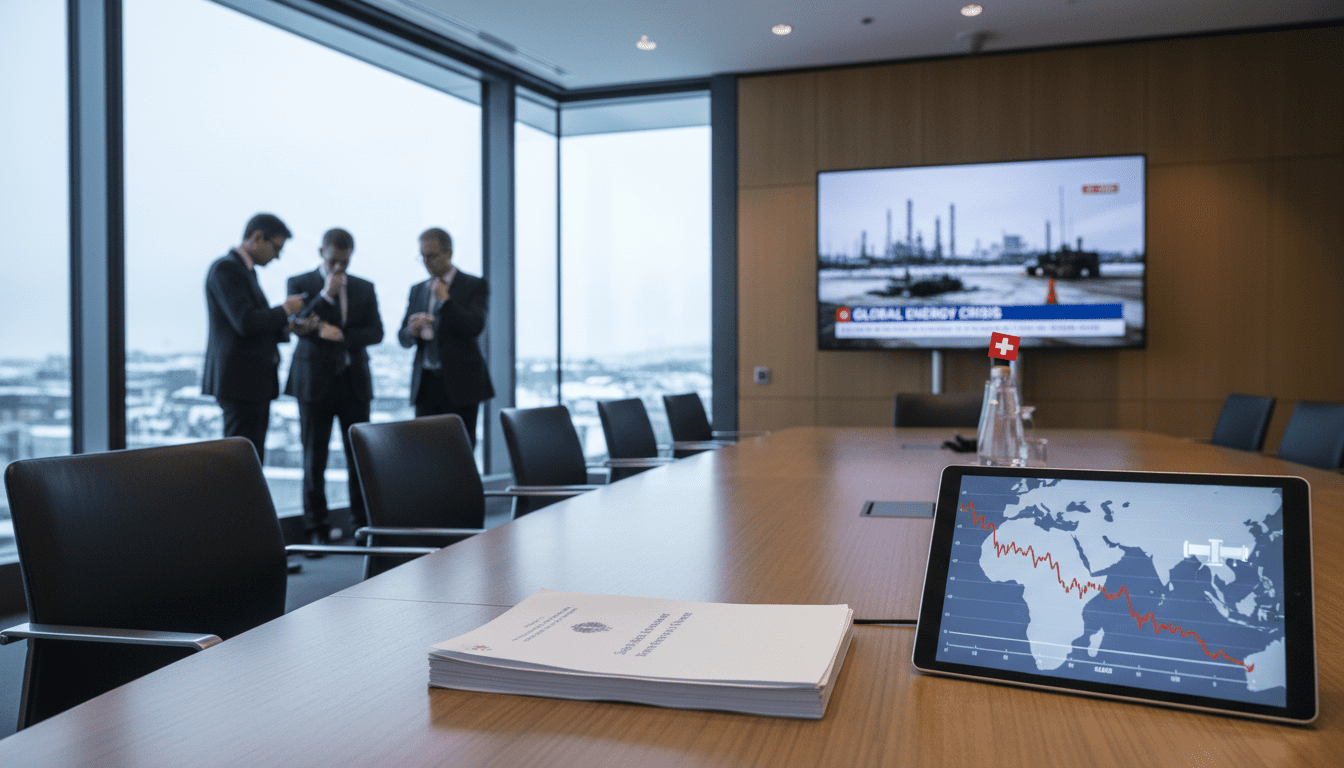
Swiss regulator warns winter gas availability at risk as US-Israeli war on Iran raises supply uncertainty
Swiss regulator warns US-Israeli war on Iran could jeopardize winter gas availability, disrupting European and Swiss electricity supplies this season.
The Swiss Federal Electricity Commission has warned that the ongoing US-Israeli war on Iran has increased uncertainty over winter gas availability, with potential knock-on effects for electricity stability across Switzerland and parts of Europe. The regulator said disruptions to global gas flows or supply routes could strain fuel-dependent generation and push grid operators to adopt contingency measures ahead of the heating season. In an extreme scenario, the commission said, gas shortages could affect the stability of the European and Swiss electricity supply, heightening the need for coordinated planning. The warning frames energy security as an immediate policy concern as geopolitical tensions sharpen.
Regulator Flags Risk to Winter Gas Availability
The Swiss Federal Electricity Commission said recent conflict dynamics have injected new risk into fuel markets that underpin power generation. Gas-fired plants, seasonal storage and cross-border import arrangements were all identified as points of vulnerability if supplies tighten. The commission’s statement stresses that uncertainty, rather than a current shortfall, is driving its message to planners and policymakers.
Potential Impact on Swiss Electricity Grid
Switzerland relies on a mix of hydropower, nuclear and thermal generation, with gas-fired units acting as flexible backup in some regions. Reduced gas availability could force greater reliance on hydropower and demand-side measures, increasing operational pressure during prolonged cold spells. Grid operators could face tighter margins for balancing supply and demand, raising the likelihood of emergency interventions if adverse weather or outages coincide with supply constraints.
European Supply Chain Concerns
The regulator linked the risk to broader European gas infrastructure and market links, noting that disruptions in transit or liquefied natural gas (LNG) flows would reverberate across borders. Many European countries maintain interconnected networks and shared storage capacity, so shocks in one corridor can propagate quickly. The commission highlighted the importance of monitoring international shipping, pipeline status and market liquidity as part of its assessment.
Scenario Analysis from the Commission
The commission outlined a range of scenarios, from manageable price volatility to severe supply curtailments that could force rationing or generation shifts. In moderate scenarios, higher prices and re-dispatch of generation would be the primary outcomes, while severe scenarios could test system resilience and require coordinated demand reductions. Officials emphasized that while extreme outcomes are not the baseline expectation, contingency planning must assume such possibilities to avoid abrupt emergencies.
Government and Industry Response Options
Swiss federal authorities and utilities were urged to review contingency plans, diversify gas sourcing where possible, and accelerate measures to reduce peak demand. Short-term options include tapping strategic reserves, increasing electricity imports if available, and implementing emergency demand-response programs. Longer-term responses discussed by analysts include accelerating renewable deployment, enhancing storage, and reviewing contracts to bolster supply flexibility.
Implications for Consumers and Businesses
A contraction in gas availability or sharp price spikes could reach consumers through higher energy bills and, in strained scenarios, through targeted supply curbs for industry. Energy-intensive manufacturers and commercial heating customers are particularly exposed to volatility, and some firms may seek alternative fuels or hedging arrangements. The commission recommended clear communications from authorities to help households and businesses prepare for possible price or delivery disruptions.
The commission also urged transparency in forecasting and stressed the need for cross-border coordination among European regulators to manage shared risks. Timely data on storage levels, import capacities and market indicators will be critical to avoid surprises and to allow market participants to respond in an orderly manner.
Swiss authorities are expected to convene further briefings with industry stakeholders and neighboring countries in the coming weeks to refine contingency steps. The regulator’s public warning seeks to prompt early action rather than create alarm, but it underscores that energy security planning must now account for an elevated geopolitical risk premium. The coming months will test how swiftly governments and operators can translate risk assessments into operational safeguards to protect electricity stability and household heating needs.
