
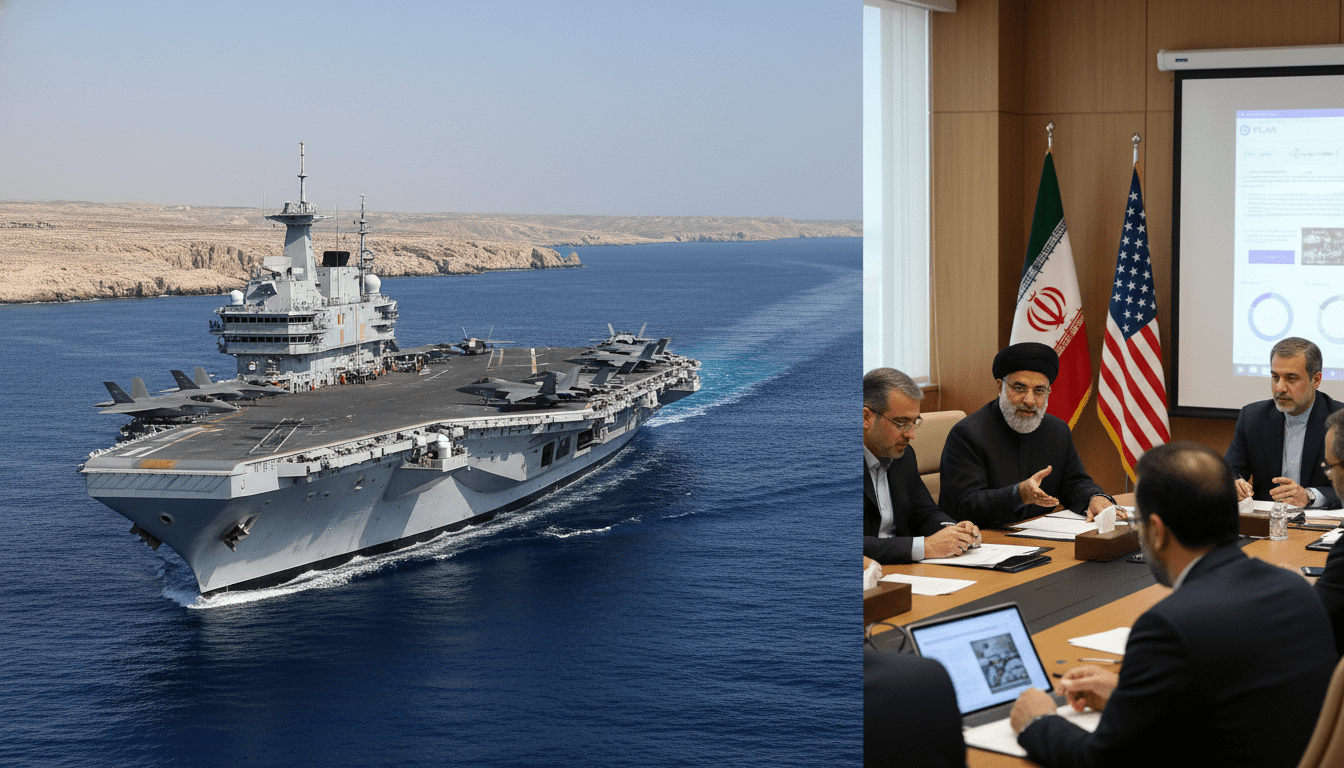
France, Britain Push Defensive Mission as Charles de Gaulle Sails Toward Strait of Hormuz
Charles de Gaulle heads to the Strait of Hormuz as Paris and London prepare a defensive navigation mission while Tehran reviews a US proposal that could end the war.
French carrier Charles de Gaulle moves toward the Strait of Hormuz
The French nuclear-powered aircraft carrier Charles de Gaulle is sailing south of the Suez Canal into the Red Sea en route to the Strait of Hormuz, French defence officials said on Wednesday. The deployment is being framed as a precautionary, defensive operation intended to protect commercial shipping if conditions allow.
French authorities described the move as part of preparations to restore safe navigation through the strategically vital strait, which was effectively blocked amid the wider US-Israel conflict with Iran. The carrier’s passage underscores rising European concern over maritime security and the commercial disruption caused by the closure.
Macron and Starmer spearhead a multinational navigation effort
President Emmanuel Macron and British Prime Minister Keir Starmer are leading diplomatic efforts to assemble a multinational mission aimed at reopening and safeguarding transit through the Strait of Hormuz. Both leaders have stressed that any deployment would remain distinct from the belligerent parties and would be defensive in nature.
French officials said the plan is intended to reassure shipowners and insurers and to create conditions conducive to renewed diplomacy between Tehran and Washington. Macron has also raised the proposal directly with President Donald Trump and discussed the situation with Iranian leadership as part of broader mediation efforts.
Reported terms of the US-Iran memorandum under mediation
Diplomats and media reports indicate negotiators are discussing a compact that would tie the reopening of the strait to reciprocal concessions on nuclear and ballistic issues. Under the reported framework, Iran would commit to not pursuing a nuclear weapon and would suspend or limit uranium enrichment for an extended period, while the United States would lift certain sanctions and allow access to frozen Iranian funds.
Several accounts suggest the memorandum would require the Strait of Hormuz to be reopened within 30 days of signing, creating a clear, time-bound link between security guarantees and economic relief. Mediators have portrayed the arrangement as a short document intended to build trust and pave the way for longer, more detailed talks on regional security and verification mechanisms.
Reactions in Tehran and Washington to the proposal
Iran’s foreign ministry said Tehran had not yet communicated a formal response to the proposal and that officials were still examining exchanged texts transmitted via Pakistani mediators. Tehran has played down media speculation that an agreement is imminent, insisting that any decision would follow careful review and consultation.
In Washington, President Donald Trump signalled progress in talks while warning of resumed military strikes if Iran rejected the plan, reflecting a blend of diplomatic engagement and coercive leverage. US officials and allied governments have indicated they are prepared to link security measures at sea to the pace and scope of any agreement reached on nuclear and missile issues.
Maritime and economic stakes for global shipping
The Strait of Hormuz is a critical artery for global energy flows, with roughly one-fifth of traded oil transiting the waterway before the conflict disrupted normal passage. The closure has driven up insurance premiums, rerouted commercial traffic, and heightened the risk of supply shocks in energy markets.
European leaders argue that restoring navigation will help stabilise markets and encourage both sides to pursue diplomatic solutions to the wider crisis. Naval escorts and a visible multinational presence are being offered as reassurance to commercial operators while mediators work to convert tentative negotiating gains into enforceable commitments.
Obstacles to a durable settlement and next steps
Despite reported convergence on a brief memorandum, major gaps remain over verification, sanctions relief sequencing, and ballistic missile restrictions. Iran and the United States continue to differ over the extent of oversight required and the timelines for reciprocal measures, complicating prospects for rapid ratification.
Diplomats say Pakistani intermediaries are carrying texts between the capitals and that negotiators are attempting to translate a one-page political agreement into implementable steps. The coming days will test whether the combination of European security guarantees at sea and a compacted diplomatic offer can overcome mutual mistrust and deliver a durable cessation of hostilities.
European naval movements and parallel mediation efforts aim to create breathing room for negotiators, but analysts warn that any breakthrough will require robust verification and a clear mechanism to prevent renewed escalation.
If talks succeed, the reopening of the Strait of Hormuz would immediately ease shipping disruptions and unlock frozen funds that could be used as part of confidence-building measures. If negotiations falter, nations in and beyond the region face a prolonged period of elevated maritime risk and economic uncertainty.
