
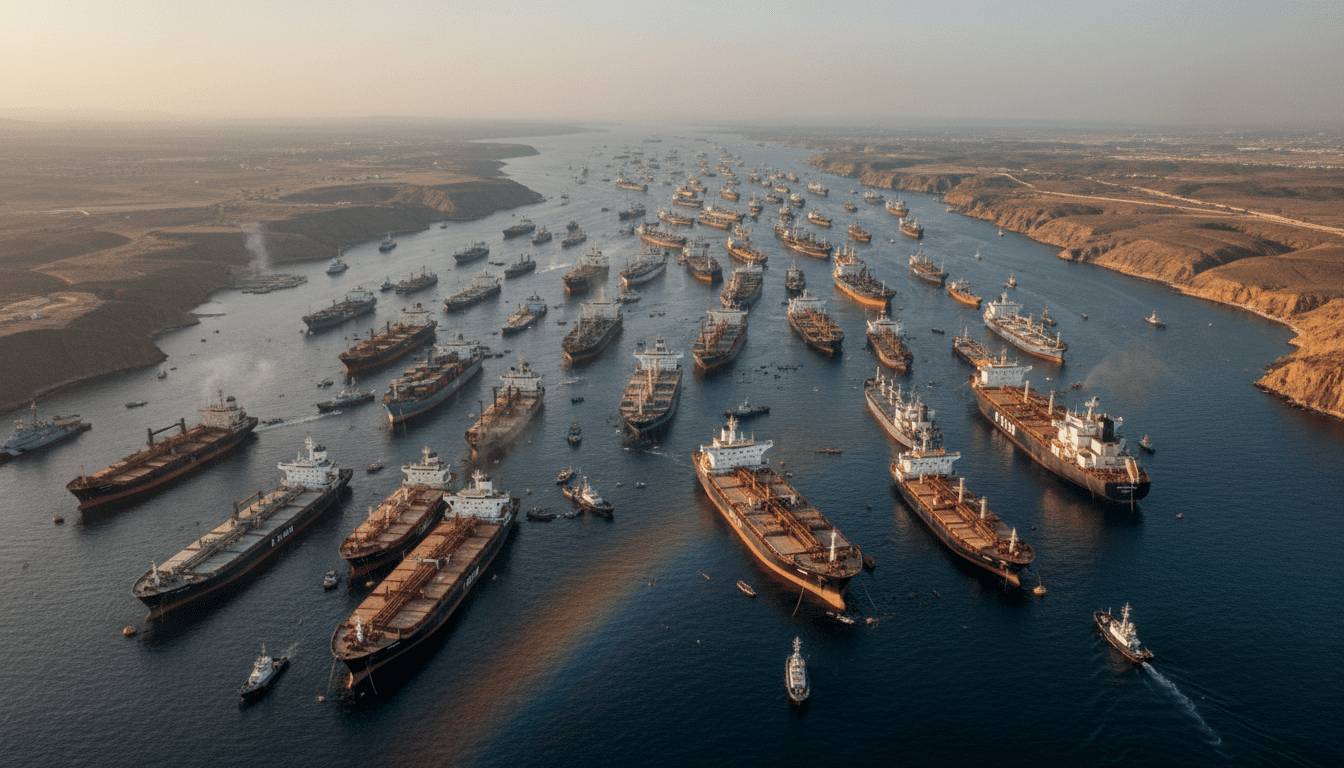
Around 1,600 Vessels Remain Stranded Near Strait of Hormuz After Missile Strikes
Around 1,600 vessels remain stranded near the Strait of Hormuz after missile strikes since late February; at least 10 killed and about a dozen injured, authorities say.
The waters surrounding the Strait of Hormuz remain congested as roughly 1,600 vessels are reported stranded near the key chokepoint, officials and maritime sources say. The Strait of Hormuz has become a focal point after a series of missile strikes that began in late February, leaving shipping operations disrupted and crews confined to vessels at anchor.
Stranded Fleet Size and Location
Shipping authorities estimate about 1,600 commercial and private vessels are awaiting clearance or safe passage in the approaches to the Strait of Hormuz. Many of the ships are anchored off nearby ports and shipping lanes, where crews remain onboard amid ongoing safety concerns.
Maritime traffic control centers have issued advisories urging ships to maintain holding patterns and follow instructions from local authorities and naval patrols. Port operators say congestion has increased vessel waiting times and complicated cargo transfer operations in adjacent terminals.
Missile Strikes Since Late February
Since the outbreak of hostilities in late February, at least 32 ships have been struck by missiles while transiting or waiting near the Strait of Hormuz, according to aggregated incident reports. The attacks have involved a variety of explosive ordnance and have affected both commercial and smaller craft, complicating efforts to reopen routes safely.
Shipping companies and insurers have recorded repeated incidents in concentrated timeframes, prompting a series of navigational warnings and temporary route suspensions. Authorities continue to investigate the circumstances of each strike as they work to establish secure corridors for transit.
Human Toll and Reported Casualties
The reported human cost from the incidents includes at least 10 fatalities and roughly a dozen injuries among seafarers and maritime personnel. Casualties have been confirmed by a mix of local authorities, shipping firms, and independent maritime monitors, though some figures remain provisional as investigations continue.
Rescue and medical evacuations have been conducted where possible, but delayed access to shore medical facilities and limited on-scene resources have complicated treatment for the wounded. Shipping operators have emphasized the need for reliable information on crew well-being and for clear protocols to facilitate rapid medical response.
Impact on Global Shipping and Energy Routes
The Strait of Hormuz is one of the world’s busiest oil transit chokepoints, and prolonged disruption has immediate implications for global supply chains and energy markets. Delays and route diversions are increasing voyage times, shipping costs, and freight rates for vessels that must bypass the area or wait for clearance.
Logistics firms report cascading effects at ports worldwide as delayed cargoes create scheduling conflicts and container bottlenecks. Energy traders and market watchers note that uncertainty around flows through the strait can ripple into crude oil and refined product pricing, though precise market moves will depend on the duration and severity of the disruptions.
Responses from Regional and International Authorities
Regional governments and international maritime organizations have issued coordinated appeals for de-escalation and enhanced protection for civilian shipping. Naval patrols from multiple countries have been authorized in some areas to provide escorts and to monitor maritime approaches, while diplomatic channels remain active to seek a reduction in hostilities affecting commercial traffic.
Shipping industry bodies have urged owners and operators to comply with guidance from flag states and classification societies, including heightened watchstanding, revised routing, and the use of best-management practices for high-risk areas. Insurers have signaled ongoing assessments of risk premiums and war-risk cover in response to the evolving security environment.
The situation has also prompted calls for improved incident reporting and transparency to assist ports and charterers in making informed decisions about vessel movements and crew welfare.
The immediate challenges for ship operators include coordinating safe anchorage, arranging medical evacuations when necessary, and managing contractual obligations amid force majeure claims. Port authorities and terminals face the task of balancing commercial throughput with safety protocols and the need to minimize wider supply chain disruption.
International observers emphasize that any sustained interference with traffic through the Strait of Hormuz would require coordinated diplomatic and security measures to restore confidence among shipowners and insurers. For now, maritime stakeholders are watching for clear, verifiable steps to secure transit lanes and to prevent further attacks on civilian shipping.
While investigations continue into each missile strike and its perpetrators, shipping companies are updating contingency plans, and crews remain on heightened alert. The coming days and weeks will be crucial in determining whether traffic can be safely restored or whether prolonged rerouting and congestion will reshape regional maritime operations and global trade flows.
