
Sudan accuses Ethiopia and UAE of drone attacks launched from Bahir Dar
Sudan accuses Ethiopia and the UAE of drone attacks, including strikes on Khartoum airport, stoking tensions and raising the risk of regional conflict.
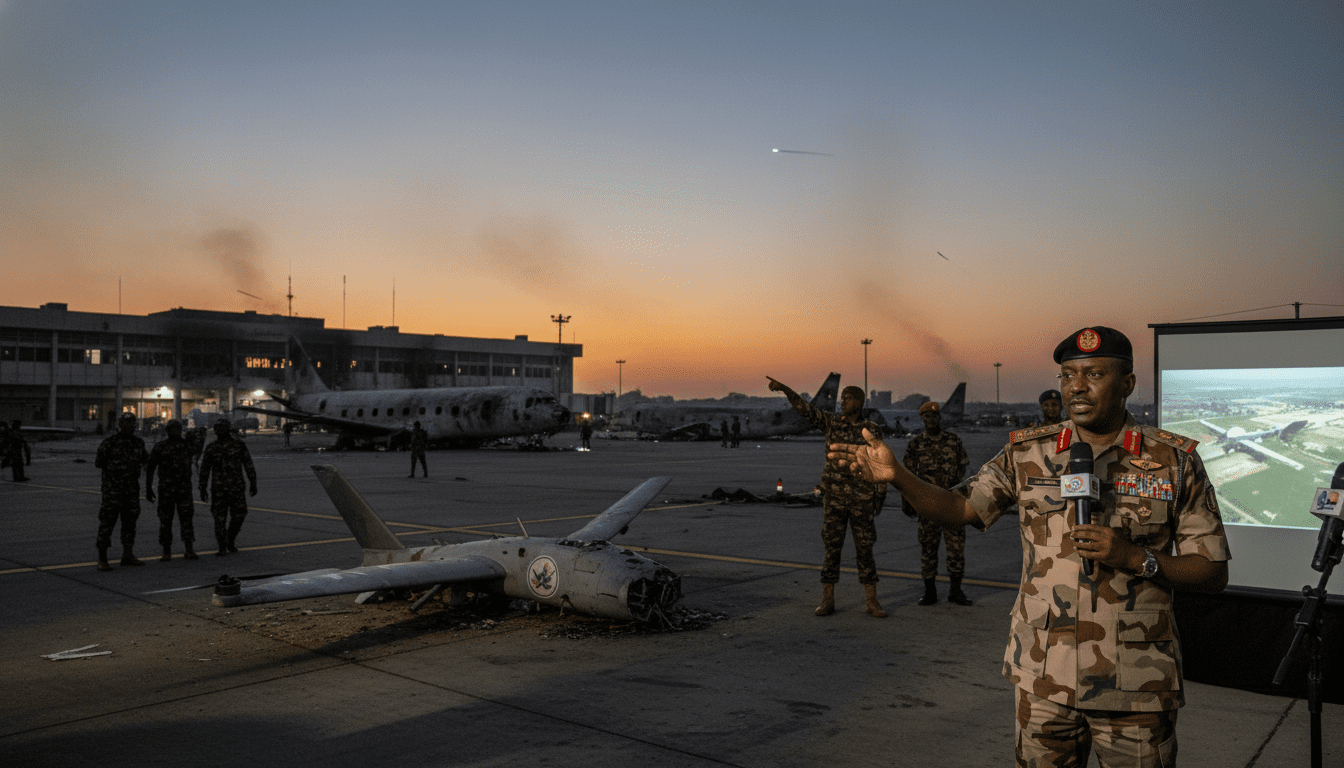
Sudan said on Tuesday that it has evidence linking recent drone attacks to Ethiopia’s Bahir Dar airport and to drones supplied by the United Arab Emirates, allegations that deepen a regional crisis and threaten to widen the war already raging inside Sudan. The government’s claim centers on data recovered from a downed unmanned aerial vehicle and a string of strikes since March 1, including an attack on Khartoum International Airport that followed the capital’s first international flight in three years. Officials warned that the country will respond to further aggression while insisting it will not be the first to strike across borders.
Sudan presents recovered drone data as proof
Sudanese military spokesperson Brigadier General Asim Awad Abdelwahab told reporters that forensic data from a drone shot down near el-Obeid pointed to UAE-manufactured systems launched from the Bahir Dar area in Ethiopia. He said four separate operations since March 1 targeted Sudanese army positions across several states, and that the same drones struck sites in and around Khartoum in recent days.
Abdelwahab’s statements were accompanied by a diplomatic gesture: Khartoum recalled its ambassador from Addis Ababa. The military framed the operations as “direct aggression” and vowed the country would not remain passive if attacks continue.
Attacks inflict civilian and military casualties across states
The recent wave of drone attacks has killed civilians and struck military targets across Kordofan, Blue Nile, White Nile and central regions. A Saturday strike on a civilian bus in Omdurman killed five people, and another attack in Gezira province a day later hit relatives of a commander allied to the Sudanese Armed Forces, highlighting the blurred line between combatants and civilians.
The strikes shattered a fragile calm in the capital that followed a notable easing of hostilities, including the resumption of international flights to Khartoum last week. Observers warn that renewed violence at transport hubs and population centers risks reversing any tentative humanitarian access gains.
Khartoum issues warnings and readiness to retaliate
Foreign Minister Mohieddin Salem said Sudan would not initiate hostilities against other states but that it would “meet any attack with a response,” adding that Khartoum stood ready to enter an “open confrontation” with Ethiopia if necessary. The tone of the warnings suggests the government is preparing to escalate diplomatic and military postures if evidence of cross-border operations persists.
Sudanese officials characterized the alleged strikes as part of a broader campaign to destabilize the state, and they signaled they would pursue both political and defensive measures. The recall of the ambassador is likely to complicate bilateral channels that might otherwise be used to de-escalate the dispute.
Ethiopia rejects the accusations and points to security threats
Ethiopia’s Ministry of Foreign Affairs dismissed the claims as “baseless,” accusing Sudanese forces of hosting and supporting groups it describes as mercenaries, including remnants of the Tigray People’s Liberation Front. Addis Ababa wrote on social media that Sudan has become a hub for anti-Ethiopian actors and alleged that Khartoum’s military aided incursions along the western border.
The response reflects longstanding tensions between the neighbors, including simmering clashes over the fertile al-Fashaga frontier and disputes over the Grand Ethiopian Renaissance Dam. Ethiopian officials and analysts say those border and water issues complicate any effort to separate bilateral disputes from internal security concerns.
UAE denies involvement amid rights groups’ accusations
The United Arab Emirates has denied providing drones or support to Sudanese paramilitaries, with an unnamed UAE official calling the accusations a “pattern of deflection” aimed at prolonging conflict. Nevertheless, rights organizations such as Amnesty International and Human Rights Watch have previously alleged that the UAE supplied arms to paramilitary forces in Sudan, claims that Abu Dhabi has repeatedly rejected.
Sudanese authorities say recovered flight and forensic data implicate UAE-made systems in the strikes; they argue such outside support helps fuel the internal conflict and extend foreign influence across the Red Sea and East Africa. Analysts note that strategic and economic interests, including access to minerals and trade routes, are part of the wider calculus shaping Gulf engagement in the region.
Analysts warn of growing regionalisation and need for de-escalation
Alan Boswell, director for the Horn of Africa at the International Crisis Group, said reciprocal accusations risk “regionalising” what began as an internal power struggle between Sudan’s armed forces and the Rapid Support Forces. He cautioned that foreign backers embolden parties on both sides and that outside mediation will be necessary to prevent a broader confrontation.
International diplomacy, including U.S. efforts, has sought to reduce cross-border tensions, but officials say progress has been limited. Observers urge third-party mediation and verification mechanisms to assess contested claims and to lower the risk that isolated strikes become triggers for wider conflict.
The Sudanese government’s allegations mark a dangerous escalation in a conflict that has already devastated communities and displaced millions since the outbreak of civil war on April 15, 2023. As accusations fly between Khartoum, Addis Ababa and Abu Dhabi, the immediate priorities for affected communities remain protection, humanitarian access and credible investigative mechanisms that can either substantiate or refute claims of cross-border drone operations.
