
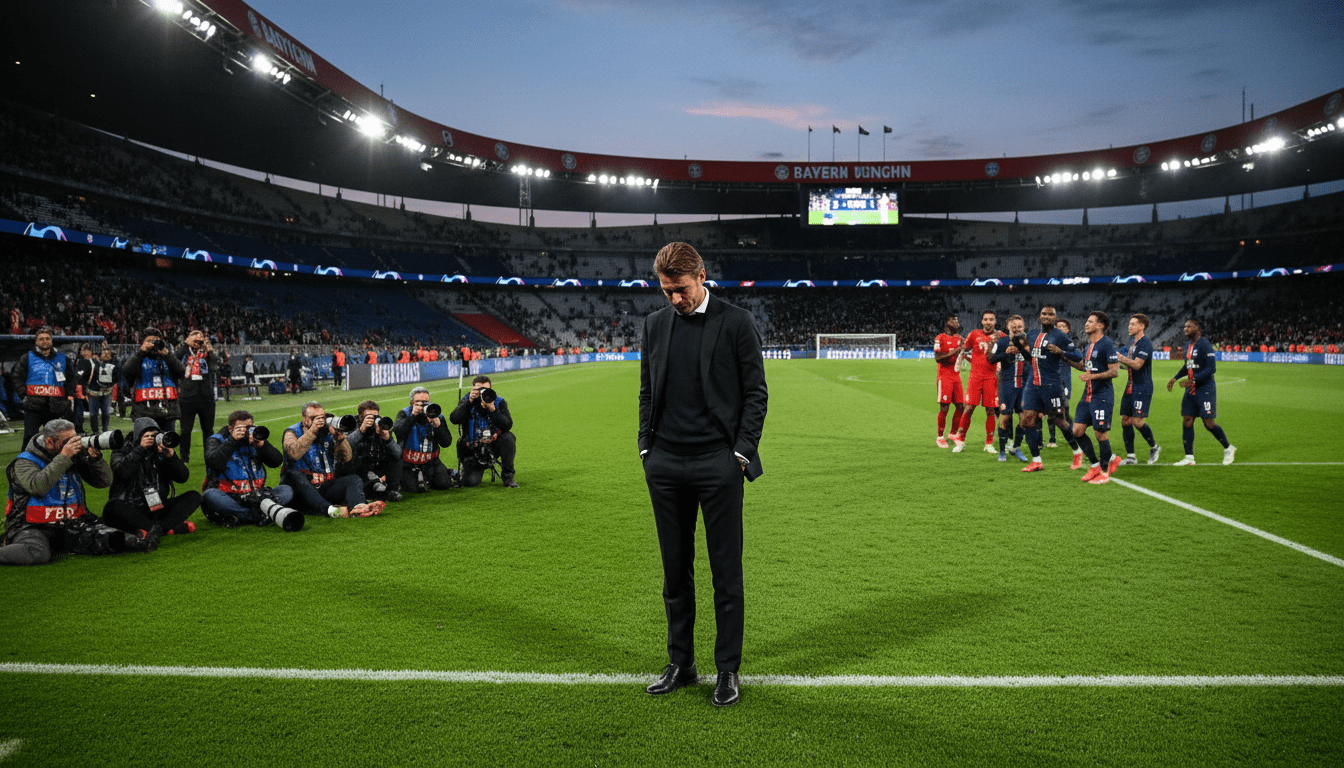
Bayern vs PSG: Kompany’s Bayern Overrun as PSG Adapts and Germany Reassesses
Bayern vs PSG clash underscores tactical limits of Vincent Kompany’s attack-first approach after Paris secured a decisive early advantage, leaving Bayern unable to recover. The rapid 2:21 opener shifted momentum and exposed vulnerabilities Kompany must address at elite level. The result also offered stark lessons for Julian Nagelsmann and the German national team ahead of the World Cup.
Early strike upends Bayern’s game plan
Paris Saint-Germain’s goal at two minutes and twenty-one seconds instantly reframed the tie and forced Bayern out of their rhythm. What had looked like a continuation of an exhilarating first leg instead became an exercise in damage control for Kompany’s side. The early setback magnified the risks of Bayern’s uncompromising, forward-leaning setup when faced with a disciplined and adaptable opponent.
Bayern initially seemed unaware of the gravity of the moment, but as the match progressed they discovered PSG was prepared to change the script entirely. That shift deprived Bayern of the space and tempo they had relied on to overwhelm opponents earlier in the competition. In high-stakes knockout football, a single errant minute can determine the direction of an entire campaign.
PSG’s change of tempo and structure
After gaining the lead, PSG abandoned the premise of trading blows and instead dictated the game through selective control and defensive composure. The Parisians proved they could transition from aggressive pressing to a more cautious, game-managing posture without losing effectiveness. That ability to vary approach under pressure is a hallmark of elite teams and it neutralized Bayern’s primary weapons.
PSG’s tactical flexibility removed Bayern’s avenues for sustained attack and forced the visitors into riskier play. Rather than trying to outscore the opponent in an open contest, Paris focused on shutting down channels and exploiting counter opportunities. The result highlighted the gulf between theoretical attacking intent and the practical demands of finishing a two-legged tie.
Kompany’s philosophy tested at the highest level
Vincent Kompany’s principles — aggressive positioning, high intensity and proactive football — remain coherent and, in many contexts, effective. Yet this match made clear those ideas can become fragile when opponents decline to participate on the same terms. At the very top level, a manager must plan contingencies for moments when a favored template is rendered impractical.
The Bayern coach will not face wholesale rejection of his approach for a single game, but the defeat exposed how quickly confidence can be undercut by one early blow. Kompany now confronts the task of refining in-game management and structural resilience so his team can pivot without losing identity or exposing fatal defensive gaps.
Nagelsmann’s scouting and the national team implications
Germany head coach Julian Nagelsmann was in attendance and left with tactical questions applicable to his own squad as the World Cup approaches. The match provided a live illustration of how a team predicated on outscoring opponents may struggle if it cannot also adopt a pragmatic posture when circumstances demand. That dual capacity is often decisive in tournament knockout phases.
Nagelsmann’s selections and match plans will be scrutinized for signs he can toggle between optimistic attacking and disciplined containment. The Bayern display served as a cautionary example: high-tempo football can succeed in group play, but a swift shift in game dynamics requires players and staff who can reset priorities under duress.
German representation in the final and personnel notes
German football was not absent from the continental climax, with Kai Havertz among the finalists in Budapest, offering a narrower but meaningful presence on the biggest stage. The more immediate takeaway for Germany is not the number of representatives at the final but the types of players who can influence outcomes under shifting conditions. In this sense, defensive leaders such as Joshua Kimmich and Manuel Neuer remain central to any tactical recalibration.
The match underscored that the players most likely to preserve a fragile advantage are often the ones who marshal defensive organization rather than spearhead attack. That balance between defensive stewardship and attacking creativity will be a central theme for German preparations in the coming weeks.
Bayern vs PSG illustrated that high-minded football philosophies must be married to pragmatic game management to succeed in knockout competition. Kompany’s ideas remain promising, but Paris’s response delivered a timely reminder of the margins that separate progress from elimination.
The outcome leaves Bayern with clear homework: sharpen transitional plans, reinforce defensive compactness, and build greater tactical malleability into match-day decision-making if they are to translate ambitious football into consistent success at the highest level.
