
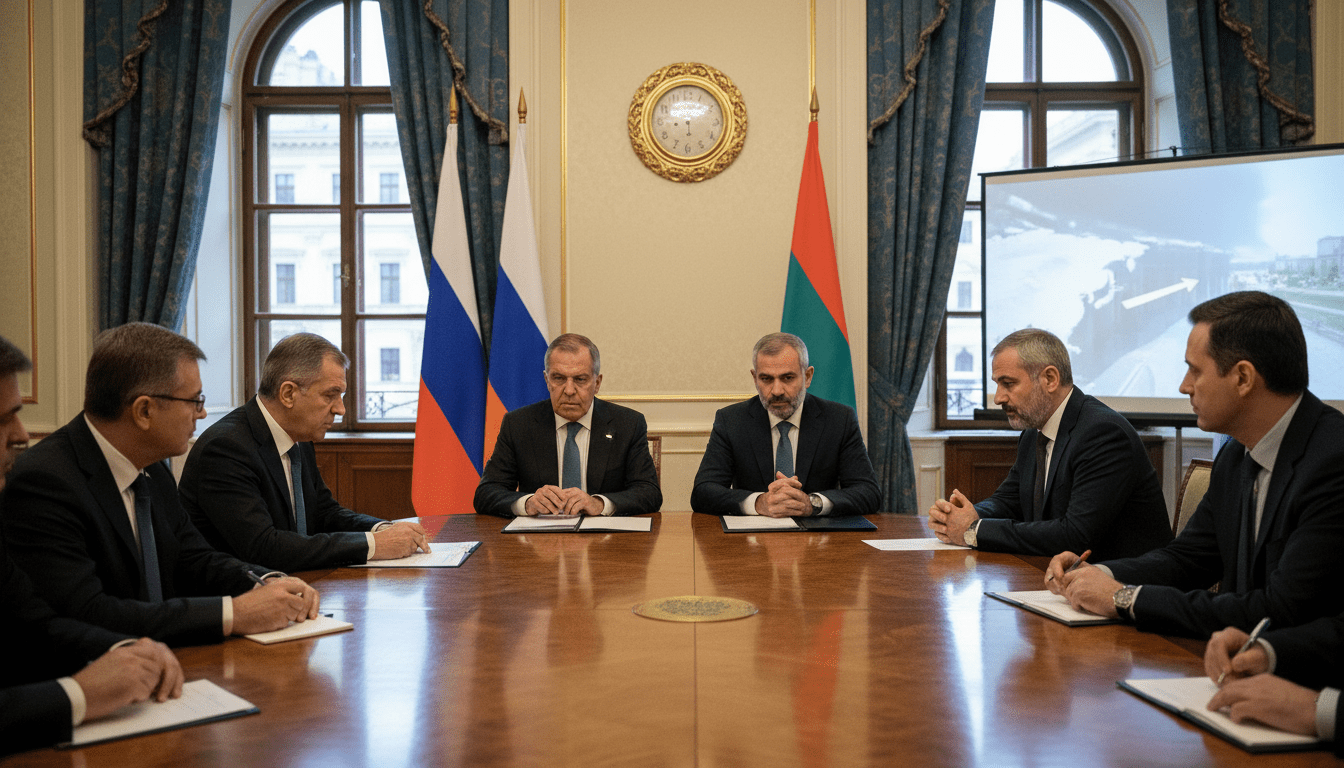
Russia Warns Against Armenia-EU Ties Ahead of June 7 Parliamentary Vote
Moscow warns Armenia’s closer ties with the EU could bring political and economic fallout as Yerevan hosts European summits ahead of the June 7 parliamentary vote.
Armenia-EU ties have become the focus of a sharp public warning from Moscow as diplomatic traffic between Yerevan and Brussels intensifies ahead of a closely watched vote on June 7. Russian Foreign Ministry spokeswoman Maria Zakharova said Armenia risked being drawn into an “anti‑Russian orbit” as its leadership pursues deeper alignment with European institutions. The comments underscore growing friction between two former allies at a moment when Armenia has hosted high‑profile European meetings and opened new diplomatic channels with the EU.
Moscow’s Public Warning
Maria Zakharova framed Armenia’s outreach to the European Union as movement toward “aggressive euro‑Atlantic standards,” asserting that the course adopted by Yerevan could produce negative political and economic consequences. Her remarks were delivered in clear, public language intended to signal Moscow’s displeasure with the trajectory of Armenia‑EU ties. The statement did not outline specific countermeasures, but it reiterated a long‑standing Russian view that post‑Soviet states should remain within its strategic sphere of influence.
Yerevan Hosts European Political Community and EU‑Armenia Summit
Earlier this week Yerevan hosted leaders and delegates for a meeting of the European Political Community, followed by a separate EU‑Armenia summit aimed at deepening cooperation. Armenian officials presented the gatherings as part of a sustained effort to broaden political and economic links with the European Union. European representatives described the meetings as opportunities to discuss security, recovery and closer institutional engagement without signaling membership prospects.
Relations Strained Since Nagorno‑Karabakh Offensive
Bilateral relations between Russia and Armenia have noticeably deteriorated since Azerbaijan’s military operation in Nagorno‑Karabakh in September 2023, which resulted in the reintegration of the disputed territory and a mass departure of ethnic Armenians. That episode intensified regional realignment pressures and sharpened domestic debates in Yerevan over security guarantees and external partnerships. Analysts say the shift in public and elite sentiment toward diversifying alliances has been a key factor behind Armenia’s outreach to the EU.
June 7 Vote Seen as a Pivot on Foreign Policy
The parliamentary elections scheduled for June 7 are widely viewed as a potential turning point for Armenia’s foreign policy orientation, with parties offering differing visions of the country’s strategic partnerships. Pro‑European forces portray expanded Armenia‑EU ties as a way to secure economic investment and political reform, while pro‑Russian constituencies emphasize traditional security links with Moscow. Voters will confront competing narratives about the trade‑offs of deeper integration with the EU versus preserving close relations with Russia.
Economic and Security Risks Highlighted by Moscow
In warning of political and economic consequences, Moscow pointed to what it termed potential disruptions in trade and security cooperation should Armenia accelerate alignment with European norms. Armenia’s economy remains closely interconnected with regional partners, and changes in trade relationships or security arrangements could have measurable effects. Observers note that Armenia’s small but open economy would face short‑term adjustment costs even as longer‑term diversification might bring new investment and institutional ties.
Diplomatic Signals and Regional Calculations
Both Yerevan and Brussels sought to frame recent summits as constructive steps rather than decisive breaks with existing partners, emphasizing dialogue and practical cooperation. Russia’s public admonition functions as a diplomatic signal to audiences in Moscow, Yerevan and capitals across the region that the Kremlin is monitoring the pace of change. Regional powers will continue to weigh the implications of Armenia’s choices for balance of power and the management of frozen or contested conflicts in the South Caucasus.
Public opinion, elite calculations and immediate security concerns will shape how Armenia navigates the coming months as it responds to Russian warnings and European offers. The June 7 parliamentary vote will offer voters a chance to endorse a path that could bring closer Armenia‑EU ties or to reaffirm a strategy of closer engagement with Russia. The outcome will have ramifications not only for bilateral relations but for the broader geopolitical dynamics of the Caucasus.
