
Rhineland-Palatinate constitution change limits AfD’s ability to unilaterally launch investigation committees
Rhineland-Palatinate constitutional change bars AfD from unilaterally launching inquiry committees, sparking debate over minority rights and democratic norms.
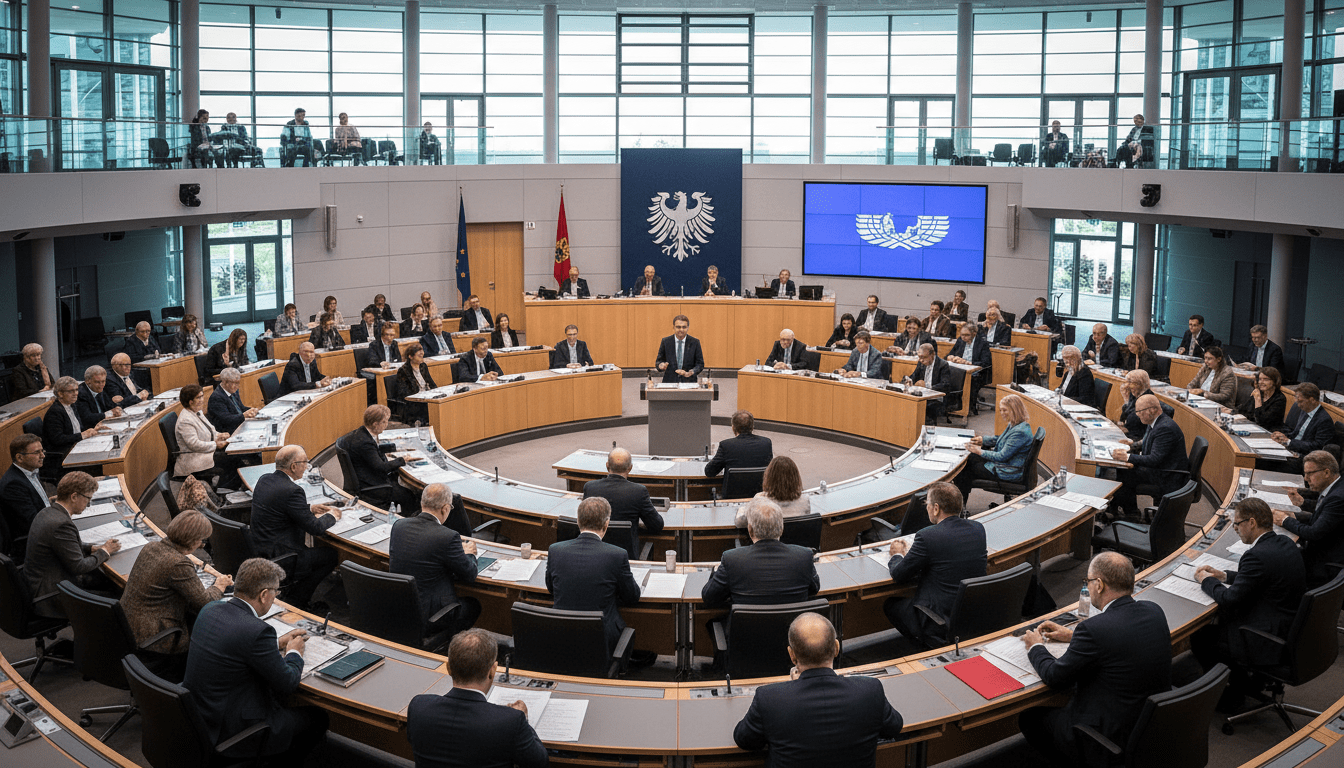
The Rhineland-Palatinate constitution change approved by the state parliament has removed the automatic right of a single parliamentary group to initiate a state-level investigation committee, a move proponents say is needed to prevent misuse of the instrument. The amendment, passed by the outgoing Landtag in Mainz before the new assembly is constituted, immediately reshapes how parliamentary oversight can be triggered. Critics warn the change narrows opposition tools and risks eroding public trust in democratic competition.
State parliament amends constitution
The Landtag voted to alter the state constitution to raise the threshold for establishing an investigation committee, aligning Rheinland-Pfalz’s rules more closely with federal and other state standards. Lawmakers supporting the change argued the measure restores procedural balance and protects parliamentary resources from being consumed by frequent, politically motivated probes.
Opponents say the timing and the content of the amendment are problematic because the outgoing parliament used its remaining legislative session to curtail a power of the newly elected legislature. The debate centers on whether the change responds to a legitimate procedural problem or amounts to a preemptive limitation aimed at a specific party.
Majority frames change as defensive measure
Members of the CDU, SPD and Greens repeatedly described investigation committees as a “sharp instrument” that can be destructive if invoked excessively, saying frequent inquiries risk paralysing parliamentary work. They argued that raising the bar preserves the committee’s investigative value and prevents a culture in which such mechanisms are deployed as a routine partisan tactic.
Supporters also cited the practical burden of lengthy inquiries, which can consume staff, judicial and administrative resources without producing substantive outcomes. Their argument rests on protecting the legislature’s ability to function and on preventing an environment of constant, resource-draining political confrontation.
AfD’s planned use and the minority rights argument
The AfD had signalled it planned an aggressive use of the inquiry mechanism, which intensified the political impetus for change. Proponents of the amendment point to that planned usage as a reason to adjust the rules, while defenders of opposition rights say the move directly targets one party’s capacity to act as an effective minority counterweight.
Legal scholars and democratic theorists stress that investigation committees are a classic minority tool to scrutinise the majority and hold governments accountable. Curtailing that tool, they say, risks weakening the institutional checks that make parliamentary majorities answerable to scrutiny beyond electoral cycles.
Legal and constitutional challenges likely
Legal analysts expect the amendment to face scrutiny in courts, with possible challenges arguing the change undermines established minority rights or was improperly timed. The constitutional route could test whether procedural adjustments of this kind are permissible when enacted by an outgoing legislature acting on the heels of an election result.
Proponents point out that higher thresholds for initiating investigations already exist at the federal level and in several Länder, framing the reform as harmonisation rather than an unprecedented restriction. Nonetheless, the scope for judicial review remains substantial and could produce clarifying rulings on the balance between majoritarian rule and opposition prerogatives.
Political fallout and risks to voter trust
Beyond legal questions, the move has political consequences: several parties have coalesced around the amendment for the explicit purpose of limiting the AfD’s parliamentary tools, a strategy that critics characterise as a “cordon sanitaire” extended into the operational rules of the legislature. Observers warn that system-wide efforts to block a party from procedural instruments risk reinforcing narratives of exclusion and may fuel voter disaffection.
Analysts also note the potential long-term cost to democratic legitimacy if voters perceive that electoral outcomes are being second-guessed through procedural changes. In a period of multiple economic and social pressures, shrinking avenues for opposition oversight may aggravate public frustration and strengthen appeals from parties that present themselves as outside the establishment.
The Rhineland-Palatinate constitutional amendment has settled the procedural question for now, but it has raised deeper debates about how democracies should balance protection against abuse with the need to preserve minority oversight. The coming weeks and possible legal challenges will determine whether the state’s recalibration of investigative powers is upheld and how it reshapes parliamentary politics in Mainz.
