
Trump Iran Talks: ‘Very Good Conversations’ from Oval Office as U.S. Vows to Block Strait of Hormuz Closure
President Trump said there were “very good conversations” with Iran and vowed the U.S. would not allow Tehran to close the Strait of Hormuz, promising more information by the end of the day.
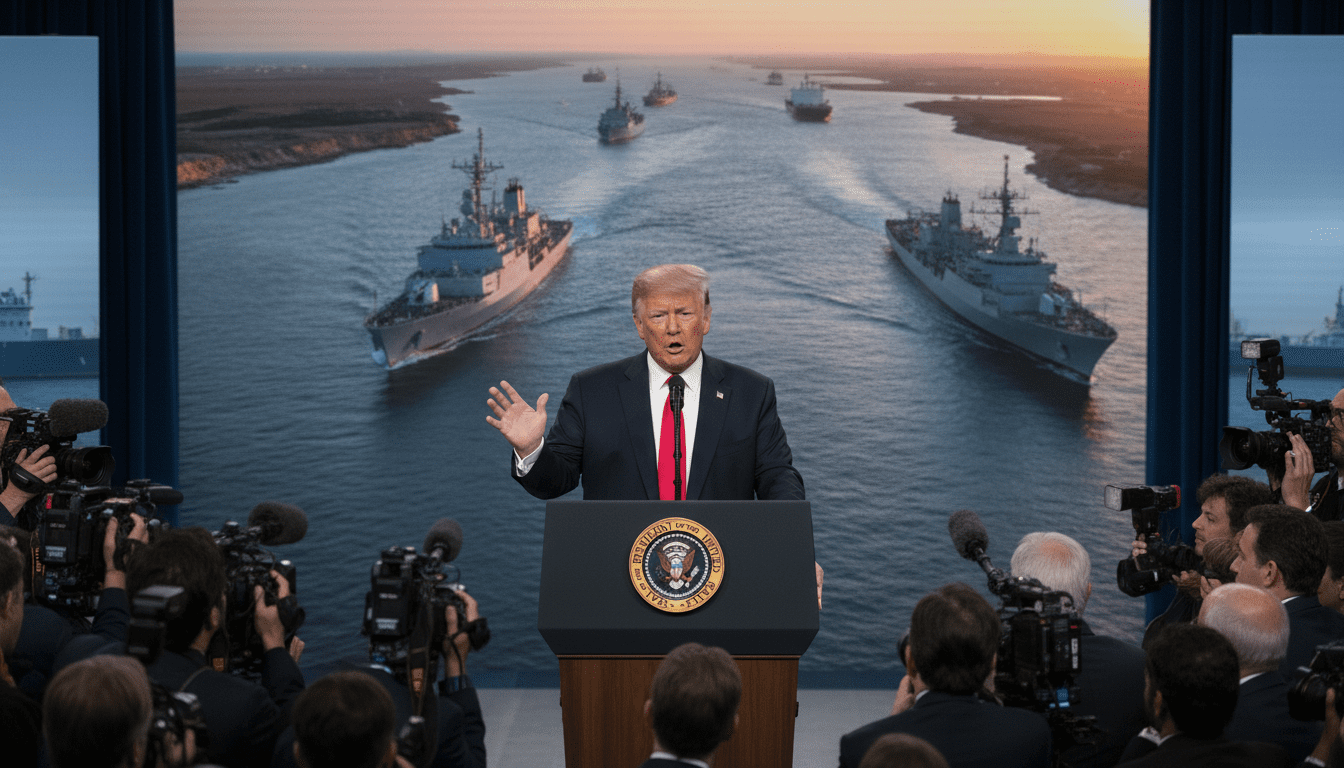
Speaking from the Oval Office, President Donald Trump said the United States was engaged in “very good conversations” with Iran and described the exchanges as constructive. He reiterated that Iran had threatened to close the Strait of Hormuz and said the U.S. would not be “blackmailed” by such moves. Trump also characterized Iranian behavior as “a little cute as they have for 47 years” and said the administration would provide “some information by the end of the day” without offering further detail.
Trump Announces Talks with Iran from Oval Office
Trump framed the discussions as productive during a short Oval Office statement, using the phrase “very good conversations” to describe contacts with Iranian leaders. He did not identify who in Tehran or Washington had taken part in the talks, nor did he specify whether discussions were direct or mediated. The president’s remarks were brief and focused on stressing U.S. firmness rather than outlining diplomatic steps.
U.S. Response to Threats against the Strait of Hormuz
The president made clear the United States rejects any attempt by Iran to close the Strait of Hormuz, the narrow waterway through which a significant share of global oil shipments transits. Saying the U.S. would not allow itself to be “blackmailed,” he signaled a continued willingness to use military and diplomatic tools to keep the sea lane open. Washington has historically viewed freedom of navigation in the Gulf as a strategic priority, and the Oval Office comments underscored that posture.
‘A Little Cute’ Remark and Historical Context
Trump’s remark that Iran had been “a little cute as they have for 47 years” invoked the long, adversarial history between the two countries dating to the 1979 Iranian Revolution. The comment framed current tensions as part of a decades-long pattern of friction rather than a sudden escalation. Analysts said such language can be double-edged: it underscores longstanding grievances but also risks inflaming nationalist sentiment in Tehran if perceived as dismissive.
Promise of a Same-Day Intelligence Update
The president said there would be “some information by the end of the day,” but offered no timeline or specifics about the nature of that material. The promise raised questions about whether the administration planned to release fresh intelligence, operational details, or policy announcements related to the reported talks. Officials and analysts typically treat same-day intelligence briefings as sensitive, and any public release could have immediate diplomatic or market consequences.
Diplomatic and Security Implications for the Region
The Oval Office statement is likely to reverberate across the Gulf and among U.S. partners, who watch Tehran’s rhetoric and maritime activity closely. A threatened closure of the Strait of Hormuz would pose serious risks to global energy markets and to commercial shipping, prompting potential coordinated responses from allies. The U.S. stance of refusing to accept coercive moves signals openness to collaboration with regional partners, but it also raises the prospect of increased naval deployments or sanctions as contingency measures.
Unanswered Questions for Policy and Markets
Beyond the president’s brief remarks, crucial questions remain unanswered: Who is participating in the talks, what concessions if any are on the table, and what form will the promised information take? Markets and foreign ministries typically react swiftly to such developments, and a lack of detail can heighten volatility. Observers said any forthcoming disclosures will be scrutinized for indications of whether diplomacy is advancing or whether the situation could spiral into further confrontation.
The administration’s statement combined an unusual mix of conciliatory language about talks and a firm warning against Iranian attempts to disrupt shipping through the Strait of Hormuz. As officials prepare to release additional information, allies and regional actors will be watching for concrete evidence of progress or provocation, and the broader implications for Middle East stability remain uncertain.
