
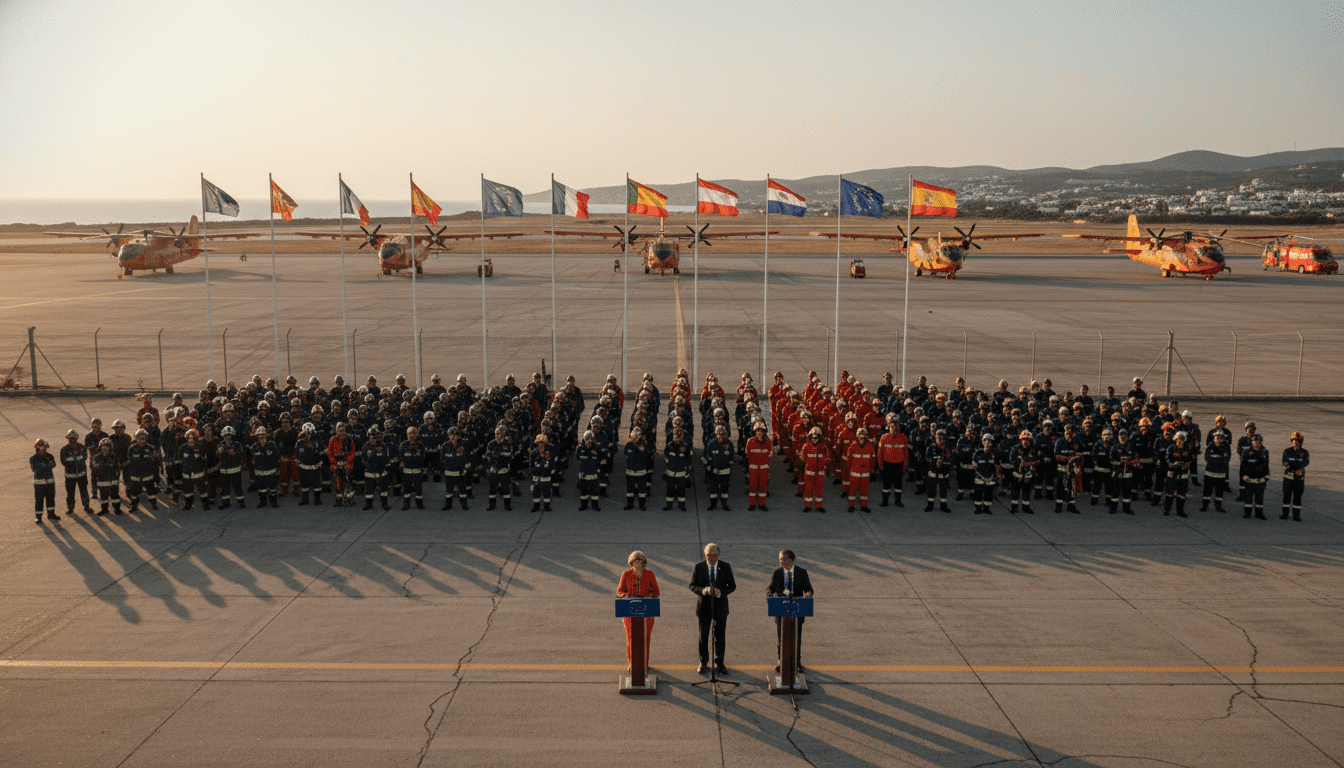
EU wildfire response mobilizes about 800 firefighters and 22 planes for largest summer operation
EU wildfire response ramps up as the Commission deploys about 800 firefighters, 22 planes and five helicopters to six Mediterranean countries this summer.
EU Announces Largest Summer Wildfire Deployment
The European Commission has unveiled what it calls the bloc’s largest coordinated wildfire operation for summer 2026, mobilizing roughly 800 personnel from 14 member states. The deployment will station crews in Cyprus, Greece, Italy, France, Spain and Portugal to bolster frontline firefighting capacity in high-risk areas. Commission President Ursula von der Leyen described the initiative as an example of “European solidarity in action” and said assets will be coordinated through the EU civil protection mechanism.
Forces Positioned Across High-Risk Mediterranean States
Teams will be placed in regions that have historically borne the brunt of seasonal fires, with particular emphasis on the southern Mediterranean rim and island territories. The plan anticipates rapid regional movement of ground crews to hotspots identified by national authorities and EU situational assessments. Officials say placement decisions will be dynamic, allowing reinforcements to be shifted as fire seasons evolve across the six targeted countries.
Aerial Fleet and Ground Teams Mobilized
In addition to nearly 800 firefighters, the Commission said 22 fixed-wing aircraft and five helicopters from the EU fleet will be available to support suppression and reconnaissance missions. These aerial resources will operate alongside ground units to provide water drops, map active fronts and assist with tactical insertions. The combined air-ground posture aims to reduce response times and improve suppression effectiveness in steep or remote terrain.
Coordination Through EU Civil Protection Mechanism
The operation will be managed and financed under the EU Civil Protection Mechanism, with a 24/7 emergency coordination centre providing round-the-clock support and expert guidance. That coordination hub will handle requests from national authorities, allocate shared assets and oversee cross-border logistics such as fuel, lodging and medical support. The mechanism is intended to streamline rapid deployment while maintaining national command of on-the-ground operations.
New Cyprus Fire Station to Strengthen Regional Readiness
As part of the initiative, the Commission intends to establish a European fire station in Cyprus aimed at improving preparedness and response capacity across the southern Mediterranean. Authorities say the permanent presence will enhance staging, training and pre-positioning of equipment ahead of peak fire months. Officials framed the Cyprus station as a forward base for both EU and partner operations, designed to shorten transit times for aerial assets and support regional interoperability.
2025 Burned Area and Climate Context
The push follows alarming data from the World Meteorological Organization and the Copernicus climate service showing that more than one million hectares burned across Europe in 2025. Those agencies reported that both the likelihood of wildfires and the typical size of burned areas have increased in southern Europe due to rising temperatures and extended dry spells. EU officials cited that evidence in arguing for a larger, more integrated response this season to protect lives, homes and critical ecosystems.
Operational Challenges and Resource Constraints
Despite the expanded deployment, experts warn that resource limits and logistical hurdles remain significant obstacles to effective suppression. Cross-border coordination requires rapid legal and operational clearances, while sustaining crews in extended operations demands reliable water sources, sleep rotations and mental-health support. Climate-driven shifts in fire behavior also complicate tactics, with hotter, faster-moving blazes increasing the risk to firefighters and civilian infrastructure.
Civil Protection Officials Stress Prevention and Preparedness
EU and national authorities emphasized that suppression capacity must be paired with prevention measures, including improved forest management, early-warning systems and public evacuation planning. Authorities said investments in fuel-reduction work, community preparedness and resilient infrastructure will reduce the scale and impact of future fires. The Commission indicated funding streams under its disaster resilience programs will be aligned to support both short-term response and longer-term adaptation efforts.
The deployment aims to provide a surge capacity that national services can draw on while maintaining local command and control, with the Commission promising continuous monitoring and reassessment as the season progresses.
