
US-Iran attacks escalate into deadliest exchanges since ceasefire collapse
US-Iran attacks intensify: mutual strikes across Iran, the Gulf and Iraq have left dozens dead, damaged civilian infrastructure and drawn urgent international calls for de-escalation.
The United States and Iran engaged in the fiercest mutual strikes since the June ceasefire broke, with the US reporting multiple strikes on Iranian military sites and Iran striking targets across the Gulf and in Iraq. The US-Iran attacks have left at least eight people dead in Iran and dozens more wounded, according to Iranian state media, while Iranian forces say they have struck US radar sites and military facilities across the region. The exchanges mark a rapid escalation that has damaged civilian infrastructure and prompted urgent diplomatic interventions from several governments.
Casualties reported in Iran and Iraqi Kurdish region
Iranian state media reported eight fatalities and 20 injured in strikes attributed to US forces inside Iran, with additional casualties and damage reported in southern provinces. Iran’s health ministry said that, during July, at least 38 civilians have been killed and more than 400 wounded by US strikes, figures that the Tehran government has used to condemn the attacks internationally.
An Iranian-Kurdish exile opposition group said Iranian strikes in the autonomous Kurdish region of Iraq killed nine of its members, highlighting the conflict’s spillover into Iraqi territory. Officials in the affected areas and independent verification remain limited amid the ongoing exchanges, raising concerns about further noncombatant harm.
US says it struck “dozens” of Iranian military targets
US Central Command (CENTCOM) said American aircraft struck dozens of Iranian military targets, identifying coastal surveillance, air-defense positions, logistics hubs and naval assets among the objectives. The Pentagon framed the operations as precision strikes against military infrastructure, while warning of continued operations if threats to US forces persist.
The US also reinstated a naval blockade of Iranian ports after the ceasefire faltered, a move Washington says aims to prevent further maritime threats in the Strait of Hormuz. Officials in Washington have signaled continued readiness for diplomacy even as military pressure continues, and said lines of communication with Tehran remain open.
Iran reports damage to civilian infrastructure in the south
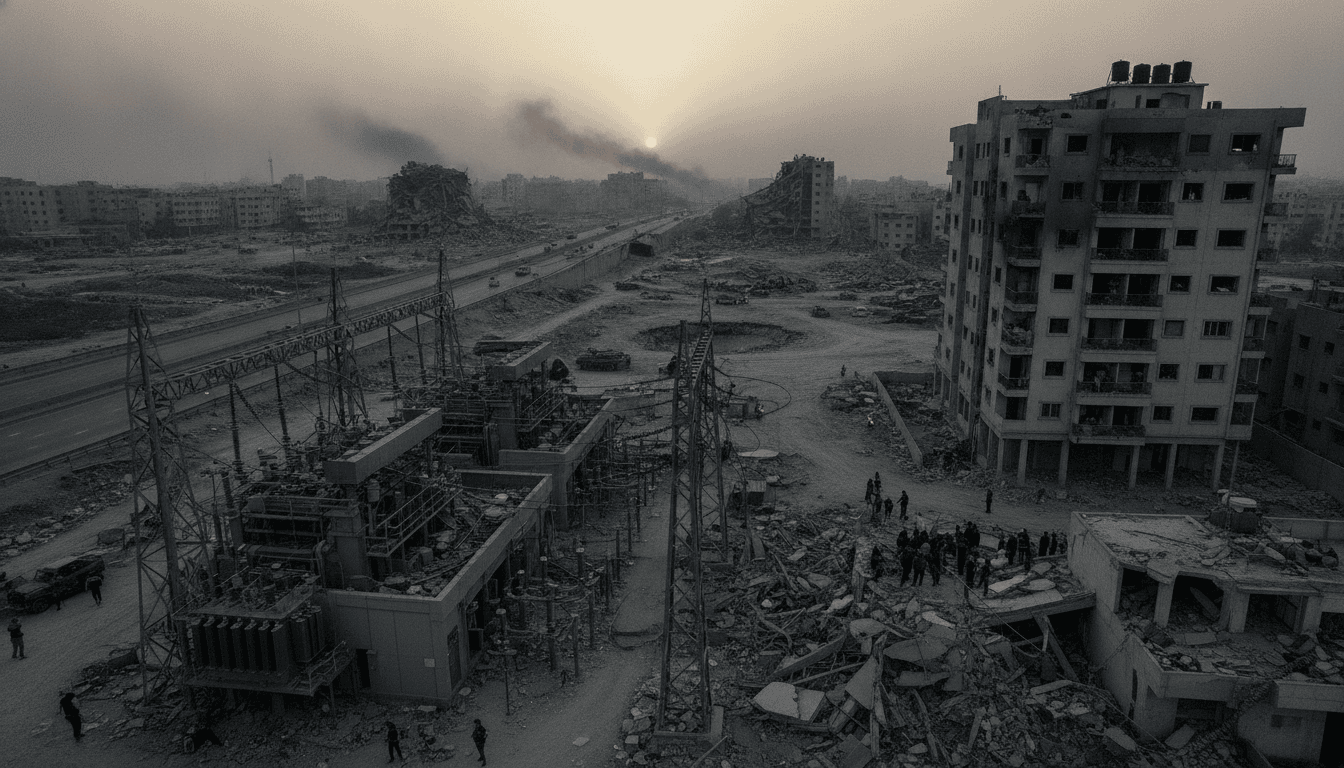
Iranian authorities said the US strikes damaged civilian infrastructure in the country’s south, listing bridges, a railway station, an airport and elements of the power grid among the sites hit. The Iranian energy ministry urged residents to conserve electricity as repair crews assessed damage to the grid, which officials said had disrupted services in several southern provinces.
Tehran’s UN ambassador described the strikes against civilian infrastructure as war crimes, a charge that escalates the diplomatic dispute over the legality and proportionality of the US operations. International monitors have not independently verified the full extent of the reported infrastructure damage.
Attacks across the Gulf and in Iraq, Oman and Syria
Iranian Revolutionary Guard Corps (IRGC) statements said their forces struck US radar installations in Oman and targeted the Al-Tanf base in Syria, signaling a widened geographic scope to the exchanges. Kuwaiti authorities reported that a military facility and a power plant were hit, injuring several soldiers, while the IRGC claimed attacks on US radar systems and military aircraft in Qatar.
AFP reported that debris from strikes in Qatar injured a child, underscoring the risk to civilians even in states hosting foreign military assets. The spread of strikes to multiple countries has increased regional alarm about further escalation and unintended consequences.
International appeals for de-escalation and diplomacy
China and Pakistan publicly urged both sides to halt hostilities and resume negotiations, framing diplomacy as the only sustainable path out of the crisis. The German government issued an urgent call for Iran to end its attacks, reflecting concern among European capitals about the conflict’s destabilizing effects on regional security and energy markets.
Washington said President Donald Trump remained open to diplomacy while overseeing military operations, and that US officials continue to engage in contacts with Iranian counterparts. Diplomatic channels and back-channel communications are expected to remain active as international actors press for a ceasefire.
IRGC vows continued strikes until US ends southern operations
The IRGC declared it would continue its offensive until the United States ceased operations along Iran’s southern coast and in the Strait of Hormuz. Tehran has pointed to an alleged Iranian attack on a commercial tanker in the Strait of Hormuz in June as the trigger for the breakdown of a ceasefire that was reached that month.
On July 8, 2026, President Trump announced at the NATO summit in Ankara that the ceasefire was over, after which US forces resumed strikes and reimposed maritime restrictions, according to US and Iranian statements. Both sides now appear locked in a cycle of reprisals that officials in the region and abroad are working to break.
The unfolding US-Iran attacks have already caused battlefield losses and civilian hardship while raising the specter of wider regional escalation; diplomats and regional leaders are intensifying efforts to secure a pause, but for now the conflict shows few signs of immediate abatement.
