
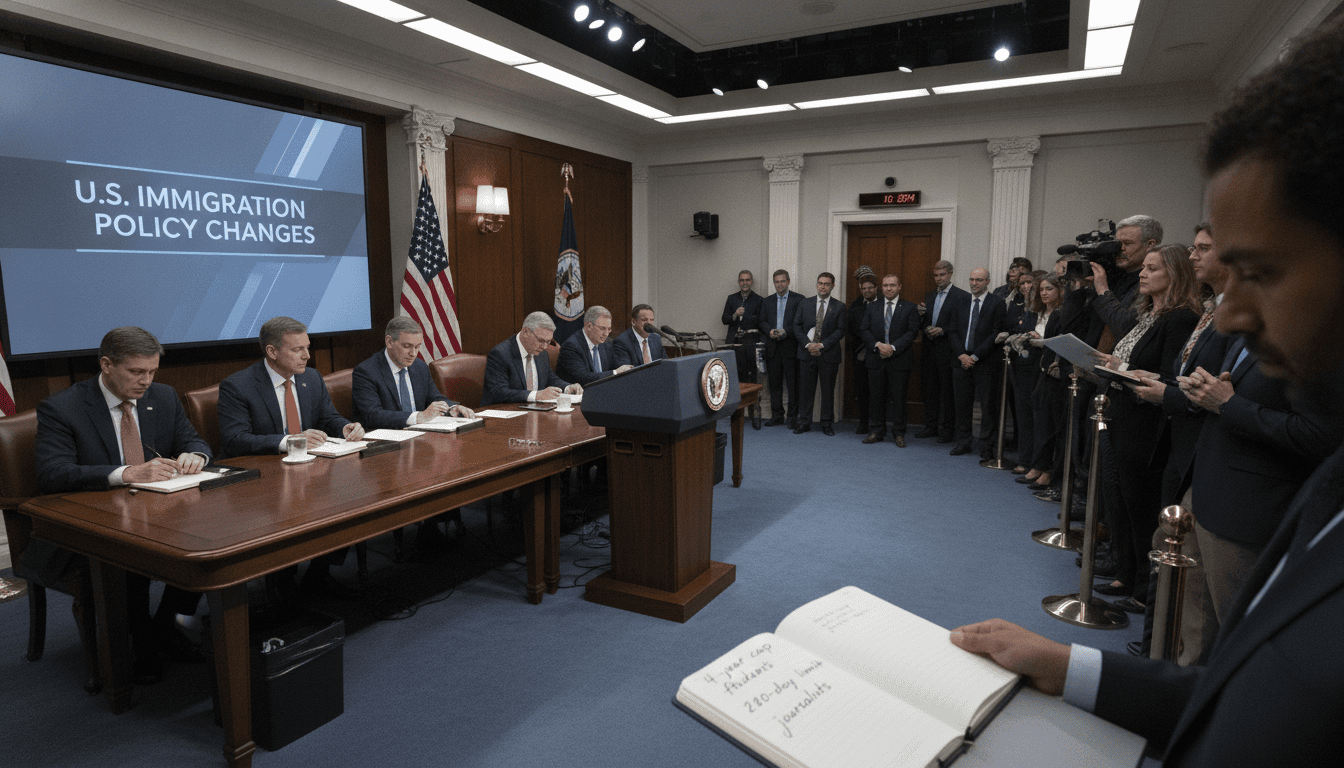
U.S. Limits Stays for Foreign Students and Journalists Under New DHS Rule
DHS final rule limits U.S. stays for foreign students to four years and caps journalists at 240 days; in‑country extensions allowed. Published July 16, 2026.
The U.S. Department of Homeland Security has finalized a rule that replaces the long-standing “duration of status” system with fixed admission periods, sharply limiting how long foreign students and journalists may remain in the United States. The change, which places a four-year cap on most F and J visa admissions and restricts I-visa holders to 240 days, marks a significant shift in immigration administration and visa oversight. The new policy and its timelines could affect thousands of university students, exchange visitors and members of the foreign press. (investing.com)
Specific limits for students and exchange visitors
The final rule sets a maximum admission period of four years for most academic students on F visas and for J exchange visitors when admitted at U.S. ports of entry, replacing the previous open-ended Duration of Status admission. Under the new framework, the admission period recorded on travelers’ Form I-94 will generally be limited to four years or the program end date listed on their I-20 or DS-2019, whichever comes first. DHS officials said the change is intended to create clearer, time-limited stays that can be monitored administratively. (iss.ucmerced.edu)
Journalists’ visits capped at 240 days, tighter limits for Chinese nationals
Representatives of foreign information media admitted on I visas will generally be admitted for up to 240 days per entry, a departure from the previous practice that allowed stays tied to assignment duration. The rule also specifies a shorter admission period for Chinese nationals in some cases, with media reporting that some Chinese journalists could be limited to 90 days. Advocates for press freedom and foreign correspondents have warned that the shorter windows will complicate long-form reporting and coverage continuity. (apnews.com)
Extension procedures allow in‑country applications
DHS will create a formal extension-of-stay procedure permitting both students and journalists to apply to extend their authorized admission periods without departing the United States while their applications are pending. The agency said those who file timely extension requests may be permitted to remain and continue authorized activities during adjudication under specified conditions. Institutions and employers will still have responsibilities under federal tracking systems such as SEVIS and must report certain changes to maintain compliance. (aila.org)
Administration rationale and national-security framing
DHS framed the change as a measure to strengthen oversight and reduce potential abuse, saying the “duration of status” model made it difficult to account for long-term stays and to verify ongoing eligibility. Officials argued that fixed admission periods provide clearer checkpoints for vetting and record-keeping, and that extensions — rather than indefinite admissions — will be easier to manage administratively. Critics counter that the policy will impose additional burdens on universities, exchange programs and news organizations that rely on predictable immigration timelines. (investing.com)
Publication date and effective timeline
The Department of Homeland Security published the final rule in the Federal Register on July 16, 2026; the rule becomes effective 60 days after publication, on September 14, 2026. DHS regulators said the delayed effective date is intended to give institutions, visa holders and federal systems time to adapt to the new admission entries and the extension mechanism. Existing visa holders already in the United States under prior Duration of Status practices will receive transitional guidance about how their program end dates and potential filings will be handled. (investing.com)
Responses from universities, press organizations and foreign governments
Higher education groups and student advocates expressed concern that the four-year limit and shorter grace periods could disrupt degree plans, research appointments and clinical placements, and that administrative overhead will rise as schools adjust SEVIS records. International press organizations and advocacy groups warned that the 240-day cap for journalists will hinder sustained reporting and could chill foreign news presence in the U.S. Meanwhile, Beijing publicly warned of reciprocal measures after media outlets reported that Chinese journalists face particularly tight limits under the new rule. Several trade associations have said they will seek clarification from DHS and explore legal options. (washingtonpost.com)
The new DHS rule marks a clear policy shift from decades of open-ended admissions for students, exchange visitors and foreign media representatives to a system of fixed, renewable admission periods intended to improve tracking and enforcement. Its implementation over the coming weeks will test federal agencies’ ability to adapt SEVIS and related processes, and it is likely to prompt further regulatory and legal scrutiny from universities, press groups and affected governments.
