
US strike on Bandar Abbas fishing port damages boats, deepens crisis for fishermen
US strike on Bandar Abbas fishing port damages boats and wounds civilians, deepening the crisis for Bandar Abbas fishermen as supply routes and prices rise.
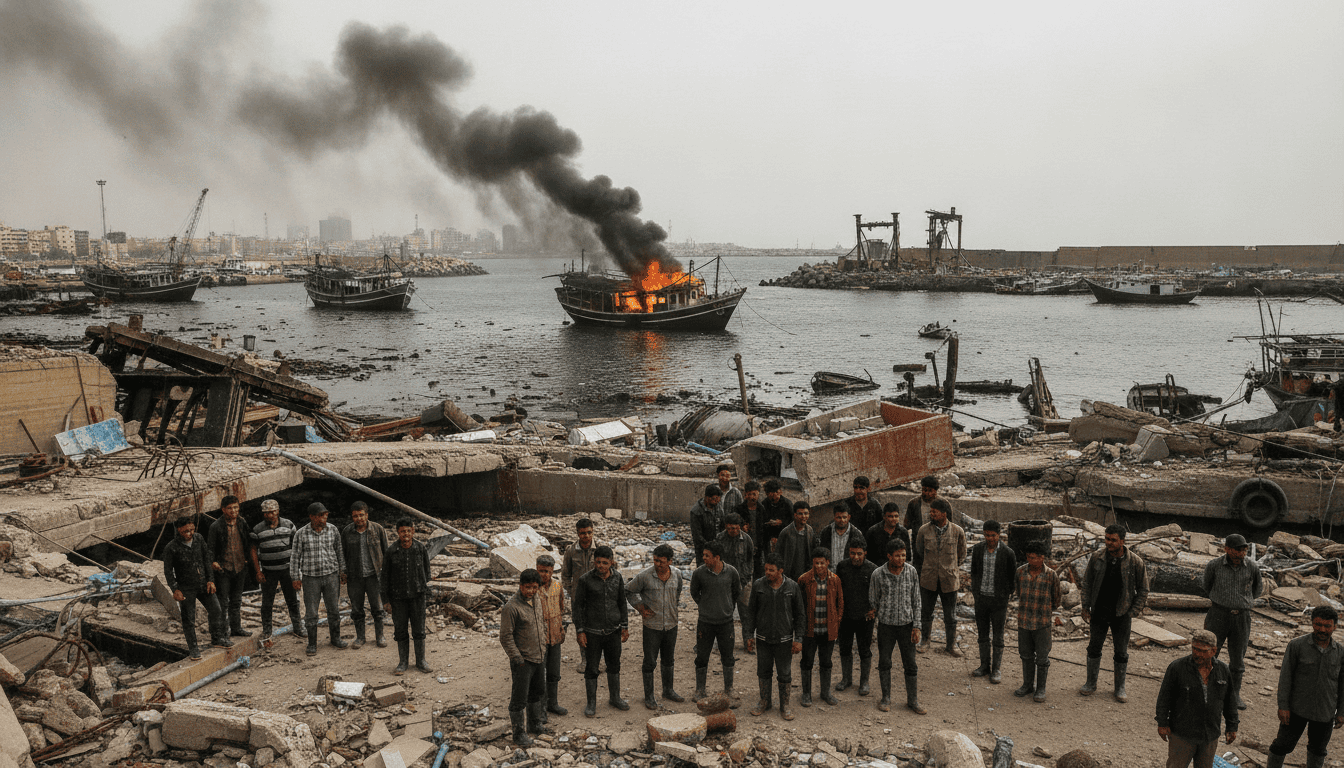
The early-morning strike on the Bandar Abbas fishing port of Pandsch Pele on July 8 struck at the heart of a community already hemmed in by violence and economic strain, leaving burned boats, injured civilians and a shaken fishing fleet. Witnesses said the blast occurred near the city’s fish market and hit both fishing vessels and facilities used by Iran’s coastal authorities. Bandar Abbas fishermen now face curtailed access to traditional fishing grounds and a growing struggle to support families as local markets tighten.
Early-morning strike on Pandsch Pele pier
A rocket or cruise missile detonated at the small Pandsch Pele harbor shortly after dawn, according to local eyewitnesses, scattering wreckage and igniting boats moored along the pier. Fishermen who were on the market across the street described a blast that shook buildings and shattered windows, forcing people to run toward the waterfront amid thick smoke. Local guards and bystanders reported multiple injuries; at least one person was pronounced dead before reaching a hospital.
Boats destroyed and civilian damage disputed
Iranian officials later claimed that roughly 30 fishing vessels were destroyed, while several local fishermen spoke of fewer craft lost but widespread engine and net damage from heat and shrapnel. Observers said both patrol boats belonging to the coastal guard and fast twin-engine craft linked to the Islamic Revolutionary Guard Corps (IRGC) were present at the pier when the attack occurred. The presence of military and paramilitary vessels in the same mooring area raised concerns among residents that civilian boats were caught in the blast.
US military frames targets as Iranian maritime nodes
The U.S. Central Command issued a statement saying the strikes that day hit some 90 “military targets” intended to degrade Tehran’s ability to threaten commercial shipping in the Strait of Hormuz. U.S. officials described the operations as aimed at coastal surveillance and logistics nodes used to support attacks on merchant vessels. Iranian authorities and some analysts dispute the proportionality of strikes that took place in densely populated coastal zones, warning that such tactics increase the risk of civilian casualties.
Local economy and fishing livelihoods collapse
The fisheries sector around Bandar Abbas has been crippled by the fighting and by preexisting overfishing, according to provincial industry representatives. A local fisheries association estimated that some 80 percent of fishermen are currently unemployed and many households that rely on multiple family members working at sea have lost their primary income source. With trawlers restricted from transiting the Strait of Hormuz and crews reluctant to go far offshore, fish supplies to local markets have been rerouted from other Gulf areas, driving up prices.
Infrastructure damage compounds supply shortages
Residents reported that strikes in the wider southern coastal corridor have damaged bridges, roads and power lines that link Bandar Abbas to inland supply networks. Iranian officials said several bridges were destroyed and that electricity transmission routes were hit, with subsequent power and water interruptions reported across the region. Traders and consumers warn that disruptions to transport and utilities will keep food and fuel prices elevated and complicate humanitarian response efforts.
Psychological toll and community response
The human cost extends beyond physical damage: medical clinics see rising demand for anxiety and depression treatment, and locals report widespread sleep disturbances and family tensions as stress mounts. Community leaders and public figures have called for greater attention to the southern crisis, and social media campaigns show solidarities emerging between residents of Bandar Abbas and activists elsewhere in the country. Some households have turned to alternative foods and incomes, but social taboos and limited options restrict coping strategies.
Thousands of fishermen who once sailed to the rich grounds south of Hormuz or beyond the strait say they will not return until the area is demonstrably safer, and many fear they may never recover lost gear or customers. The combination of damaged boats, restricted waters and severed logistics networks has transformed a traditional port economy into a precarious humanitarian situation that local and international observers say will require targeted relief and clear channels for commercial recovery.
