
Florian Lipowitz Checks In from Sierra Nevada Ahead of Tour de France Preparation
Florian Lipowitz joined a late-May 2026 video call from the Red Bull–Bora–Hansgrohe team hotel in the Sierra Nevada to outline his Tour de France preparation, altitude training and concerns about the sport’s honesty.
Florian Lipowitz, the 25-year-old former biathlete turned professional cyclist, spoke by video call during the final week of May 2026 about his build-up to the Tour de France and the intense schedule that followed his podium finish in 2025. The conversation touched on training at altitude, the pressure of public expectation, doubts he holds about honesty in cycling, and the specific areas he wants to improve. His remarks offer a window into how an emerging Grand Tour contender balances physical preparation and public scrutiny.
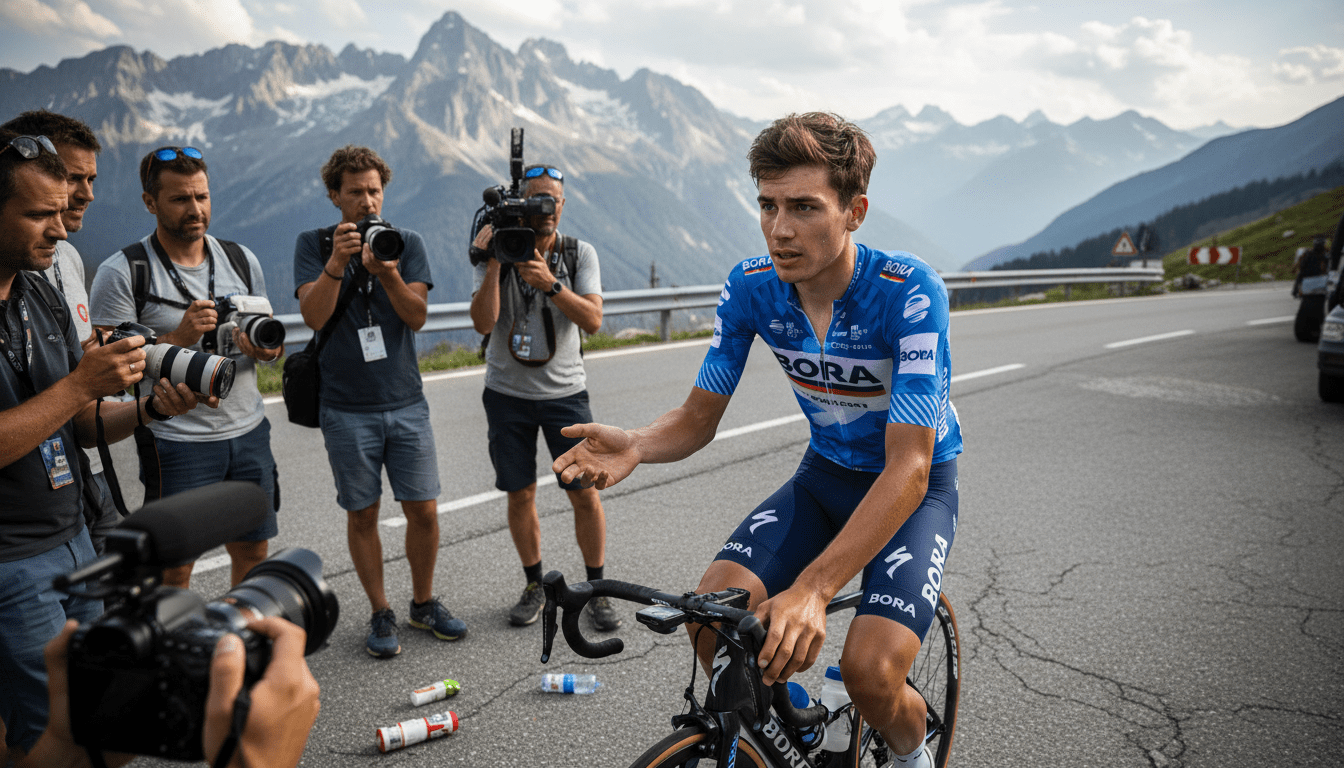
Lipowitz at the team hotel in the Sierra Nevada
Florian Lipowitz dialed into the call from Red Bull–Bora–Hansgrohe’s training base in the Spanish Sierra Nevada, where the team is conducting a concentrated camp. He flagged the altitude environment and controlled training blocks as central to the preparation for three-week racing. The camp is intended to maximize physiological adaptation while fine-tuning race-day routines ahead of the Tour.
The rider described a tightly scheduled timetable, with targeted sessions, recovery windows and daily monitoring by the team’s coaching and medical staff. That structure has become standard for teams aiming for Grand Tour success, emphasizing sleep, nutrition and data-driven load management.
Why altitude matters for a Grand Tour hopeful
Lipowitz explained that high-altitude work increases red blood cell production and can improve endurance performance when combined with calibrated intensity. He said the camp mixes long endurance rides with short, hard efforts designed to preserve sharpness without overtaxing recovery. The balance of stress and recovery is particularly important for riders expecting to contest mountain stages and sustained climbs.
Coaches and performance staff typically pair physiological testing with scheduled heat and altitude exposure to replicate race demands. Lipowitz’s comments underscored the point that adaptation is deliberate, measurable and integrated into the broader season plan rather than improvised at the last minute.
Managing expectations after a 2025 podium
The third-place finish at the 2025 Tour de France has increased attention on Lipowitz and reshaped expectations inside and outside his team. He acknowledged that the result brought a rapid rise in public interest and media scrutiny, which has affected how he and his staff plan the season. The heightened profile also requires greater care in race selection, training load and communications.
Lipowitz spoke about the need to protect form and not let external pressure dictate preparation cycles. He emphasized that while the podium accelerated his exposure, the long-term aim remains steady improvement and consistency across Grand Tours rather than a single headline performance.
Concerns over honesty and integrity in cycling
During the call he raised concerns about the honesty of his sport, framing them as questions rather than accusations directed at individuals. Lipowitz said that repeated controversies have left some riders and fans uncertain, and that clearer information and stronger governance would benefit everyone involved. He called for more transparency in testing and for governance systems that restore confidence.
His comments reflect a broader conversation within professional cycling about credibility and institutional responsibility. While not naming specific incidents, Lipowitz’s remarks point to an appetite among riders for reforms that go beyond technical fixes and address perception as well as policy.
Work to do: technical and mental priorities
Lipowitz identified a mixture of technical and psychological areas he plans to address in the months ahead, including race craft, recovery optimization and tactical patience on decisive stages. He noted that elite performance hinges as much on small marginal gains—nutrition timing, pacing strategy, cornering technique—as on raw power numbers. The rider said he is working closely with coaches and sports scientists to make targeted improvements.
He also mentioned the importance of mental resilience when racing under elevated scrutiny. Managing expectations, maintaining focus over three weeks and responding to setbacks are recurring themes for riders moving from a breakthrough season to sustained contention.
Season planning and role within Red Bull–Bora–Hansgrohe
Lipowitz described a full calendar that requires selective targeting to arrive at the Tour de France in peak condition. He said the team is exploring a mix of altitude camp work, stage-race tune-ups and controlled racing blocks with the aim of building toward July. Inside the team, his role will be shaped by both his form and strategic priorities, balancing personal ambitions with collective objectives.
Team staff have emphasized measured progression rather than aggressive over-racing, and Lipowitz echoed that sentiment by noting the need to safeguard the body across a long season. That approach is consistent with teams that prioritize Grand Tour results and long-term athlete development.
Lipowitz’s late-May update offers a candid look at one rider’s path from a breakthrough podium to the hard work of consolidation and growth. As he continues altitude sessions and race simulations with Red Bull–Bora–Hansgrohe, the coming weeks will show whether the combination of targeted training, tactical refinement and institutional support can turn a promising season into sustained Grand Tour contention.
