
Jordan denies Aqaba evacuation after US embassy warning of ‘credible threat’
Jordan denies an Aqaba evacuation after a US embassy warning of a “credible threat”, saying airport and seaport operations continue normally.
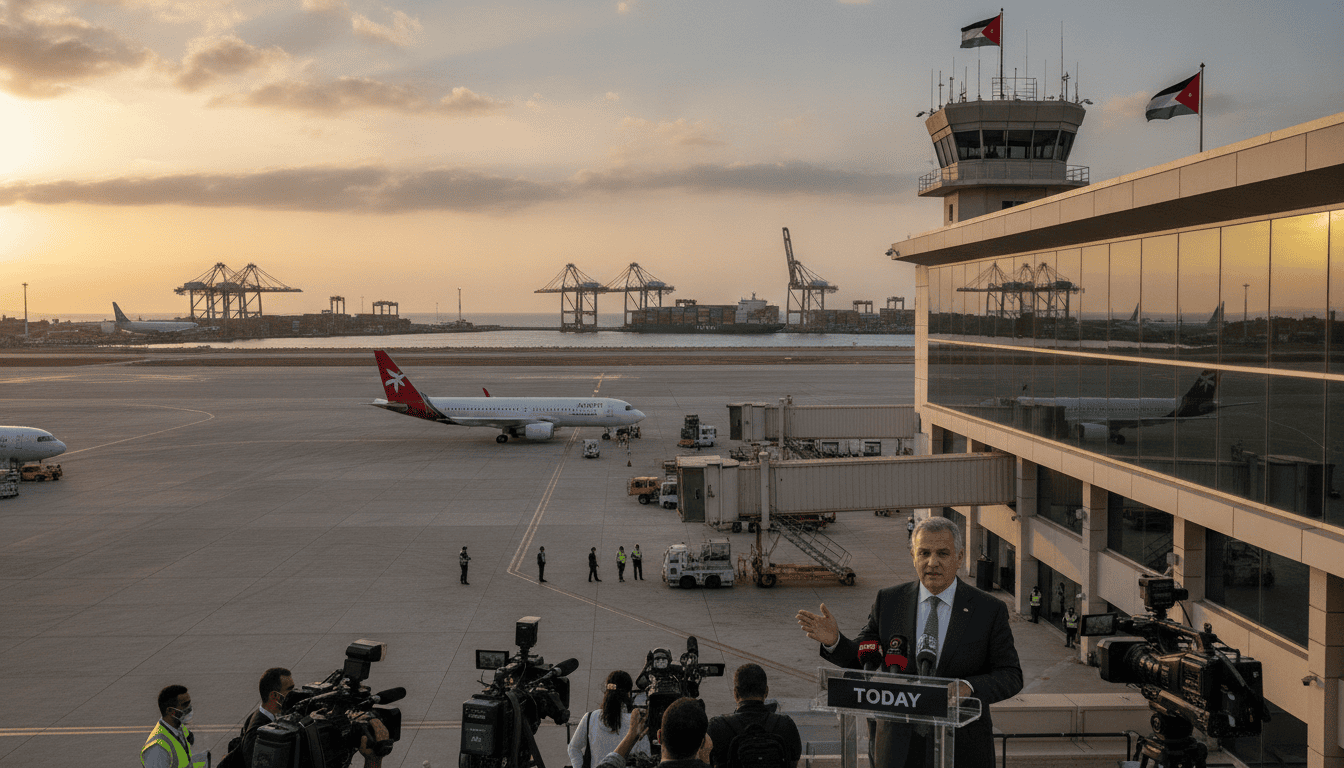
Jordan’s government has publicly denied reports that Aqaba’s airport or seaport were evacuated following a security advisory from the United States, with officials insisting there have been no evacuation orders and no detected threats in the area.
Government Response and Denial
Mohammad Al-Momani, a spokesman for the Jordanian government, told the state Petra news agency that no evacuation orders were issued for Aqaba Airport or the city’s seaport.
He said relevant authorities had not recorded any potential threats to Aqaba in the hours after the advisory, and that both transport hubs were operating under normal conditions.
The statement sought to counter circulating reports and social media posts that suggested mass movement or official closures in the southern port city.
Status of Aqaba Airport and Seaport
Officials emphasized that Aqaba King Hussein International Airport remained open to scheduled flights and that seaport operations continued without interruption.
Authority statements framed the situation as one of routine monitoring rather than emergency action, with standard security protocols reportedly in place at both facilities.
Port and airport operators did not issue statements reporting disruptions to cargo handling or passenger services at the time of the government denial.
US Embassy Advisory and ‘Credible Threat’ Warning
The US embassy issued a travel advisory referencing a “credible threat” and warned American citizens to exercise caution, prompting heightened public attention and media coverage.
Diplomatic advisories of this nature typically aim to alert nationals to elevated risk without providing granular operational details; they can prompt local and foreign entities to reassess security postures.
Jordanian officials, however, maintained that the advisory did not translate into a domestic order to evacuate or suspend operations in Aqaba.
Security Monitoring and Official Statements
Authorities in Jordan described their response as continued surveillance and intelligence gathering rather than emergency measures, according to government briefings.
Security services reportedly increased vigilance and continued to review intelligence, with local law enforcement maintaining visible presence around critical infrastructure.
Officials declined to confirm or deny specific intelligence details, saying only that current assessments did not justify evacuation of transport hubs.
Commercial and Travel Impact
Despite the government denial, the US advisory and the ensuing media attention briefly disrupted traveler confidence and raised questions among shipping firms and regional tour operators.
Some airlines and tour organizers were reported to be reviewing itineraries as a precaution, though no widespread cancellations had been announced by carriers or major travel agencies at the time of the statements.
Shipping firms and port clients remained in contact with local operators to monitor any operational changes, while logistics companies emphasized contingency planning as part of normal risk management.
Regional Context and Strategic Importance of Aqaba
Aqaba serves as Jordan’s primary maritime gateway and a growing tourism hub on the Red Sea, making the city strategically significant for trade and passenger travel.
Any suggestion of disruptions there can have ripple effects for trade flows in the region and for cross-border tourism between Jordan, Israel and Egypt.
Jordan’s government has historically prioritized the protection of ports and border crossings, and authorities framed their response as consistent with that priority while assuring the public of continuity.
Given the competing inputs — a US embassy advisory and Jordanian officials’ denial of evacuations — travelers and commercial operators were advised to follow statements from their governments and official Jordanian sources for authoritative updates.
Local residents and businesses were urged to remain alert to official communications from Jordanian security agencies and transport authorities, while international travelers were advised to stay in contact with their embassies or consulates.
Official updates on the situation were expected to follow as authorities continued to assess intelligence, and both diplomatic missions and Jordanian agencies said they would notify the public should conditions change.
For now, Jordan maintains that there has been no evacuation of Aqaba airport or seaport and that routine operations are ongoing while security services carry out heightened monitoring.
