
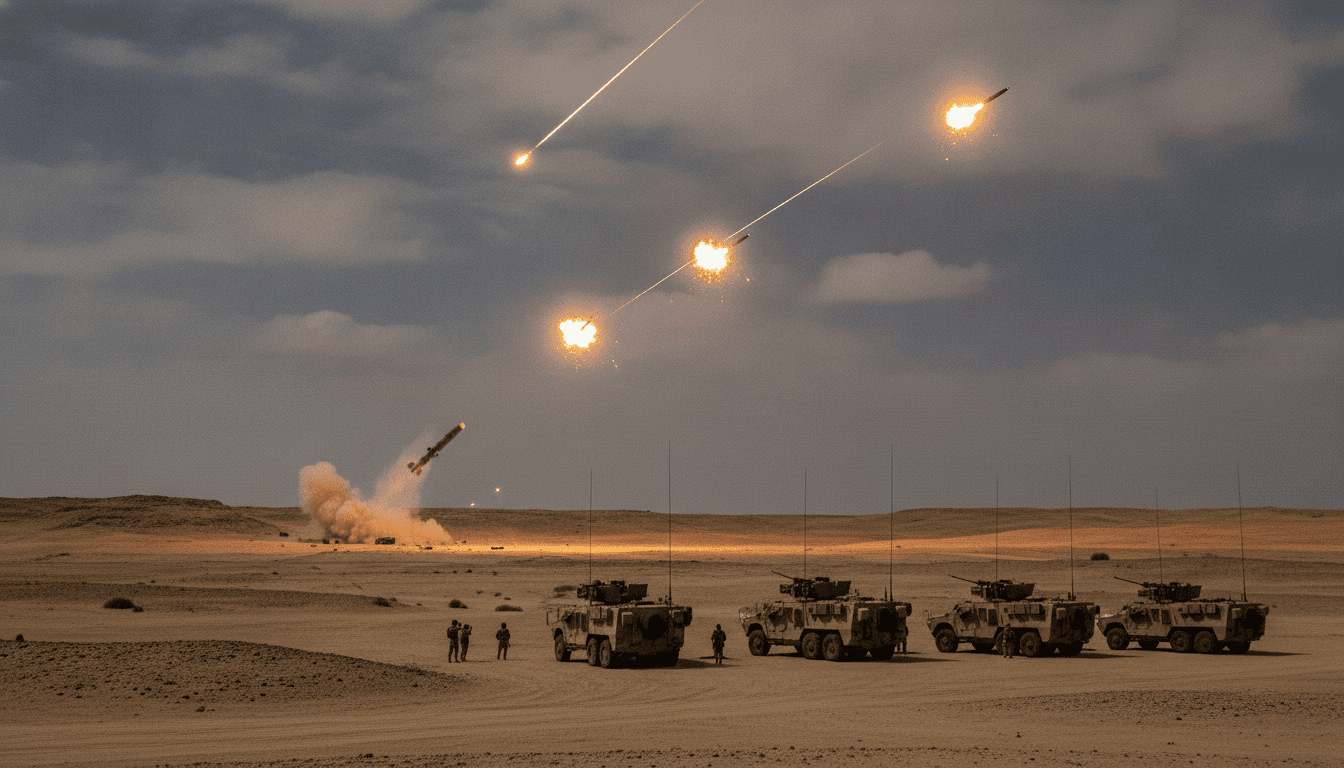
Jordan shoots down three Iranian missiles as fourth falls in remote area
Jordanian forces intercepted three Iranian missiles targeting the kingdom, while a fourth fell in a remote area, the state news agency and military officials reported.
Jordanian military intercepts missiles
The Jordanian Armed Forces said its air defenses engaged and shot down three incoming missiles aimed at territory inside the kingdom. The action came after what military spokespeople described as an unidentified missile launch toward Jordanian airspace.
Military officials did not provide further technical details about the intercepts or the defensive systems used. The state news agency carried the military statement, which offered the primary account of the incident.
Official statements from state news agency and military
Jordan’s state-run news agency reported the engagement and attributed the information to a military official, signaling that government channels were the source of the account. The report emphasized the successful interception and framed the event as a defensive operation to protect national territory.
The military official quoted by state media confirmed there were no casualties and no material damage as a result of the strikes. Officials declined to expand on possible motives, timing, or the precise flight path of the projectiles in the initial statement.
Fourth projectile fell in remote area
In addition to the three missiles that were intercepted, the military said a fourth projectile fell in a remote area inside Jordan. Authorities indicated that the fourth missile landed away from population centers, reducing the risk of harm to civilians and infrastructure.
Jordanian emergency services did not report any search-and-rescue activity or immediate recovery operations in publicly released comments. The military account described the location as isolated, and officials have signaled that assessments would continue to determine any wider effects.
No casualties and no material damage reported
Both the state news agency and the military official stressed that there were no injuries or material damage linked to the incident. That assessment, if upheld, suggests the event was contained relatively quickly by Jordanian defenses and that civilian life was not disrupted.
Officials noted that the lack of casualties would shape the government’s immediate public messaging and diplomatic posture. For now, the official line to the public is one of containment and calm while authorities gather further information.
Regional security context and implications
An engagement of this type occurs against a backdrop of heightened regional tensions, where missile launches and air-defense responses have become a recurring feature of broader conflicts. Jordan, which is situated amid several flashpoints, has previously taken measures to shield its airspace and protect civilian areas.
How regional governments and international actors respond will be shaped by confirmation of the missiles’ origin and intent. Even as Jordan reports interception success, neighboring states and allied powers are likely to monitor further official statements and intelligence assessments closely.
Potential diplomatic and military follow-up
Jordanian authorities may pursue diplomatic channels to clarify the incident, inform partners, and coordinate any joint responses or investigations. Military leaders are also likely to review the engagement to confirm systems’ performance and to refine procedures for early warning and civilian protection.
International organizations and foreign governments that maintain ties with Jordan could call for calm while urging full transparency about the incident. Any formal attributions or accusations would typically follow after additional evidence is reviewed and verified by relevant authorities.
The Jordanian government’s immediate messaging underscores the priority placed on defending national territory and protecting civilians, while officials continue to assess the circumstances and coordinate with partners.
