
FIFA World Cup 2026: Spain and Argentina to Meet in New York Final after Record-Breaking Tournament
FIFA World Cup 2026 climaxes on July 19, 2026, as Spain and Argentina prepare to contest the final in New York, capping a tournament that stretched across North America with unprecedented scale. The tournament’s format, schedule and dramatic knockout rounds have produced early exits for traditional powers and standout performances from underdogs. Fans in Europe followed the action with daily kick-off times converted to Central European Summer Time, reflecting time differences between hosts.
Final set for New York
Spain and Argentina will meet at the New York-New Jersey stadium on July 19, 2026, with kick-off scheduled for 21:00 local time in the host city. The match represents the conclusion of a 104-game event staged across three countries and promises a high-profile clash between two contrasting styles of play.
The third-place match precedes the final on July 18 in Miami, where France and England will play for the bronze spot. Both fixtures are the culmination of a tournament that featured long travel itineraries, late-night fixtures for European audiences and a crowded calendar of fixtures.
Record scale and three-nation hosting
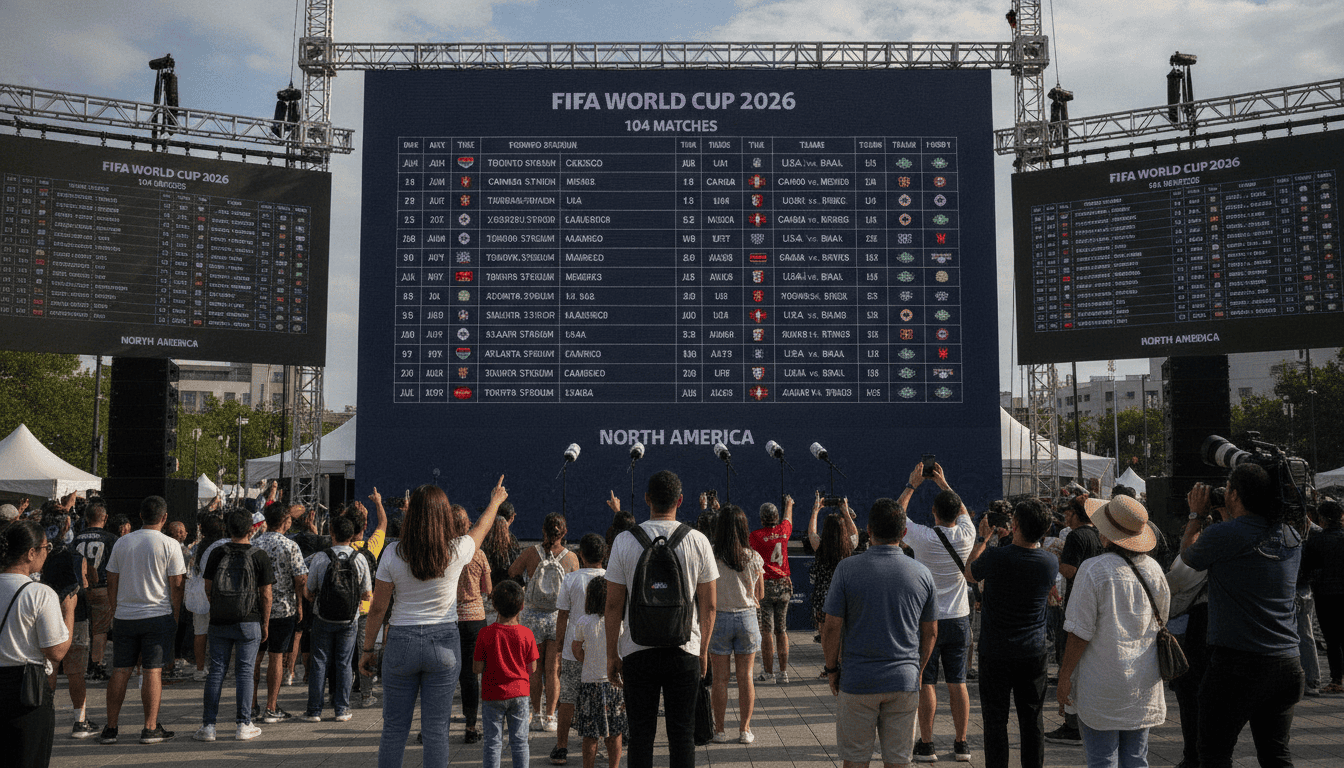
This edition of the FIFA World Cup expanded to 48 teams and 104 matches, distributed across 16 stadiums in the United States, Mexico and Canada. The arrangement marks the first time a World Cup has been organized by three hosts, increasing travel and logistical complexity for teams and supporters alike.
Organizers scheduled matches to accommodate global broadcast windows, which produced time shifts of six to nine hours relative to Central European Summer Time. That arrangement influenced preparation routines and recovery cycles for squads traveling between venues in different time zones.
Germany eliminated in penalty shootout
Germany’s campaign began brightly with a 7-1 win over Curaçao in Houston on June 14, 2026, when Kai Havertz scored twice and Deniz Undav provided decisive contributions off the bench. The team followed with a 2-1 victory over Ivory Coast in Toronto but slipped to a 2-1 defeat by Ecuador in New York on June 25, 2026, which left the side vulnerable entering the knockout stages.
A tense round-of-16 tie against Paraguay on June 29 in Boston ended level after regular time, and Germany were eliminated on penalties. The exit in the early knockout phase underlined tactical questions around squad selection and in-game management that dominated domestic debate after the match.
Knockout shocks and defining matches
The knockout phase delivered several surprises that reshaped expectations. Morocco advanced past the Netherlands on penalties, Brazil edged Japan 2-1, and Belgium overcame Senegal in extra time, highlighting the parity across many top teams. Mexico and the United States each produced memorable home-ground performances that energized local supporters.
Several matches were decided by narrow margins and late moments, with penalty shootouts and extra-time wins punctuating an unpredictable bracket. Those outcomes underscored the impact of the expanded format, where more teams reach the knockout rounds and underdogs have additional opportunities to progress.
Stadiums and scheduling pressures
Sixteen stadiums hosted tournament fixtures, including iconic venues such as Mexico City’s Azteca Stadium and the New York-New Jersey venue in East Rutherford. Capacities ranged widely, with larger American stadiums accommodating crowds above 80,000 and Canadian venues hosting more intimate 45,000‑seat arenas. The distribution of venues required teams to undertake long transfers and adapt quickly to different climates and playing surfaces.
Match scheduling reflected both commercial broadcast needs and local logistics, with organizers balancing prime-time windows for European audiences against travel and recovery constraints. The result was a dense fixture list that tested squad depth and rotation policies across participating nations.
Broadcasting arrangements and viewing access
Public broadcasters ARD and ZDF carried a significant portion of the tournament, televising 60 of the 104 matches, while a subscription service provided access to all games. The pay-TV provider offered a full-match package, including live streaming via its platform, and the public networks supplemented free-to-air coverage with streams on their respective media apps.
Viewers across Europe relied on a mix of traditional broadcast and streaming options to follow matches, often adjusting to late-night kick-offs. Broadcasters emphasized highlights, live commentary and extended post-match analysis to cater to audiences facing unfavorable local kick-off times.
The 2026 World Cup leaves a complex legacy: expansions in format and geography delivered broader participation and moments of drama, but they also raised fresh questions about travel demands, scheduling fairness and competitive balance. The New York final on July 19 will close a tournament of records and debates while delivering a definitive winner for this unique edition of the FIFA World Cup 2026.
