
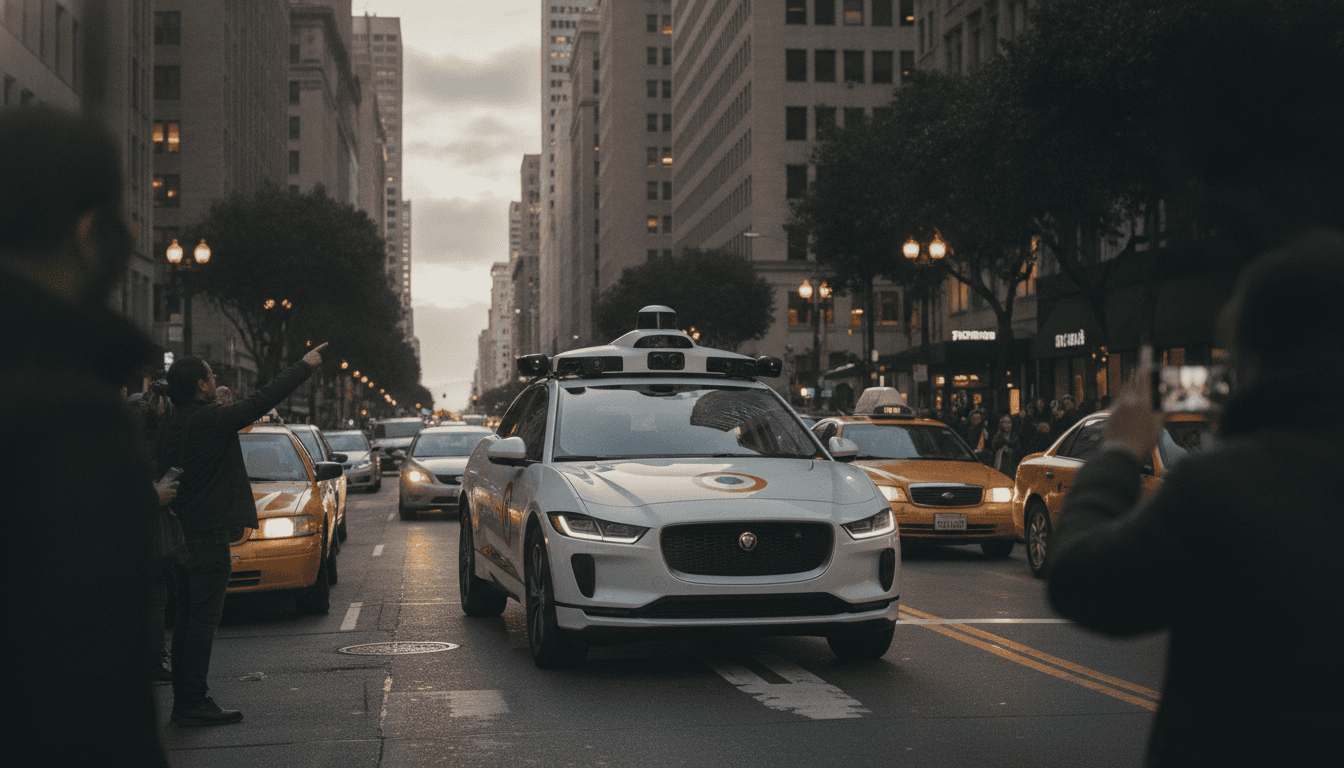
Waymo robotaxi service resumes in San Francisco after temporary pause during citywide outage
Waymo robotaxi service in San Francisco resumed after a temporary pause during a power outage affecting 7,000 PG&E customers, coordinating with city officials.
Waymo pauses operations and then resumes
Waymo temporarily paused its robotaxi service in San Francisco as crews assessed local conditions during a city power outage. The company notified users that freeway routes were unavailable while it made adjustments to vehicle operations.
A Waymo spokesperson said the operator was “making temporary adjustments” and would “return to normal operations as soon as possible.” The company later clarified it had “decided to pause service for approx. one hour” to evaluate the outage and coordinate with local authorities.
Scope of the power outage and immediate impacts
The outage affected roughly 7,000 PG&E customers across parts of the city, according to utility reports, disrupting traffic signals and street infrastructure in several neighborhoods. That loss of electrical power reduced available roadside systems that Waymo’s vehicles rely on for routing and safe navigation.
Riders in San Francisco posted screenshots showing the service notification that trips were paused and limited to non-freeway streets. The interruption briefly reduced available robotaxi capacity at a time when commuters depend on alternative mobility options in dense urban corridors.
Operational changes and safety precautions by Waymo
Waymo limited freeway routing and adjusted its operating maps to keep vehicles off roads where control systems or signals could be compromised. Company officials described the moves as precautionary measures intended to prioritize passenger safety and system reliability.
The temporary adjustments included pausing pickups in certain zones and rerouting active vehicles to safer, lower-risk streets. Company statements emphasized coordination with city agencies as part of the response before restoring full service.
Previous outages inform today’s response
This is not the first time power issues have affected Waymo operations in San Francisco. In a prior December outage, a number of the company’s vehicles stalled on city streets, causing service disruptions and drawing scrutiny from regulators and the public. A separate incident around a major public event also strained traffic management and Waymo routing during the holiday weekend.
Those precedents appear to have influenced Waymo’s decision to pause proactively and assess conditions rather than risk larger-scale vehicle interruptions. The company’s more conservative posture reflects lessons learned from earlier incidents where outages intersected with complex urban traffic.
City officials call for stronger rules on autonomous vehicles
San Francisco Mayor Daniel Lurie responded to recent AV incidents by urging tougher state-level regulations to govern autonomous vehicles during major incidents. He has argued that existing rules do not adequately define how autonomous fleets should behave when infrastructure or emergency conditions change suddenly.
Mayor Lurie and other city leaders have pressed for clearer protocols on fleet behavior, communication with traffic control, and obligations to local agencies during planned and unplanned outages. Those calls add pressure on regulators in Sacramento to consider new standards for contingency operation and public safety oversight.
Industry implications and contingency planning
The interruption underscores the interdependence of autonomous systems and urban infrastructure, raising questions about grid reliability and redundancy as robotaxi deployments scale. Fleet operators and cities must reconcile the need for continuous service with the technical limits of communications, signaling, and power-dependent infrastructure.
For operators, the incident highlights the importance of tested contingency plans, robust coordination channels with utilities and emergency services, and clear rider communication strategies. For regulators, it emphasizes the need to set expectations for fleet behavior in emergencies, and to require interoperable protocols that protect road users when critical systems falter.
Waymo restored full service after its brief pause and said it will continue to monitor local conditions and work with city officials and utilities to reduce the risk of future interruptions. The episode is likely to shape ongoing debates over how autonomous vehicle operators balance service availability with conservative safety practices in complex urban environments.
