
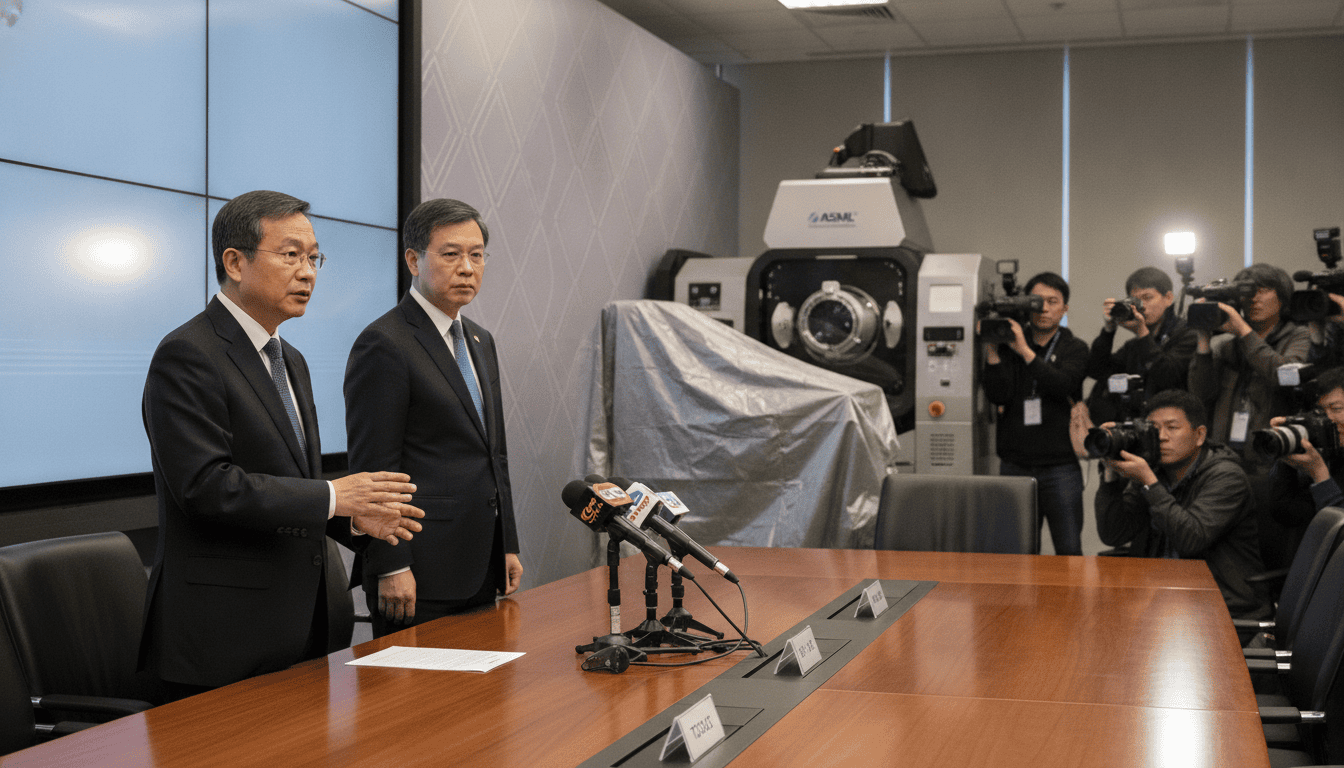
TSMC Says ASML EUV Machine Is “Very, Very Expensive” and Will Not Be Deployed Soon
TSMC executive Kevin Zhang described ASML’s latest EUV machine as “very, very expensive,” signaling the foundry will not adopt the tool in the near term amid cost and capacity concerns.
TSMC’s deputy co-chief operating officer Kevin Zhang said the new ASML EUV machine carries a multi-hundred-million-euro price tag and is unlikely to be used by the company for the foreseeable future. He made the remarks in Munich ahead of TSMC’s annual technology conference, citing cost as the primary barrier to deploying the system across the contract chipmaker’s fabs. The comment underscores growing tensions between equipment suppliers’ technological advances and chipmakers’ careful cost management.
TSMC Executive Labels ASML Machine ‘Very, Very Expensive’
Kevin Zhang’s blunt assessment crystallizes a practical challenge for the chip industry: advanced lithography progress is colliding with economic constraints. Zhang, identified as TSMC’s deputy co-chief operating officer, told reporters the machine’s price puts it out of reach for immediate use at the world’s largest contract semiconductor manufacturer. The remark came as part of a broader discussion on technology planning and capital allocation that precedes large-scale purchasing decisions.
Industry executives often weigh performance improvements against the total cost of ownership, including installation, maintenance and throughput. Even if a tool offers incremental process benefits, its value must be measured against yield, cycle time and the cost per wafer for high-volume production. Zhang’s statement therefore signals a calculated decision by TSMC to delay commitment until a clearer return on investment emerges.
Price Tag and Technical Demands Behind the Decision
The ASML EUV machine at the center of this debate represents the latest generation of extreme ultraviolet photolithography, which enables smaller transistor geometries and tighter patterning. Such systems are complex, requiring precise optics, vacuum environments and specialized consumables, which contribute to very high acquisition and operating costs. For leading-edge nodes, manufacturers also need compatible process integration, new masks and extensive R&D that amplify the initial outlay.
Beyond purchase price, chipmakers evaluate throughput, uptime and integration timelines when deciding whether to adopt new equipment. If a machine delivers lower throughput or requires lengthy qualification, that reduces its economic attractiveness despite technical capability. TSMC’s decision to refrain from immediate deployment suggests the current trade-offs do not yet favor widespread adoption at its facilities.
Implications for Foundries and Fab Economics
If TSMC holds back on the new ASML EUV machine, other foundries may take a cautious stance as well, potentially slowing the pace of immediate industry-wide upgrades. The semiconductor supply chain has historically moved in waves, with early adopters absorbing higher costs that later become more palatable as prices fall and reliability improves. A delay at a market leader like TSMC could elongate that cycle and shift investment timelines for smaller players.
Slower adoption can also affect chip designers who anticipate availability of tighter geometries for future product roadmaps. Companies planning generational performance or power improvements may need to adjust schedules or accept alternative process nodes. Meanwhile, equipment vendors face pressure to demonstrate not only technical superiority but also compelling economics to justify the capital expenditure.
ASML’s Market Position and Response Options
ASML remains the dominant supplier of EUV lithography systems and has invested heavily in advancing the technology to serve next-generation nodes. Its machines are key enablers for continued scaling under Moore’s Law, and the company’s roadmap includes incremental improvements in throughput and reliability. However, the premium price for the newest tools means ASML may need to balance innovation with broader market access considerations.
To address customer concerns, vendors can pursue several strategies: accelerate productivity upgrades, offer flexible financing, or introduce modular improvements that lower immediate cost of entry. Demonstrating improved yield and total cost of ownership in customer-specific pilot runs will be especially important to convert cautious interest into purchase orders. ASML’s commercial approach in the coming quarters will likely reflect feedback from major customers such as TSMC.
Broader Market Effects and Supply Chain Considerations
The debate over deploying ultra-expensive lithography equipment intersects with broader trends in chip supply and geopolitical priorities. Governments and companies are investing heavily in semiconductor capacity, but investments must still make commercial sense for operators. Public subsidies and strategic funding can alter investment calculus, yet commercial viability remains central to sustained production planning.
If leading foundries delay, it may create temporary bottlenecks for certain classes of advanced chips while easing pressure on upstream equipment demand. Conversely, a measured rollout could allow the industry to optimize recipes, improve yields and eventually support a more cost-effective transition. Market watchers will be closely monitoring purchase patterns, pilot projects and vendor announcements for signs of momentum shifting.
ASML’s latest EUV machine has attracted attention for its technical promise and its cost, and TSMC’s cautious stance highlights the crossroads between pushing technological frontiers and maintaining disciplined capital deployment. The coming months should clarify whether price reductions, productivity gains or financing solutions will persuade major foundries to change course.
