
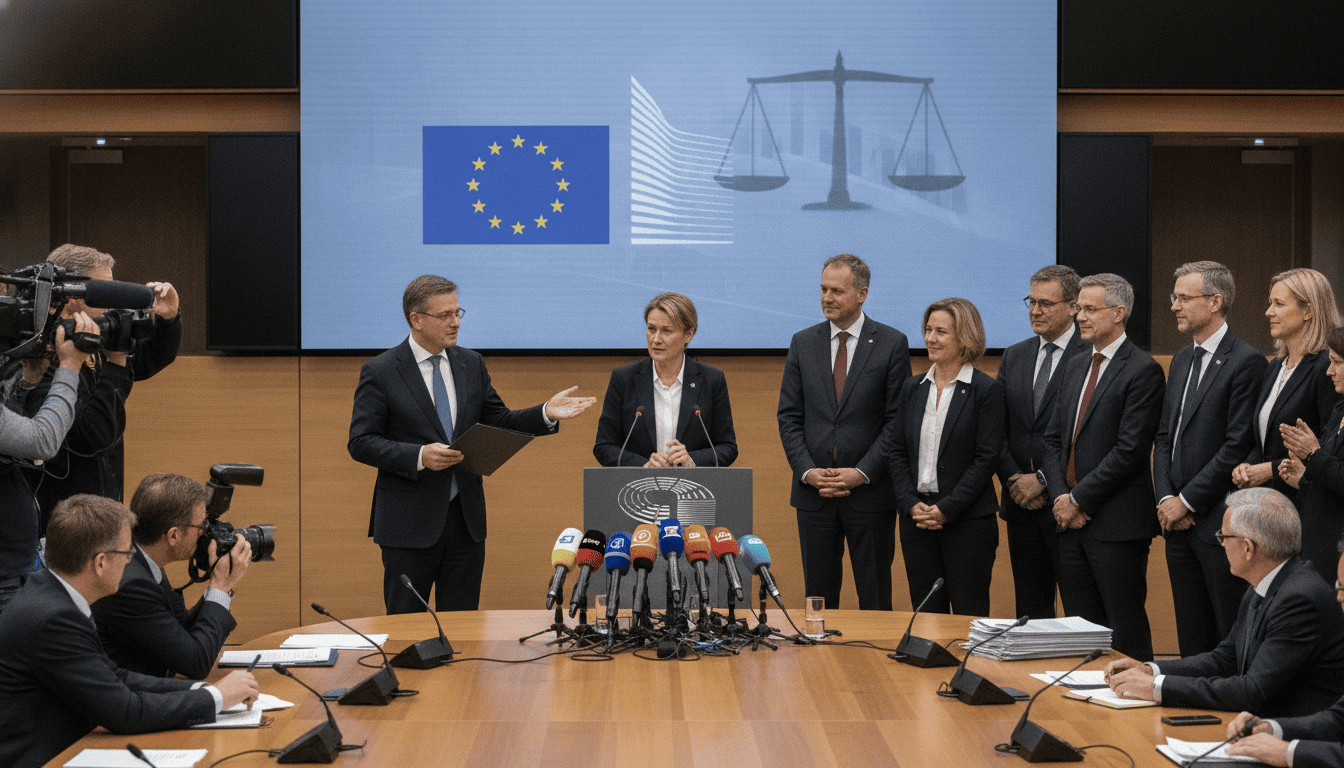
EU banking regulation reshaped by 2008 compromises, diluted capital rules, and protection for Landesbanken
Post‑2008 compromises reshaped EU banking regulation: diluted capital rules, safeguards for Landesbanken, and a policy shift toward competitiveness and EU debate.
Commission’s single rulebook drive after 2008
The European Commission pushed for a single rulebook for banks after the 2008 financial shock, arguing that fragmented regulation had worsened the crisis. That initiative, framed as a way to restore stability, became the vehicle for broader institutional change in banking supervision across the EU.
Legislative momentum gave the Commission leverage to bind national systems into a common framework, but the process also opened space for member‑state bargains. Those trade‑offs would shape the substance of EU banking regulation for years to come.
German concessions softened core capital definition
During negotiations, a series of concessions were granted to secure political support from powerful member states, notably Germany. One consequential concession relaxed the European definition of core capital to allow instruments such as silent participations alongside common equity, diverging from the stricter Basel standards.
The softened definition reduced the capital quality demanded of banks under EU rules and effectively made it easier for institutions to report stronger regulatory capital ratios without increasing true loss‑absorbing equity. Critics say this adjustment weakened resilience by prioritizing domestic banking structures over rigorous international standards.
Landesbanken borrowing and the role of Steinbrück
A key domestic factor in Germany’s bargaining position was the exposure of state‑owned Landesbanken, which had benefited for years from regional guarantees. Negotiations dating back to the early 2000s — in which German officials agreed to delayed enforcement of limits on state guarantees — allowed Landesbanken to expand balance sheets supported by public backstops.
Those institutions used the grace period to raise hundreds of billions of euros in guaranteed debt and to invest heavily in securitisations and foreign assets. Observers contend that the losses tied to that strategy were a principal driver of Germany’s disproportionate fiscal burden during the global crisis.
Supervision gaps and the US regulatory response
The compromises over capital standards and the preservation of home‑country supervision reinforced a fragmented supervisory landscape that critics say left cross‑border risks insufficiently addressed. In contrast, U.S. regulators moved to ensure foreign banks operating in the United States met local capital and liquidity rules, narrowing the scope for regulatory arbitrage.
That divergence highlighted a practical problem: if home‑country frameworks appear more permissive, host jurisdictions may impose their own requirements to protect domestic stability. The result has been an uneasy patchwork of rules and supervisory claims over the past decade.
‘Competitiveness’ rhetoric and capital markets push
In recent years, officials and industry groups have framed regulatory reform through the language of “competitiveness,” arguing that softer rules and deeper capital markets will help European banks and firms compete with U.S. counterparts. Policymakers have linked this rhetoric to ambitions for a capital markets union and a stronger role for investment banking in Europe.
However, analysts caution that promoting large‑scale investment banking activities does not automatically translate into broad economic benefits at home. European experience suggests that the gains often accrue to trading desks and fee earners while risks and costs are borne more widely, particularly when regulatory discipline is relaxed.
Policy trade‑offs and lessons from the crisis
The policy choices made in the wake of 2008 reveal enduring trade‑offs between political accommodation and regulatory stringency. Accommodating national banking models helped secure short‑term support for a European framework but also introduced vulnerabilities by permitting lower‑quality capital and preserving state‑backed business models.
Future reforms will need to confront uncomfortable questions about insolvency law, accounting standards, tax systems and shareholder rights if a truly integrated capital market is the objective. Absent such reforms, efforts to boost “competitiveness” through deregulatory measures risk reinforcing the same imbalances that contributed to the crisis.
The legacy of the post‑2008 compromises is a European banking architecture that reflects political compromise as much as technical design; recognizing that balance will be essential for any credible move toward deeper integration and sustained financial resilience.
